Categories
Thought

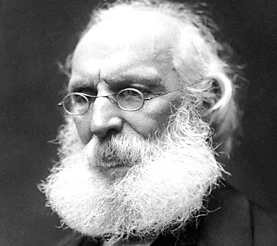
Edmond About

This discipline of the understanding reflects infinite credit upon the nineteenth century. If posterity does us justice, it will be grateful to us therefor. It will see that instead of cutting one another’s throats about theological questions, we have surveyed lines of railway, laid telegraphs, constructed steam-engines, launched ships, pierced isthmuses, created sciences, corrected laws, repressed factions, fed the poor, civilized barbarians, drained marshes, cultivated waste lands, without ever having a single dispute as to the infallibility of a man.


Edmond About, The Roman Question (1859), H. C. Coape, translator.

Categories
Today

Bagge It

On December 11, 1957, American cartoonist and Reason magazine contributor Peter Bagge was born.

Categories
video

Video: Red Pill Diaries

Comedian and conservative contrarian Gavin McInnes rants about the way mainline Third-Wave feminists have reacted to the documentary The Red Pill. Caution: “explicit language.”

Wondering about the movie itself? Here is a trailer for it:

And here is Dave Rubin interviewing documentarian Cassie Jaye:

Categories
Snowden Thought

Edward Snowden

Privacy is the foundation of all other rights. Arguing that you don’t care about privacy because you have nothing to hide is no different from saying you don’t care about free speech because you have nothing to say.

Categories
Today

Passy, Dunant and Huck

On December 10, 1884, Mark Twain’s Adventures of Huckleberry Finn was first published. This novel, narrated in the first person by the title character, is a dark comedy of the antebellum South and slavery, and has been considered by many American critics and writers to qualify as the “Great American Novel.”

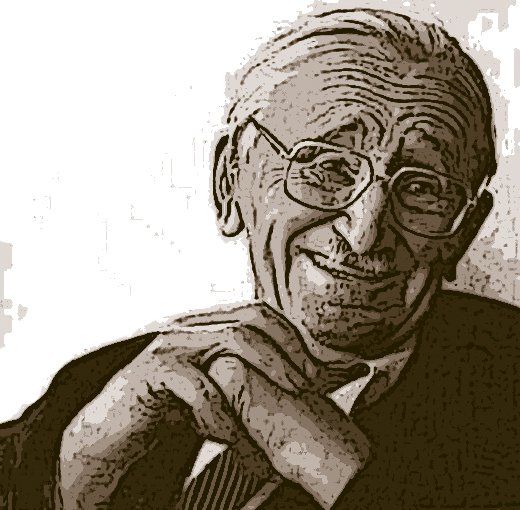
On this date in 1901, the first Nobel Peace Prizes were awarded — to economist Frédéric Passy (pictured above), co-founder of the Inter-Parliamentary Union; and to Henry Dunant the founder of the International Committee of the Red Cross.

Passy was an admirer of Cobden and an active member in the French Liberal School of Political Economy that developed in the tradition of J.B. Say, Destutt de Tracy, Charles Comte and Charles Dunoyer, and Frédéric Bastiat. His published works include Leçons d’économie politique (1860-61); La Démocratie et l’Instruction (1864); L’Histoire du Travail (1873); Malthus et sa Doctrine (1868); and La Solidarité du Travail et du Capital (1875).

Categories
Today

Mutual Aid & the Areopagitica

On December 9, 1958, the John Birch Society was founded in the United States. December 9 also marks the birthdays of

  • Poet and anti-censorship advocate John Milton (1608), author of the masterpiece of blank verse narrative, Paradise Lost (1667) and a classic prose defense of free speech and the press, Areopagitica (1644).
  • Russian prince and anarchist theoretician Peter Kropotkin (1842), author of Mutual Aid and other books and pamphlets.
  • John Malkovich (1953), who directed The Dancer Upstairs (2002) and starred in the odd eponymous film Being John Malkovich (1999) . . . and many other movies.
Categories
Thought

Mary Wollstonecraft

It is justice, not charity, that is wanting in the world.

Mary Wollstonecraft, A Vindication of the Rights of Woman (1792), Chapter 4.

Categories
Thought

John Milton

Revolutions of ages do not oft recover the loss of a rejected truth, for the want of which whole nations fare the worse.

John Milton, Areopagitica; A speech of Mr. John Milton for the Liberty of Unlicenc’d Printing, to the Parlament of England (1644).

Categories
Today

The Brookings

On December 8, 1927, one of the United States’ oldest think tanks was founded through the merger of three organizations that had been created by philanthropist Robert S. Brookings. Called the Brookings Institution, it would provide a blueprint for future work by research and advocacy organizations in the modern era.

On this date in 1974, a plebiscite abolished the monarchy in Greece.

Categories
Thought

Mary Wollstonecraft

Independence I have long considered as the grand blessing of life, the basis of every virtue; and independence I will ever secure by contracting my wants, though I were to live on a barren heath.

Mary Wollstonecraft, A Vindication of the Rights of Woman (1792).