Categories
Today

First President

On February 4, 1789, George Washington was unanimously elected as the first President of the United States, under the new Constitution, by the U.S. Electoral College.

On the same date five years later, the French legislature abolished slavery throughout all territories of the French Republic.

Categories
Thought

George H. Lewes

History shows how the human mind, which, at the dawn of civilisation, was a lyre of three chords, became in the progress of civilisation a lyre of seven chords. . . .


G. H. Lewes, Problems of Life and Mind (Third Series) Problem the First — The Study of Psychology: Its Object, Scope, and Method (1879), p. 157.

Categories
Today

Spain and Bagehot

On February 3, 1783, Spain recognized United States independence.

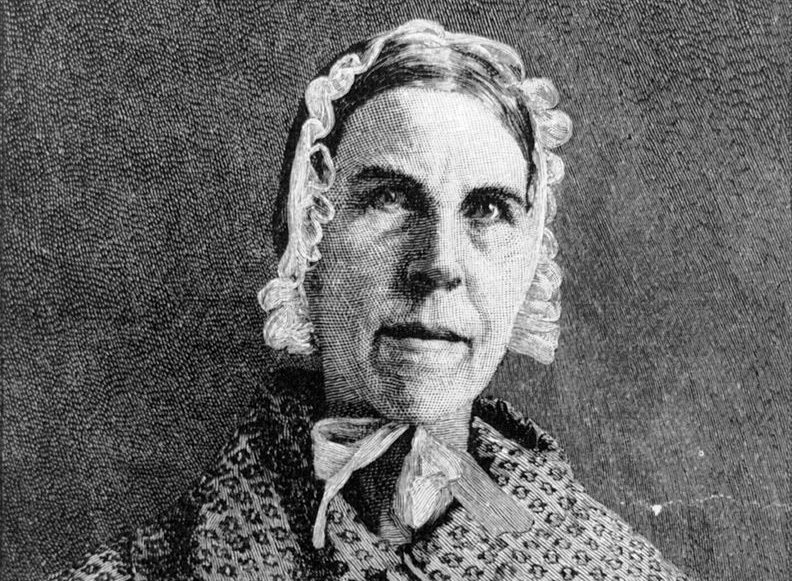
Walter Bagehot (pronounced “badge-it”; pictured), famed editor of The Economist and author of Lombard Street, was born on this date in 1826.

Categories
Thought

Grant Starrett

The American people are paying for employees they can’t even control. Federal bureaucrats enjoy ludicrous protections that far exceed what average Americans can expect in their own jobs and thus isolate the bureaucracy from the will of the American people. To correct this, Congress should pass a law to make all federal employees serve at will — just like Americans in the private sector. If a bureaucrat underperforms, undermines policy, or is no longer needed, he should be dismissed.


Grant Starrett, “Make All Federal Employees Fireable, National Review (February 2, 2017).

Categories
Today

Groundhog!

On February 2, 1887, Punxsutawney, Pennsylvania, celebrated the first Groundhog Day. On the same day in 1976, the Groundhog Day gale hit the north-eastern United States and south-eastern Canada.

In 2009, the Reserve Bank of Zimbabwe officially devalued the Zimbabwean dollar for the third and final time, making Z$1 trillion now only Z$1 of the new currency, equivalent to Z$10 septillion before the first devaluation. Politicians in Zimbabwe looked up, saw their shadow, and realized that they had only a couple months more of their inflation binge. Indeed, the legalization of trading currencies, the previous month, had sealed the fate of Zimbabwe’s independent dollar. The Zimbabwean dollar was abandoned officially on the 9th of April, 2009.

Categories
Thought

Dave Rubin

We should be more worried about the government taking away our free speech rather than us taking it away from ourselves.


Dave Rubin, Rubin Report transcript.

Categories
Thought

Ben Shapiro

Facts don’t care about your feelings.


Ben Shapiro, professional motto, as seen on Twitter (and heard on his show).

Categories
Today

Slavery Abolished

On February 1, 1835, slavery was abolished in Mauritius. Twenty-six years later, in the American Civil War, Texas seceded from the United States. On this date in 1865, President Abraham Lincoln signed a Joint Resolution from Congress formally submitting the proposed Thirteenth Amendment to the United States Constitution, which abolished slavery (and involuntary servitude), to the states for ratification.

Categories
Thought

Götz Aly

Another major source of stop-gap revenues to fund Hitler’s popular tax and rearmament policies was Germany’s — and later much of Europe’s — Jewish population. By late 1937, civil servants in the Finance Ministry had pushed the state’s credit limit as far as it would go. Forced to come up with ever more creative ways of refinancing the national debt, they urged their attention to property owned by German Jews, which was soon confiscated and added to the so-called Volksvermögen, or the collective assets of the German people.


Götz Aly, Hitler’s Beneficiaries: Plunder, Racial War, and the Nazi Welfare State (2005), Jefferson Chase, trans., p. 41.

Categories
Today

Corn Law

On January 31, 1849, the Corn Laws were abolished in the United Kingdom, one of the most impressive and far-reaching anti-protectionist moves of all time. “Corn” stood for all grains, including wheat, oats, barley, etc.; the free-trade agitation by John Bright and Richard Cobden was one of the main impetuses for the reform.

On Jan. 31, 1865, the United States Congress proposed the Thirteenth Amendment to the U.S. Constitution, submitting it to the states for ratification. The Amendment’s main section reads: “Neither slavery nor involuntary servitude, except as a punishment for crime whereof the party shall have been duly convicted, shall exist within the United States, or any place subject to their jurisdiction.”

On Jan. 31, 1990, the first McDonald’s fast food restaurant opens in the Soviet Union. Having once traveled to Moscow, I’m exceedingly thankful for this.