Categories
Thought

Jordan Peterson

I’ve studied totalitarianism. I’ve often wondered how societies slide into The Big Lie. And I know it has something to do with sins of omission.


Jordan Peterson, on the Mark Steyn Show. The full context of this quotation regards his fracas with the University of Toronto, where he teaches, regarding his refusal to abide by the proposed law to regulate speech regarding “gendered” pronouns, many of them recently invented:

I had an interesting example of that when the U of T wrote me the first letter, because they claimed that they had received a lot of letters stating that my comments about the pronouns had contributed to an unsafe environment at the U of T, that they had received letters from people who had been threatened — these were transsexual people, hypothetically — but they didn’t at all mention that they had received hundreds of letters from people supporting me, and also a petition with several thousand signatures. . . . I’ve studied totalitarianism. I’ve often wondered how societies slide into The Big Lie. And I know it has something to do with sins of omission. And that was a really good example. Because when they wrote me the letter they didn’t say, ‘You know, we’ve received opinions on both sides of this, and we’ve come to a judicious decision’ — omitting completely to note that far more people had written in support of me than had written to criticize me. That’s institutional corruption.
Categories
Today

The Count Tracy

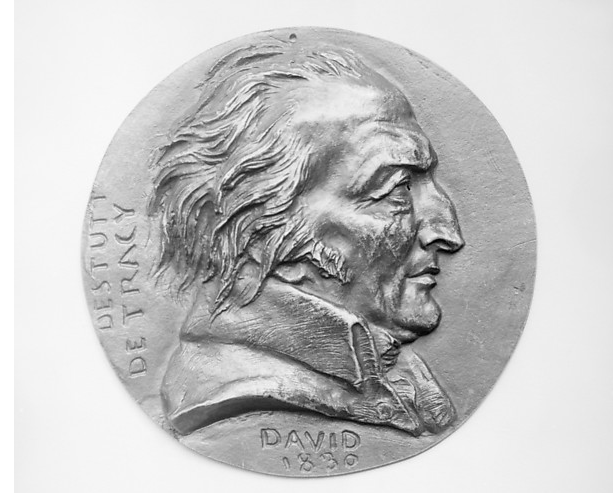
Born on July 20, 1754, Antoine Louis Claude Destutt, comte de Tracy, French philosopher and economist. Perhaps best remembered for coining the term “ideology,” he didn’t mean by that term what scornful Napoleon and communist Karl Marx later turned it into — for Destutt de Tracy ideology meant “the science of ideas,” a unified approach to all knowledge, from epistemology to social theory.

Though his family had been enobled twice, he renounced the title and entered the 1789 Estates General conference as a member of the Third Estate. During the Reign of Terror, he was imprisoned, and would have been executed had not Robespierre got to the scaffold ahead of him.

Two of his books became popular in early 19th century America, his commentaries on Montesquieu’s Spirit of the Laws, and his Traité de la volonté, which Thomas Jefferson, the editor of the American edition, retitled A Treatise on Political Economy. Tracy’s economics was of a deductivist stripe, familiar to readers of later economists such as Nassau Senior and Ludwig von Mises.

Destutt de Tracy’s politics was republican, and his preferred economic policy was laissez-faire.

Categories
Today

Seneca Falls

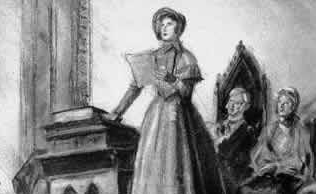
On July 19, 1848, a two-day Women’s Rights Convention opened in Seneca Falls, New York.

Categories
Thought

Camille Paglia

‘Ms.’ took time to be absorbed. But this political agitation to change common speech: are you kidding me? People shouldn’t be putting up with this for one second. What kind of nonsense is this? Absolute nonsense. These people who are searching for their identit[ies], and want to impose on others? That’s not my philosophy as a libertarian. That is an invasion and an intrusion into other people’s personal rights. Excuse us, the English language is owned by everyone; it was created by great artists — Chaucer and Shakespeare and Wordsworth and Joyce, and so on. How dare you, you sniveling little maniac[s], tell us how we’re going to use pronouns!


Camille Paglia, on being asked about Prof. Jordan Peterson’s refusal to use modish pronouns for those who have concocted new gender identities, and about Canada’s Bill C-16, which would enforce the use of such pronouns, treating refusal as “hate speech.” (A few “OKs” and “You knows” removed.)

Categories
Today

Secret Ballot

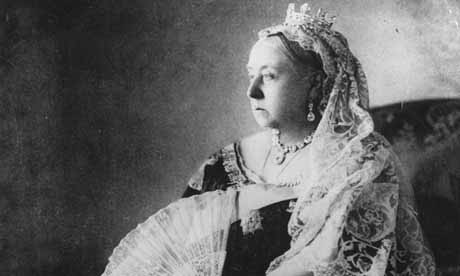
On July 18, 1872, Queen Victoria gave her “Royal Assent” to the Ballot Act, which established secret voting in Great Britain. The bill had been introduced by Prime Minister William Ewart Gladstone — one of the queen’s least favorite prime ministers.

Categories
Thought

Jordan Peterson

The alternative to negotiation is war. And that happens at the individual level and at the social level. If you can’t talk to people and you have a difference of opinion with them, then they’re your enemies. And combative speech is the replacement for actual combat. Real speech is very troublesome and difficult because it can unglue people psychologically. Better that then actual violence. Or, it’s partly: better that than tyranny and slavery — because those are really the alternatives.


Jordan Peterson, on the Mark Steyn Show, discussing the current attacks on free speech.

Categories
Thought

Will Rogers

There’s no trick to being a humorist when you have the whole government working for you.

Categories
links

Townhall: The ‘Victory Problem’ in Afghanistan

Where is there an end to it? Time to rethink. Begin at Townhall, then come back here.


Yahoo News: Trump faces a ‘victory problem’ in Afghanistan

Newsweek: Panetta’s Memoir Blasts Obama on His Leadership, Blames Him for State of Iraq and Syria

Donald J. Trump Tweet (2013): “Let’s get out of Afghanistan”

Donald J. Trump on YouTube (2016): Get out of Afghanistan

https://youtu.be/Z-41lk435WY

CNN: Gary Johnson – Get out of Afghanistan

Washington Post: Leon Panetta: Obama has ‘lost his way,’ created ‘vacuum’ for Islamic State

http://dailycaller.com/2017/05/08/taliban-controls-one-third-of-afghan-population-as-trump-considers-sending-more-troops/

Military Times: A timeline of U.S. troop levels in Afghanistan since 2001

MSNBC: On Assignment with Richard Engel about Iraq


Categories
Thought

Sarah Grimké

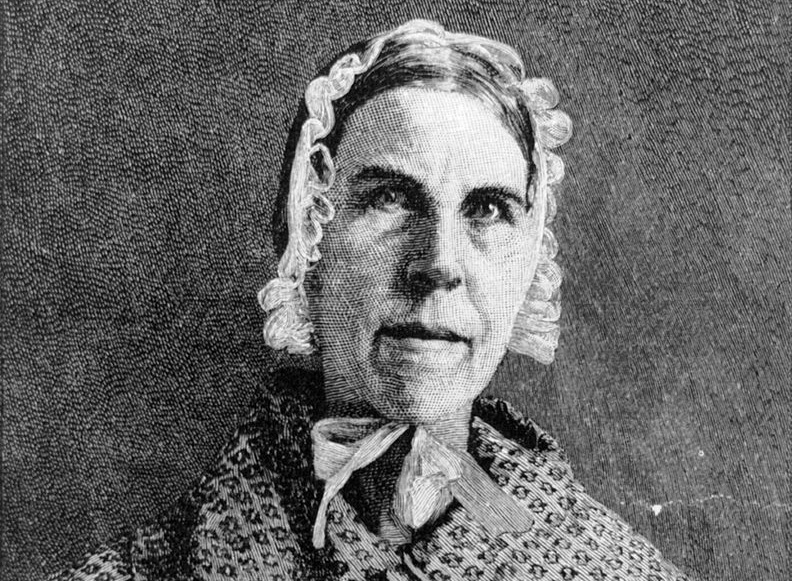
Had Adam tenderly reproved his wife, and endeavored to lead her to repentance instead of sharing in her guilt, I should be much more ready to accord to man that superiority which he claims; but as the facts stand disclosed by the sacred historian, it appears to me that to say the least, there was as much weakness exhibited by Adam as by Eve. They both fell from innocence, and consequently from happiness, but not from equality.

Categories
Today

Ethiopia

On July 16, 1931, Ethiopia’s Emperor Haille Selassie I signed a new Constitution. Not exactly a model of limited government, the new document proved that the emperor was in keeping with the time, which was a period of weakening constitutional limits in America, Europe, and Britain. A flavor of the document can be gained by its most “rights-oriented” measures:

Art. 22. Within the limits laid down by the law, Ethiopian subjects have the right to pass freely from one place to the other.
Art. 23. No Ethiopian subject may be arrested, sentenced, or imprisoned except in pursuance of the law.
Art. 24. No Ethiopian subject may, against his will, be deprived of his right to be tried by a legally established court.
Art. 25. Except in cases provided for by law, no domiciliary searches may be made.
Art. 26. Except in cases provided by the law, no one shall have the right to violate the secrecy of the correspondence of Ethiopian subjects.
Art. 27. Except in cases of public necessity determined by the law, no one shall have the right to deprive an Ethiopian subject of any movable or landed property which he owns.Art. 28. All Ethiopian subjects have the right to present to the Government petitions in legal form.
Art. 29. The provisions of the present chapter shall in no way limit the measures which the Emperor, by virtue of his supreme power, may take in the event of war or public misfortunes menacing the interests of the nation.