On July 28, 1868, the 14th Amendment to the Constitution of the United States was certified.
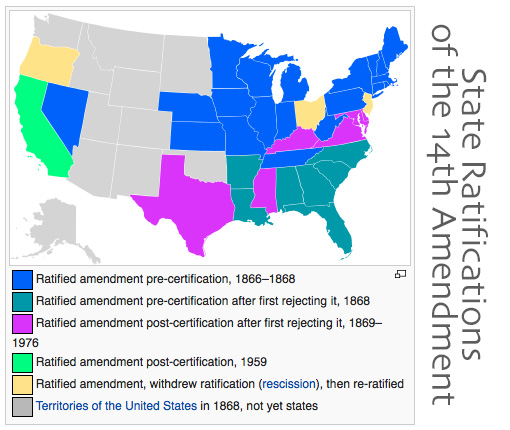

On July 28, 1868, the 14th Amendment to the Constitution of the United States was certified.
One of the chief charms of Political Economy is the open secret, that it deals not with rigidities and inflexible qualities and mathematical quantities and the unchanging laws of matter, but with the billowy play of desires and estimates and purposes and satisfactions, all of which are mental states, and all of which are subject in the general to ascertainable laws, though laws of a quite different kind from those of Mechanics. Values come and they go. Within certain limits and under certain conditions they may be anticipated and even predicted, but never with the precision of an eclipse or the result of a known chemical combination.
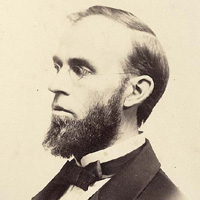
Arthur Latham Perry, LL.D., Principles of Political Economy (1891)

During recent years a number of pseudo-economists have indulged in much glibness about the passing of the ‘economy of scarcity’ and the arrival of the ‘economy of abundance.’ Sophistry of this sort has claimed the public ear far too long; it is high time that the speciousness of such fantastic views be clearly and definitely exposed. Attention needs to be focused on the hard elementary fact that man’s darkest curse has ever been his poverty, and that it yet is and promises to continue so for numberless generations. No economist worthy of the name, moreover, should need to be reminded that in the absence of “scarcity” there would be no system of ‘economy’ and no ‘science of economics.’
C.A. Phillips, T.F. McManus, and R.W. Nelson Banking and the Business Cycle: A Study of the Great Depression in the United States (Laissez Faire Books, 2014), originally published 1937.

July 27 births include that of Samuel Smith (1872; pictured), an American who served as a captain, major, and lieutenant colonel in the Continental Army,  and later as a politician in several capacities in the state of Maryland; Hillaire Belloc (1870), author of a classic analysis of modern political governance, The Servile State; and American singer and songwriter Bobbie Gentry (1944).
On July 27, 1694, the Bank of England received a royal charter, beginning a long history of central banking in England. Subsequent inflationary booms and deflationary busts are subsequently considered “mysterious” by people connected with the bank.
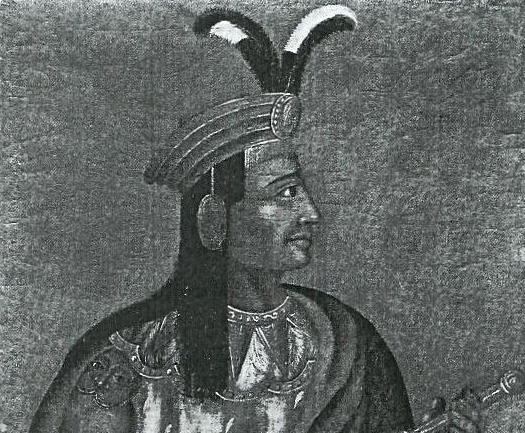
On July 26, 1533, Francisco Pizarro’s Spanish conquistadors strangled to death Atahualpa, the 13th and last emperor of the Incas, thereby ending 300 years of Inca civilization. The conquistadors were greedy and murderous, but the Inca civilization, arguably, was worse: totalitarian and radically inegalitarian. But they made great high-mountain roads. (Arguments about infrastructure promoted by Big Government continue to this very day.)
On this day in 1948, U.S. President Harry S. Truman signed Executive Order 9981 desegregating the U.S. military.
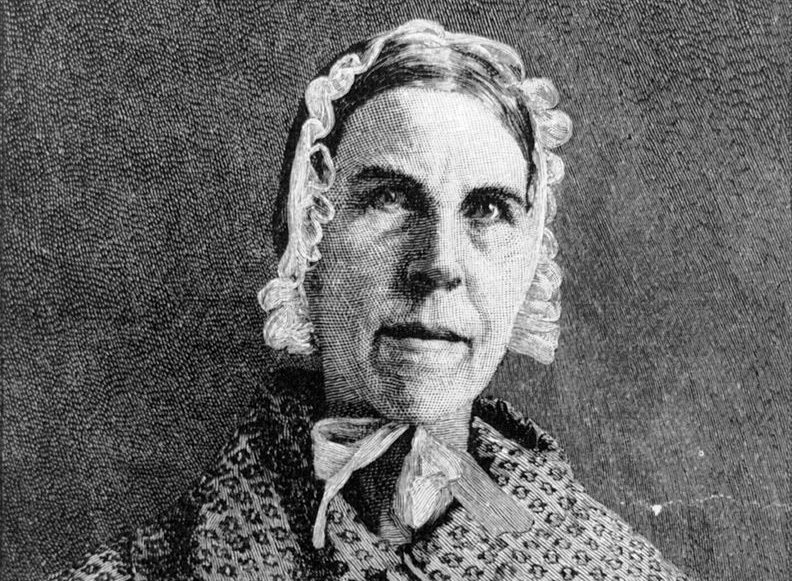
The system of slavery is necessarily cruel. The lust of dominion inevitably produces hardness of heart, because the state of mind which craves unlimited power, such as slavery confers, involves a desire to use that power, and although I know there are exceptions to the exercise of barbarity on the bodies of slaves, I maintain that there can be no exceptions to the exercise of the most soul-withering cruelty on the minds of the enslaved. All around is the mighty ruin of intellect, the appalling spectacle of the down-trodden image of God.
Sarah M. Grimké, from An Epistle to the Clergy of the Southern States, New-York, 12th Mo. 1836.

The mental action by which from moment to moment we thus, in ways commonly too rapid to observe, class the objects and acts around, and regulate our conduct accordingly, has been otherwise named by some, and especially by Professor Bain, ‘discrimination.’ Intelligence is, in its every act, carried on by discrimination; and has advanced from its lowest stages to its highest by increasing powers of discrimination. It has done this for the sufficient reason that during the evolution of life under all its forms, increase of it has been furthered by practice or habit as well as by survival of the fittest; since good discrimination has been a means of saving life, and lack of it a cause of losing life.
Herbert Spencer, Principles of Ethics, Vol. 2, Part V: “Negative Beneficence” (1893), Chapter 1: “The Kinds of Altruism.”
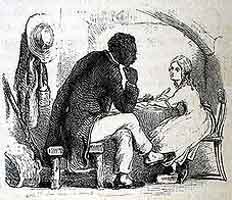
On July 25, 1861, the U.S. Congress passed the Crittenden-Johnson Resolution, stating that the war with the seceded states of the Confederacy was being fought to preserve the Union, not to end slavery.
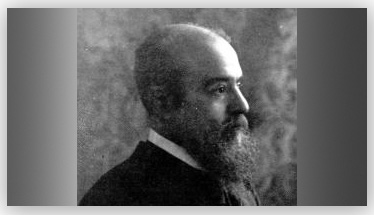
Social movements usually follow the line of least resistance. While the direct production of economic goods is often very hard, taking possession of those goods produced by others is very easy. This facility has greatly increased from the moment when deprivation became possible through the law and not contrary to it.
Vilfredo Pareto, “Socialism and Freedom,” 1891.
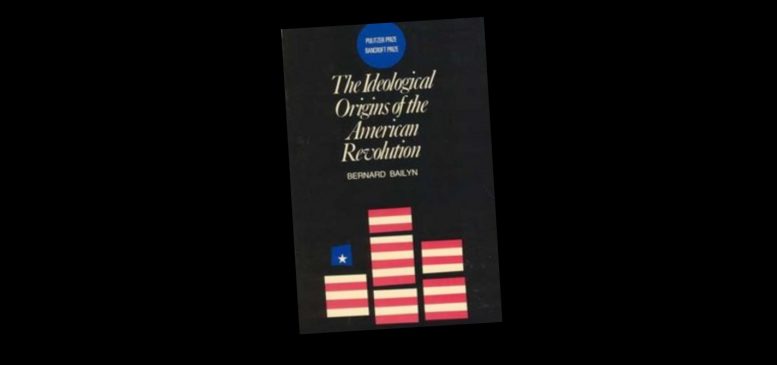
Whatever deficiencies the leaders of the American Revolution may have had, reticence, fortunately, was not one of them.
Bernard Bailyn, The Ideological Origins of the American Revolution, Chapter I, THE LITERATURE OF LIBERTY, p. 302.