The Declaration of Independence was signed by members of the Continental Congress of the United States, on August 2, 1776.
Categories
Declaration signed!
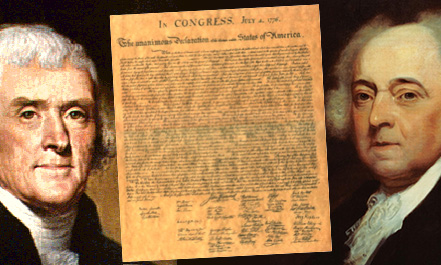
The Declaration of Independence was signed by members of the Continental Congress of the United States, on August 2, 1776.
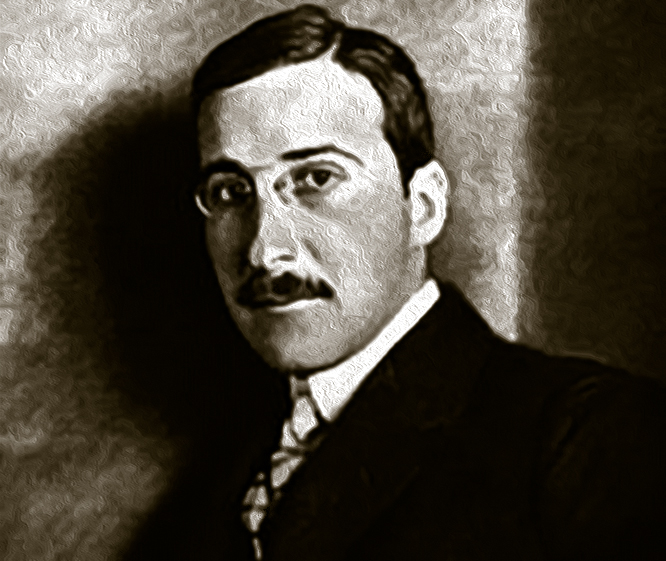
The organic fundamental error of humanism was that it desired to educate the common people (on whom it looked down) from its lofty stance instead of trying to understand them and to learn from them.
Stefan Zweig, Erasmus of Rotterdam, Marion Sonnenfeld, translator (1934)
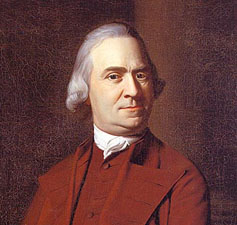
If ye love wealth better than liberty, the tranquility of servitude better than the animating contest of freedom, go home from us in peace. We ask not your counsels or arms. Crouch down and lick the hands which feed you. May your chains set lightly upon you, and may posterity forget that ye were our countrymen.
Samuel Adams, speech, Philadelphia State House (August 1, 1776)
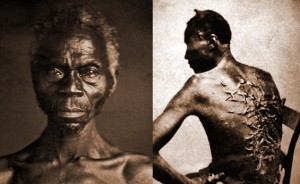
On August 1, 1834, Great Britain’s Slavery Abolition Act of 1833 took force, freeing slaves throughout the British empire.
Technically, it freed slaves under the age of six. On the August 1 date in 1838 and 1840, the rest of the empire’s slaves were freed, practically speaking.
August 1 births include Francis Scott Key (1779), composer of the poem “The Star-Spangled Banner”; American authors Richard Henry Dana, Jr. (1815) and Herman Melville (1819); and Thomas E. Woods, Jr. (1972), historian and popularizer of Austrian economics, podcaster of the Tom Woods Show.
When a man is treated like a beast, he says, ‘After all, I’m human.’ When he behaves like a beast, he says ‘After all, I’m only human.’

On July 31, 1703, Daniel Defoe — who would later become famous as the author of Robinson Crusoe and other literary works — was placed in a pillory for the crime of seditious libel. The sedition pertained to a satirical pamphlet he had published, “The Shortest-Way with the Dissenters; Or, Proposals for the Establishment of the Church.” The mob pelted him with flowers.
On the same date in 1912, Milton Friedman was born. Friedman became one of the most influential economists of the 20th century, and one of the most effective advocates of free markets, as well. His books include Capitalism and Freedom and two famous collaborations, A Monetary History of the United States (with Anna Schwartz) and Free to Choose (with his wife, Rose Friedman).

A funereal note for a baby in Britain, a death knell for socialized medicine in America? See Townhall, click on over; then come back here.
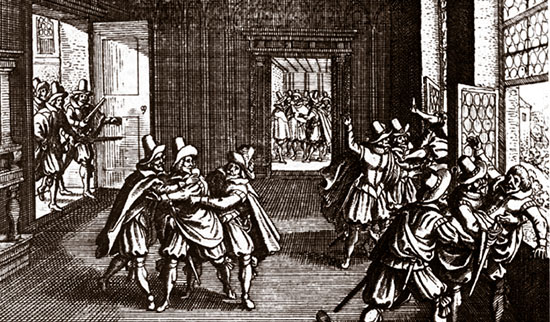
July 30, 1419, the First Defenestration of Prague: Jan Želivský, a Hussite priest at the church of the Virgin Mary of the Snows, led his congregation on a procession through the streets of Prague to the New Town Hall, on Charles Square. While they were marching, a stone was thrown at Želivský from the window of the town hall. The mob, enraged, stormed the hall. Once inside, the group threw the judge, the burgomaster, and some thirteen members of the town council out of the window and into the street, where they were killed by the fall or dispatched by the mob.
King Wenceslaus IV of Bohemia, upon hearing this news, was so stunned, the legend goes, that he died soon after.
On July 30, 1619, the first representative assembly in the Americas, the House of Burgesses, convened for the first time in Jamestown, Virginia. On the same date in 1676, Nathaniel Bacon issued the “Declaration of the People of Virginia,” beginning Bacon’s Rebellion against the rule of Governor William Berkeley.
On this date in 1863, representatives of the United States and tribal leaders (including the Shoshone’s Chief Pocatello) signed the Treaty of Box Elder.
July 30 birthdays include Henry Ford (1863), Gen. Smedley Butler (1881), C. Northcote Parkinson (1909), and former California Governor Arnold Schwarzenegger (1947).
Vanuatuans celebrate Independence Day on July 30.

“Your social systems have to be large enough so they protect you but small enough that you have a place in them.” Professor Peterson on globalism:
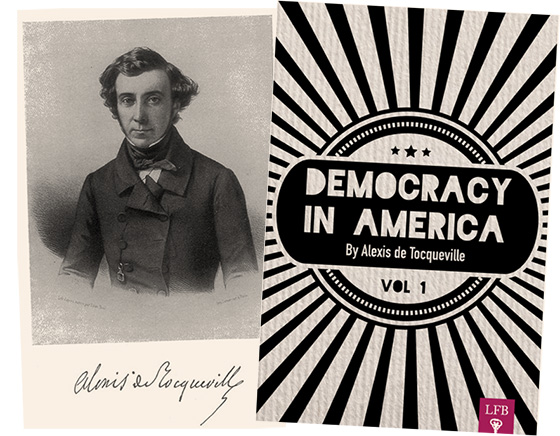
On July 29, 1805, Alexis de Tocqueville was born. His most famous book, Democracy in America (1835, 1840), quickly became a classic of social and political research and analysis, and remains the most important early book about the United States of America. He is often referred to as a founder of sociology as well as a major figure in the development of classical liberalism.