Categories
Thought

Herbert Spencer

When Edward I forbade all towns to harbour forestallers, and when Edward VI made it penal to buy grain for the purpose of selling it again, they were preventing the process by which consumption is adjusted to supply: they were doing all that could be done to insure alternations of abundance and starvation. Similarly with the many legislative attempts since made to regulate one branch or other of the food-industry, down to the corn-law sliding-scale of odious memory. For the marvellous efficiency of this organization we are indebted to private enterprise; while the derangements of it we owe to the positively-regulative action of the Government. Meanwhile, its negatively-regulative action, required to keep this organization in order, Government has not duly performed. A quick and costless remedy for breach of contract, when a trader sells, as the commodity asked for, what proves to be wholly or in part some other commodity, is still wanting.


Herbert Spencer, “Specialized Administration,” The Fortnightly Review(December 1871).

Categories
Thought

Philip K. Dick

Don’t try to solve serious matters in the middle of the night.


Philip K. Dick, “What The Dead Men Say” (1964).

Categories
Today

Slavery and Anti-Slavery in America

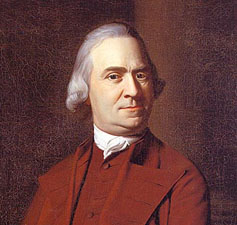
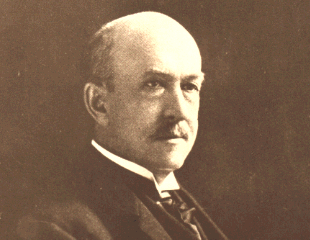
On March 8, 1775, “African Slavery In America,” the first known essay advocating the abolition of slavery in America, was published anonymously in the Pennsylvania Journal and the Weekly Advertiser. Thomas Paine (pictured) is believed to be the essay’s author.

The first anti-slavery society was formed in Philadelphia weeks after publication, and Paine was a founding member.

Exactly 120 years earlier, a court in Northampton County of the Virginia Colony ruled that John Casor, then working as an indentured servant to Robert Palmer, must be returned to Anthony Johnson as Johnson’s “lawful” slave for life. Ironically, Johnson was one of the original indentured servants brought to Jamestown, had completed his indenture to become a “free Negro” and the first African landowner in the colony. The case marked the first person of African descent to be legally-recognized as a lifelong slave in England‘s North American colonies. The first official chattel slave in English-speaking North America was of African descent, and was owned by a man also of African descent.


Centenary Dates:

The February Revolution began on February 23, 1917 (Old Style calendar: March 8 by modern reckoning), in Russia: Women calling for bread in Petrograd started riots, which spontaneously spread throughout the city.

On March 8, the United States Senate adopts the cloture rule in order to limit filibusters.

Categories
Thought

Herbert Spencer

If men use their liberty in such a way as to surrender their liberty, are they thereafter any the less slaves?


Herbert Spencer, “The New Toryism,” The Man Versus the State (1884).

Categories
Today

The First American Bicameral

On March 7, 1644, Massachusetts established the first two-chamber legislature in the American colonies.

One hundred thirty years later, to the day, British forces closed the port of Boston to all commerce.

Categories
Thought

John Hawks

‘Neanderthal’* is a bad word. It means . . . Well, you guys know what it means. It depends which political party you are, what it means, right?


* Pronounced with a soft th; John Hawks, explaining why the hominid Homo neanderthalensis should be pronounced with a ‘hard T’, “Are We the Last Neanderthals?” 24th Chicago Humanities Festival, Nov. 2, 2013.

Categories
Today

Lana Peters & others

On March 6, 1967, Soviet Premiere Joseph Stalin’s only daughter, Svetlana Alliluyeva, defected to the United States. (She later took the name Lana Peters, upon marriage to William Wesley Peters. The marriage was short-lived.)

| The March 6 date also marks term limits advocate and initiative organizer Paul Jacob’s birthday. He was born on the anniversary of the births of Michaelangelo, Cryano de Bergerac, and Alan Greenspan. He is also, obviously, the reason this site, ThisIsCommonSense.com, exists. (It continues, however, only through the continued support of readers like you.)

| On this day in 1820, the Missouri Compromise was signed into law by President James Monroe. The compromise allowed Missouri to enter the Union as a slave state, brought Maine into the Union as a free state, and made the rest of the northern part of the Louisiana Purchase territory slavery-free.

Categories
links

Townhall: Cowards Clapping for Courage

The new president delivered a fairly successful first address before Congress. But it was not without its problems. One big one serves as this weekend’s subject at Townhall. Click on over, then come back here.

https://youtu.be/QN1tjLs777s

Categories
Today

A Banned Book

On March 5, 1616, Nicolaus Copernicus’s book, De revolutionibus orbium coelestium, was placed on the Catholic Church’s Index of Forbidden Books. This censorship notwithstanding, the Earth continued to revolve around the Sun. The book had been first published in 1543 in Nuremberg.

| In 1770, the Boston Massacre took place on March 5.

| March 5 is magician Penn Jillette’s birthday. He turns 62 today, beginning his 63rd year of life.

Categories
Thought

Brion McClanahan

What kind of press do we need or want? A fair and objective press? No. We need a free and independent press, and modern media has gone the way of the 18th and 19th centuries. That is a good thing.


Brion McClanahan, “Fake News,” The Brion McClanahan Show, March 2, 2017 (on how Internet media is bringing news back to its honest and openly partisan origins … and why Tom Brokaw is a pompous, know-nothing windbag)