Polling data and conclusions:
What We Want (From the Police, The Pols)
Polling data and conclusions:
On March 4, 1789, the first bicameral Congress of the United States met in New York, New York, in accordance with the new Constitution.
Two years later on the same date, Vermont was admitted as the fourteenth state of the union.
In a twist in World War II allegiances, Finland declared war on Nazi Germany on March 4, 1945, beginning the Lapland War.
I do not wish women to have power over men; but over themselves.
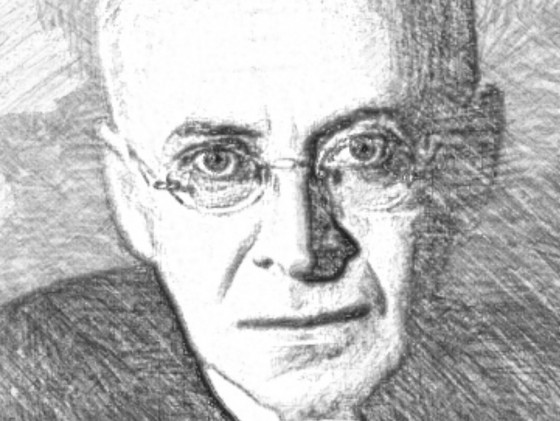
Mary Wollstonecraft Shelley, detail (above) of a portrait by Richard Rothwell, oil on canvas, first exhibited 1840.
On March 3, 1991, an amateur videographer captured the beating of Rodney King by Los Angeles police officers, thus ushering in the age of citizen surveillance of the state.
That’s the beauty of the Web: You can roll around in a stranger’s obsession without having to smell his or her house. You can amscray whenever you want without being rude. The site gets its ‘hit’ and you know more about our species’ diversity.
Penn Jillette, “Free Celebrity Nudes!” in Penn’s Columns (15 October 1997) at Penn & Teller.com.
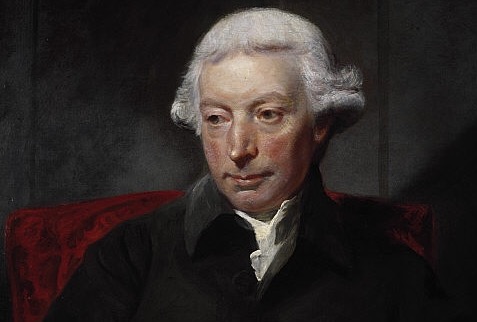
All judges had rather that ten innocent should suffer than that one guilty should escape.
Mary Wollstonecraft Shelley, Victor Frankenstein of Justine Moritz in Frankenstein; or, The Modern Prometheus (1818), Ch. 8
On March 2, 1793, Sam Houston was born.
On March 2, 1926, American economist and political theorist Murray N. Rothbard was born.
As President of the Republic of Texas, Houston cut the size of the Republic’s budget by a whopping amount, including selling the navy for scrap. Rothbard theorized about even more daring — and more permanent — cuts to (and limits upon) government.
On March 2, 1781, the Second Continental Congress convened as the new Congress of the Confederation, under the Articles of Confederation, ratified the day before. The congress elected no new president upon adoption of the Articles. This Confederation Congress oversaw the conclusion of the American Revolution.
March 1st Firsts (and a 17th and a 37th):
| The first United States census was authorized, in 1790.
| Ohio was admitted as the 17th U.S. state, in 1803.
| President John Tyler [pictured above] signed a bill authorizing the United States to annex the Republic of Texas, in 1845.
| The state of Michigan formally abolished capital punishment, 1847.
| Nebraska became the 37th of the United States, in 1867.
| Yellowstone National Park was established as the world’s first national park, 1872.
On March 1, 1781, the Continental Congress of the United States adopted the Articles of Confederation. With this, the governing body became known, officially, as United States of America in Congress Assembled, less officially as the Congress of the Confederation. The first session of this newly styled Confederation Congress took over without a break from the Second Continental Congress, adjourning on November 3. Samuel Huntington and Thomas McKean served as presidents during this first session.
[O]ver two-thirds of the railways of the world belong to private companies. Moreover, of the 24,500 miles of railway belonging to the state of British India, 18,000 miles are operated by private companies. In Holland all the lines are operated by companies. In Belgium the tramway lines are longer than the state railways, and they are operated by private companies. Lines in Great Britain, which have three, four, or even more tracks, are included in these figures on the line and not the track basis. The total length of line is 23,287 miles. The length of main track, however, is 39,851 miles, and of main track and sidings, 54,311 miles.
The greatest system in the world, that of the United States, is owned by private companies. Mr. Bryan, on returning from Europe in 1903, introduced nationalization of railways into his platform, without informing any of the members of the Democratic party of his intention. This brilliant inspiration helped to destroy his chances for the presidency.
The operating ratios suffice to show that superior administrative capacity is not to be found on the side of the several states which exercise it in this direction.
Yves Guyot, Where and Why Public Ownership Has Failed, Book II: Financial Results of Government and Municipal Ownership; Chapter IX, Public vs. Private Operation” (American edition, 1913).
On February 28, 1646, Roger Scott, of Lynn, Massachusetts, was tried for sleeping in church. Awakened in church by a tithingman’s long, knobbed staff hitting him on the head, he struck back at the man, and garnered a whipping as punishment, as well as the dark designation as “a common sleeper at the publick exercise.”