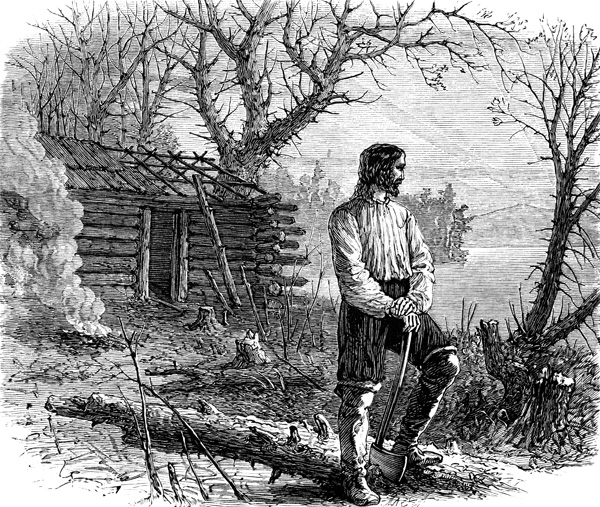
On May 4, 1796, American historian William H. Prescott was born. Prescott’s History of the Conquest of Mexico and his Conquest of Peru remain classic works of well-researched, ”scientific history.” Prescott, Arizona, was named in his honor.
In 1791, the Constitution of May 3, the first modern constitution in Europe, was proclaimed by the Sejm of the Polish–Lithuanian Commonwealth.
On May 3 in 1915, Lieutenant Colonel John McCrae composed the poem “In Flanders Fields.”
In Flanders fields the poppies blow
Between the crosses, row on row,
That mark our place; and in the sky
The larks, still bravely singing, fly
Scarce heard amid the guns below.We are the Dead. Short days ago
We lived, felt dawn, saw sunset glow,
Loved and were loved, and now we lie
In Flanders fields.Take up our quarrel with the foe:
To you from failing hands we throw
The torch; be yours to hold it high.
If ye break faith with us who die
We shall not sleep, though poppies grow
In Flanders fields.
The tragedy of fascism and Nazism should have taught us that totalitarianism establishes itself through banal men, and the true antidote is a religion that prevents one from adoring men who pretend to be gods, for it teaches us to love instead the inner God of moral conscience, and to defend liberty with absolute devotion.
Maurizio Viroli, As If God Existed: Religion and Liberty in the History of Italy (Princeton University Press, 2012).
On May 2, 1989, Hungary began dismantling its border fence with Austria, allowing a number of East Germans to defect.
Happily common sense, though she is by nature the gentlest creature living, when she feels the knife at her throat, is apt to develop unexpected powers of resistance, and to send doctrinaires flying, even when they have bound her down and think they have her at their mercy.
Samuel Butler, Erewhon (1872), chapter 26.
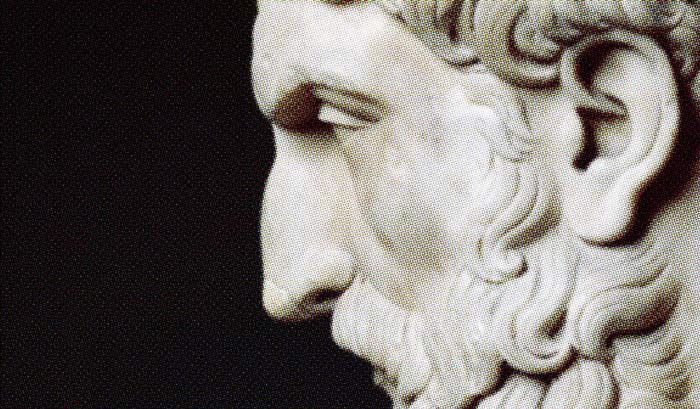
The Manifesto of the Anti-Fascist Intellectuals, written by philosopher Benedetto Croce [pictured, above] in response to the Manifesto of the Fascist Intellectuals by Giovanni Gentile, sanctioned the unreconcilable split between the philosopher and the Fascist government of Benito Mussolini, to which he had previously given a vote of confidence on October 31, 1922.
The manifesto was published by Il Mondo on May 1, 1925, which was Workers’ Day, symbolically responding to the publication of the Fascist manifesto on the Natale di Roma, the founding of Rome (celebrated on April 21). The Fascist press claimed that the Crocian manifesto was “more authoritarian” than its Fascist counterpart — a typical leftist dismissal of what used to be called “liberalism” — in Italian, liberismo — but which Croce dubbed liberism, to distinguish it from the dirigiste quasi-socialisms of self-described “liberals” of the time.
Strictly speaking, the mass, as a psychological fact, can be defined without waiting for individuals to appear in mass formation. In the presence of one individual we can decide whether he is ‘mass’ or not. The mass is all that which sets no value on itself — good or ill — based on specific grounds, but which feels itself ‘just like everybody,’ and nevertheless is not concerned about it; is, in fact, quite happy to feel itself as one with everybody else.
José Ortega y Gasset, The Revolt of the Masses, 1929.
Oh, what will we do? The socialists in the United Nations do not approve of an American policy proposal… Click on over to Townhall. Then come back here for more info:
Samuel Butler, describing the residents of the imagined southern hemispheric utopians in his satirical novel, Erewhon, 1872.
The main feature in their system is the prominence which they give to a study which I can only translate by the word ‘hypothetics.’ They argue thus — that to teach a boy merely the nature of the things which exist in the world around him, and about which he will have to be conversant during his whole life, would be giving him but a narrow and shallow conception of the universe, which it is urged might contain all manner of things which are not now to be found therein. To open his eyes to these possibilities, and so to prepare him for all sorts of emergencies, is the object of this system of hypothetics. To imagine a set of utterly strange and impossible contingencies, and require the youths to give intelligent answers to the questions that arise therefrom, is reckoned the fittest conceivable way of preparing them for the actual conduct of their affairs in after life.
On April 30, 1902, economist Theodore W. Schultz was born. His work studying the quick post-war recovery in Germany and Japan led to his development of “human capital theory,” explicated in many books, including Investing in People (1981). He was co-winner (with William Arthur Lewis) of the 1979 Alfred Nobel Memorial Prize in Economic Sciences. Schultz died in 1998.