Categories
Today

Pig War!

The Oregon Treaty, signed June 15, 1846, established the boundary between Great Britain’s Canadian territory and the United States of America, from the Rocky Mountains to the Strait of Juan de Fuca, using the 49th Parallel as the handy marker. However, the treaty was not exactly clear on the territorial status of the San Juan Islands, so exactly 13 years later, to the day, a war erupted . . . over a shot pig.

Basically, an American farmer shot a pig rooting through his garden. The pig belonged to an Irishman. The two did not agree upon compensation, and “the authorities” were called in, with infantry mustering from the south and the Governor of Vancouver Island instructing marines to land on San Juan Island — though the rear admiral in charge refused to comply with the order, on the reasonable grounds that war over a pig was not worth it. Local troops from both sides lined up against each other, but under command to defend themselves only and not shoot first. All that was exchanged in this war were insults. It turned out to be a bloodless war, discounting the pig, so it might qualify as the best war in American history.


On June 15, 1992, Vice President Dan Quayle incorrectly added an “e” to the end of a Trenton, N.J., sixth grader’s correctly spelled “potato.”

Categories
Thought

Ambrose Bierce

Conservative, n.
A statesman enamored of existing evils, as opposed to a Liberal, who wants to replace them with others.
Cynic, n.
A blackguard whose faulty vision sees things as they are, not as they ought to be. Hence the custom among the Scythians of plucking out a cynic’s eyes to improve his vision.
Egotist, n.
A person of low taste, more interested in himself than in me.
Idiot, n.
A member of a large and powerful tribe whose influence in human affairs has always been dominant and controlling. The Idiot’s activity is not confined to any special field of thought or action, but “pervades and regulates the whole.” He has the last word in everything; his decision is unappealable. He sets the fashions and opinion of taste, dictates the limitations of speech and circumscribes conduct with a dead-line.
Mayonnaise, n.
One of the sauces that serve the French in place of a state religion.
Once, adj.
Enough.

Ambrose Bierce, The Devil’s Dictionary (1911)

Categories
Today

Stars and Stripes

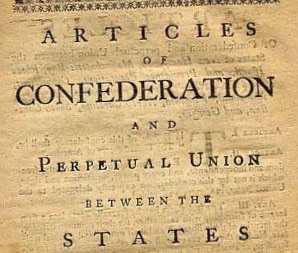
On June 14, 1777, U.S. Congress adopted the Stars and Stripes as the United States Flag.

Categories
Thought

John H. Cochrane

Any time economists start telling you to pass complex regulations to enforce morality, run in the opposite direction. The Obama administration had something with the idea of ‘science-based’ policy. At least let’s get the cause and effect science right before we start making moral claims.


John H. Cochrane, “NoahLogic,” The Grumpy Economist, June 4, 2017

Categories
Today

Anti-slavery

On June 13, 1774, Rhode Island became the first British colony in the Americas to prohibit the importation of slaves.

Categories
Thought

Jean-Baptiste Say

The best scheme of finance is, to spend as little as possible; and the best tax is always the lightest.

Categories
Today

Rights

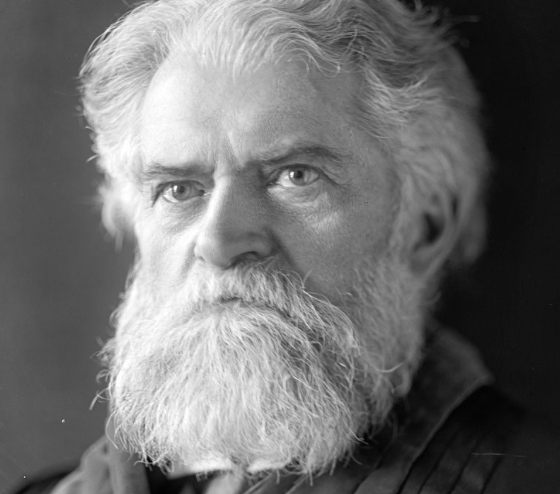
In 1776, on June 12, the Fifth Virginia Convention at Williamsburg, Virginia, unanimously adopted a Declaration of Rights, several weeks prior to the adoption of the state’s constitution. George Mason (pictured above), who drafted the document, stated clearly in the preamble that rights must be “the basis and foundation of Government.”

The first four planks run as follows:

I. That all men are by nature equally free and independent, and have certain inherent rights, of which, when they enter into a state of society, they cannot, by any compact, deprive or divest their posterity; namely, the enjoyment of life and liberty, with the means of acquiring and possessing property, and pursuing and obtaining happiness and safety.

II. That all power is vested in, and consequently derived from, the people; that magistrates are their trustees and servants, and at all times amenable to them.

III. That government is, or ought to be, instituted for the common benefit, protection, and security of the people, nation or community; of all the various modes and forms of government that is best, which is capable of producing the greatest degree of happiness and safety and is most effectually secured against the danger of maladministration; and that, whenever any government shall be found inadequate or contrary to these purposes, a majority of the community hath an indubitable, unalienable, and indefeasible right to reform, alter or abolish it, in such manner as shall be judged most conducive to the public weal.

IV. That no man, or set of men, are entitled to exclusive or separate emoluments or privileges from the community, but in consideration of public services; which, not being descendible, neither ought the offices of magistrate, legislator, or judge be hereditary.

Categories
links

Townhall: They United Against Insiders and Won

“The requirement being proposed by the Constitutional Revision and Review Committee,” M. Dane Waters, a scholar of initiative and referendum processes, testified, “would make Ohio a lonely outlier both in this country and around the world.” And he wasn’t alone to oppose the committee appointed by the Ohio Legislature. In written testimony, for example, Pete Sepp, president of the National Taxpayers Union expressed “great concern” that “the Commission was considering a recommendation that would effectively create second-class ballot measure rights for the people of Ohio.”

This weekend at Townhall.com, Paul Jacob tells the tale of a successful, trans-partisan defense of initiative and referendum rights in the Buckeye State. Click on over. Learn why former State Representative John Adams quipped, “My past service in the legislature has taught me many things — one of those would be not to trust and definitely to verify.”

Footnote in the article:

* The tabling of the recommendation effectively killed it, because funding for the OCMC runs out at the end of this month and a House bill to fund state government contains no new appropriation for the commission established by the Ohio General Assembly.

Outbound Links:

Categories
Thought

Marianne Williamson

Our deepest fear is not that we are inadequate. Our deepest fear is that we are powerful beyond measure. It is our light, not our darkness that most frightens us. We ask ourselves, Who am I to be brilliant, gorgeous, talented, fabulous? Actually, who are you not to be? You are a child of God. Your playing small does not serve the world. There is nothing enlightened about shrinking so that other people won’t feel insecure around you. We are all meant to shine, as children do. We were born to make manifest the glory of God that is within us. It’s not just in some of us; it’s in everyone. And as we let our own light shine, we unconsciously give other people permission to do the same. As we are liberated from our own fear, our presence automatically liberates others.


Marianne Williamson, A Return to Love: Reflections on the Principles of “A Course in Miracles,” Ch. 7, Section 3 (1992), p. 190

Categories
Today

Declarations

On June 11, 1776, the Continental Congress appointed John Adams, Benjamin Franklin, Thomas Jefferson, Robert R. Livingston, and Roger Sherman to draft a declaration of independence from Great Britain.

In 1963, Thich Quang Duc, a Buddhist monk, doused himself with gasoline and set himself aflame in a busy Saigon intersection as a protest against South Vietnam’s lack of religious freedom.