Categories
Today

Term Limits and the Selma March

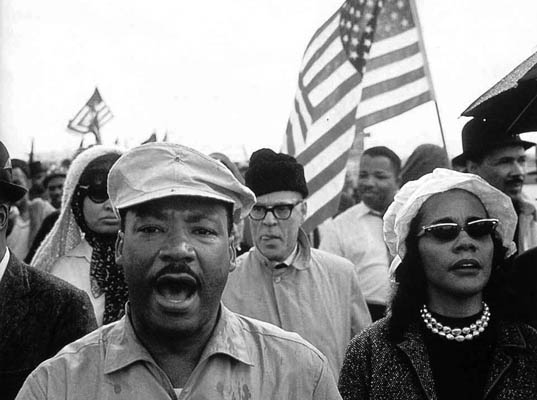
On March 21, 1965, Dr. Martin Luther King, Jr. led 3,200 people on the start of the third and finally successful civil rights march from Selma to Montgomery, Alabama.

Nearly two decades earlier, the Twenty-second Amendment (Amendment XXII) of the United States Constitution, passed Congress. The date was March 21, 1947. The amendment, ratified on February 27, 1951, set a term limit for election and overall time of service to the office of President of the United States. This was an obvious reaction to Franklin Delano Roosevelt’s more than three terms in office.

The first section of the amendment reads as follows:

No person shall be elected to the office of the President more than twice, and no person who has held the office of President, or acted as President, for more than two years of a term to which some other person was elected President shall be elected to the office of the President more than once. But this Article shall not apply to any person holding the office of President, when this Article was proposed by the Congress, and shall not prevent any person who may be holding the office of President, or acting as President, during the term within which this Article becomes operative from holding the office of President or acting as President during the remainder of such term.
Categories
Today

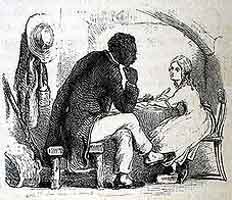
Uncle Tom’s Cabin

On March 20, 1852, Harriet Beecher Stowe’s anti-slavery novel Uncle Tom’s Cabin was published.

Categories
Thought

Herbert Spencer

A stronger affection to be displayed by child for parent in later life, must be established by a closer intimacy between parent and child in early life. . . . When the minds of children are no longer stunted and deformed by the mechanical lessons of stupid teachers — when instruction, instead of giving mutual pain gives mutual pleasure, by ministering in proper order to faculties which are eager to appropriate fit conceptions presented in fit forms — when among adults wide-spread knowledge is joined with rational ideas of teaching, at the same time that in the young there is an easy unfolding of the mind such as is even now shown by exceptional facility of acquisition — when the earlier stages of education passed through in the domestic circle have come to yield, as they will in ways scarcely dreamed of at present, daily occasions for the strengthening of sympathy, intellectual and moral, then will the latter days of life be smoothed by a greater filial care, reciprocating the greater parental care bestowed in earlier life.

Categories
Today

House of Lords

On March 19, 1649, England’s House of Commons passed an act abolishing the House of Lords, declaring it “useless and dangerous to the people of England.”

This was during Oliver Cromwell’s rule as Lord Protector, after the execution of Charles I. The House of Lords did not again meet until the Convention Parliament of 1660, under the Restoration of the monarchy.

Categories
Thought

Harriet Beecher Stowe

What makes saintliness in my view, as distinguished from ordinary goodness, is a certain quality of magnanimity and greatness of soul that brings life within the circle of the heroic.

Categories
links

Townhall: Career, No Career (A Tale of Two Pols)

What does it take to make a difference in politics? Is the thirteenth year the magic number, or does time in office guarantee nothing but corruption?

Click on over to Townhall. Come back here for more information and perspective.

Learning Curve Pol

This column will appear on this site on Tuesday, March 20.

Categories
Today

Hawaii

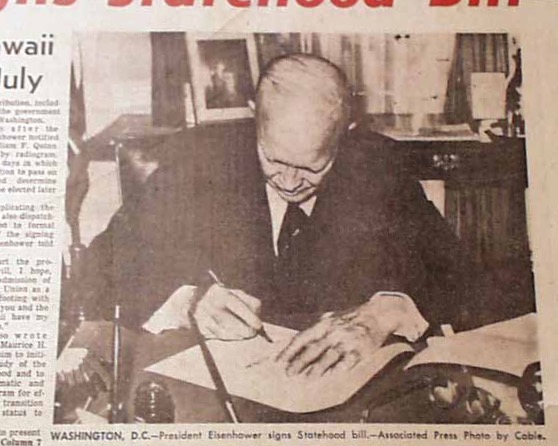
On March 18, 1959, President Dwight D. Eisenhower signed a bill enabling Hawaii to become the 50th state in the Union. The official day of statehood was set for (and became) August 21 of that year.

The statehood signing occurred exactly 85 years after The Kingdom of Hawaii formalized its treaty with the U. S. establishing exclusive trading rights.

Categories
video

“The Family Makes Us Free”

Ezra Levant and Andrew Klavan chat about anti-family indoctrination:

Categories
Thought

Herbert Spencer

We have seen that the militant type of social structure is based on the principle of compulsory co-operation, while the industrial type of social structure is based on the principle of voluntary co-operation. Now it is clear that plurality of wives, whether the wives are captured in war or purchased from their fathers regardless of their own wills, implies domestic rule of the compulsory type: the husband is tyrant and the wives are slaves. Conversely, the establishment of monogamy where fewer women are taken in war and fewer men lost in war, is accompanied by increased value of the individual woman; who, even when purchased, is therefore likely to be better treated. And when, with further advance, some power of choice is acquired by the woman, there is an approach to the voluntary co-operation which characterizes this marital relation in its highest form. The domestic despotism which polygyny involves, is congruous with the political despotism proper to predominant militancy; and the diminishing political coercion which naturally follows development of the industrial type, is congruous with the diminishing domestic coercion which naturally follows the accompanying development of monogamy.

Herbert SpencerPrinciples of Sociology, Vol. I, Part III: Domestic Institutions, Chapter IX: “The Family” (1898).

Categories
Today

Ronald Hamowy

April 17 marks the 1937 birth of Ronald Hamowy, Canadian historian, who first came to international prominence for his writings in the short-lived New Individualist Review. Hamowy died in 2012.