Categories
folly government transparency national politics & policies too much government

It’s Only Money

“If we can put a man on the moon,” went the old 1970s saw, we can do . . . well, fill in the blank.

Anything!

Man, can that “anything” get really expensive. And when promoters of big government drive the program, anything quickly serves as a first-stage rocket to everything.

During the 2016 campaign, a Democratic Party activist knocked on my door to express confidence that Democrats would provide greater healthcare benefits. “Can we afford that?” I asked.

The question caught her off-guard, but after reflecting on the affordability for a brief moment on my step, she decided, what the heck, surely the great “we” can swing it.

Vermont Senator Bernie Sanders, the conscience of the Democratic Party (that he refuses to join), likewise ponders healthcare. Sans cost, again, focusing exclusively on bestowing benefits. 

Sanders has introduced legislation mandating that the federal government provide Medicare for All.

Fortunately, the folks at the Mercatus Center at George Mason University are not so arithmetic-averse, calculating the price tag for the socialist senator’s bill to be a whopping $32.6 trillion (with a “t”) over ten years. 

In fiscal 2019, the U.S. Government plans to spend $4.4 trillion, borrowing a trillion dollars of that to keep the federal spigots spewing cash. So, Bernie suggests nearly doubling annual spending, placing a giant $3.3 trillion cherry on top of the current fiscal pig-out. 

And who in Washington has any credibility left to argue against the socialist urging evermore deficit spending on top of massive debt and gargantuan liabilities? 

President Trump? Republicans in Congress? The very architects of annual trillion-dollar deficits for the foreseeable future?

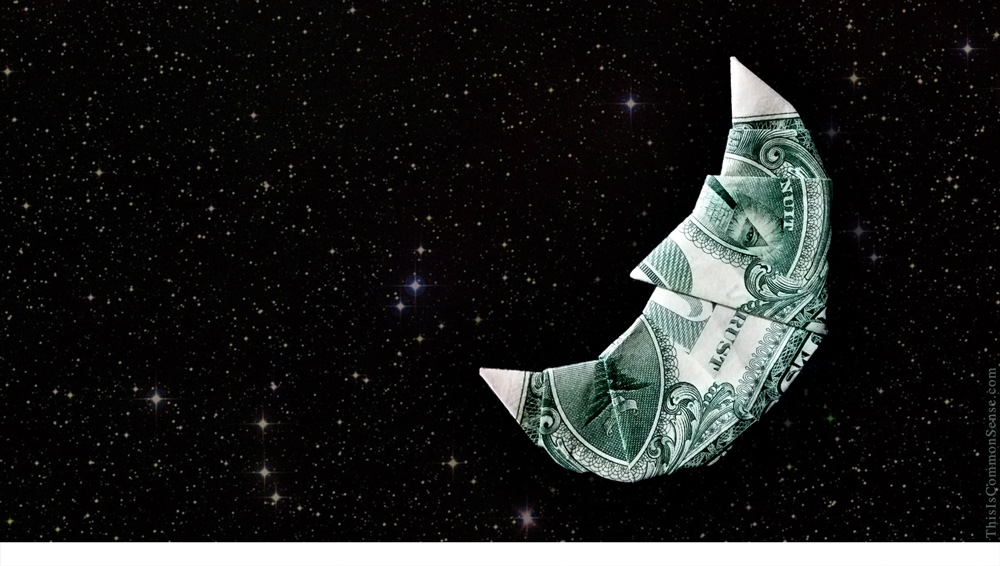
 That “lunacy” refers to the moon? Mere coincidence.

This is Common Sense. I’m Paul Jacob.


PDF for printing


Categories
Thought

Marcus Valerius Martialis

Conceal a flaw, and the world will imagine the worst.

Categories
Today

Purple Heart

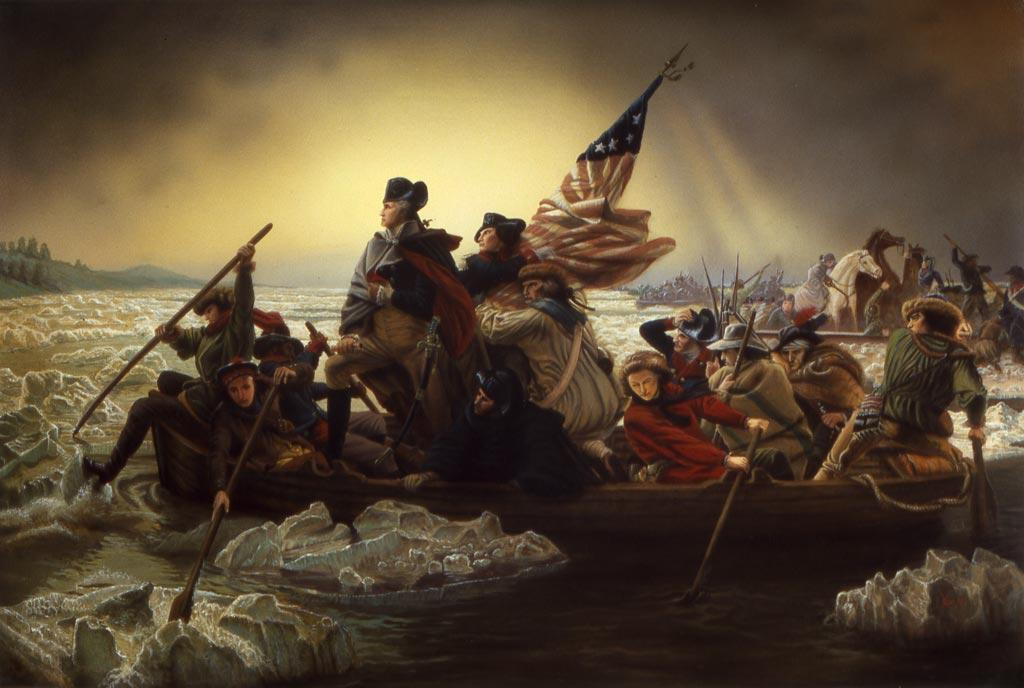
On August 7, 1782, George Washington instituted the Badge of Military Merit to honor soldiers wounded in battle, an award later renamed “the Purple Heart.”


Illustration: “Washington Crossing the Delaware,” Emanuel Leutze, 1851, Oil on canvas (Metropolitan Museum of Art, New York City), depicting an event in 1776, not 1782.

Categories
First Amendment rights general freedom ideological culture media and media people moral hazard

May Trigger Eye Rolling

The fashionable campus notion of “microaggressions” blurs the distinction between peaceful speech (offensive or not) and bashing somebody over the head with a club. 

If courts, police and/or university officials can rationalize regarding the perpetrator of a so-called “microaggression” as initiating force against an offended listener, they can also rationalize using actual physical force in retaliation. Which, to the extent implemented, would mean the end of freedom of speech. 

After all, nobody needs a First Amendment in order to utter banal pronouncements about the weather.

The allied campaign urging or requiring professors to issue “trigger warnings” before discussing anything that might provoke discomfort also dampens discourse. 

Who can object to letting viewers of TV news know that they are about to see a corpse? Or sending little kids out of the room when certain subjects are discussed? But is such common sense the point of “trigger warnings”?

At best, “trigger warnings” are a silly name for referring to what nobody seeks to keep secret. At worst, they help trigger distress themselves — or impede frank discussion of controversial subjects. The latter treats adults as if they were not adults; the former makes adults less adult. 

If and when “trigger warnings” are imposed by force, with penalties for omitting them, they also endanger freedom of speech.

Advocates of open discourse seem to be in an endless war with champions of a repressive political correctitude. The jabberwocky used to justify that repression keep evolving. The response must be constant: intellectual clarity and eternal vigilance.

This is Common Sense. I’m Paul Jacob.



PDF for printing


Categories
Today

Jamaican independence

On August 6, 1962, Jamaica became independent of Great Britain.

In 1991, on this date, Tim Berners-Lee released files describing his idea for the World Wide Web, and put up the first website, running on a NeXT computer at CERN, in France.

Tim Berners-Lee, pioneer of the World Wide Web, c 1990s.


Categories
Thought

Finley Peter Dunne (“Mr. Dooley”)

Comfort the afflicted, and afflict the comfortable.

Categories
links

Townhall: Their Turn Is a Falling Blade?

Ah, decapitation! Must it really be the next step?

Click over to Townhall, then come back here for the closest possible (safe) shave!

This column will appear on this site on Tuesday.

Categories
Today

Flogged, Founded, Fired

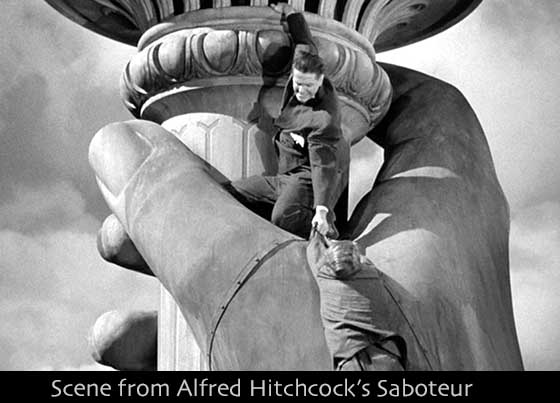
On August 5, 1861, the U.S. Army abolished flogging. The same day 23 years later, Bedloe’s Island in New York Harbor received the foundation stone for the Statue of Liberty (which was featured in the rousing conclusion to Alfred Hitchcock’s wartime picture, Saboteur). The island was later renamed Liberty Island.

President Ronald Reagan fired 11,359 striking air-traffic controllers (who had ignored his order for them to return to work) on August 5, 1981.

Categories
Thought

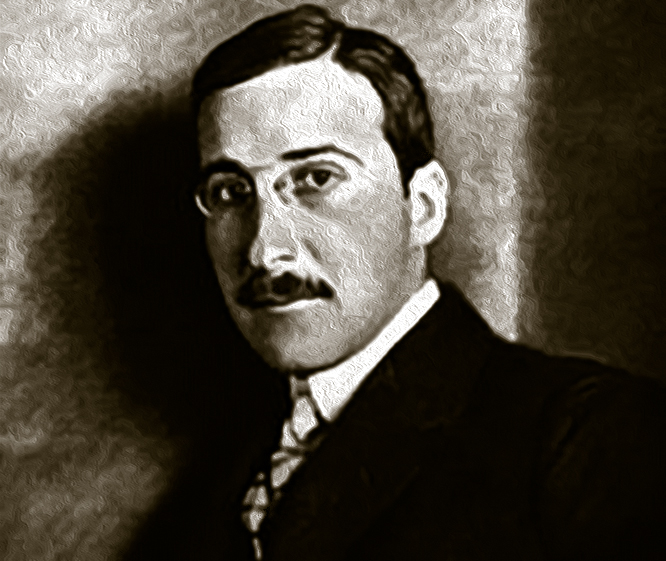
Stefan Zweig

The organic fundamental error of humanism was that it desired to educate the common people (on whom it looked down) from its lofty stance instead of trying to understand them and to learn from them.


Stefan Zweig, Erasmus of Rotterdam, Marion Sonnenfeld, translator (1934)

Categories
video

The Challenge of the Future

Charles Koch’s vision of what we face today, and will face in the near future — his case against fear: