Categories
Today

Free to Choose

On August 18, 1920, the Nineteenth Amendment to the United States Constitution was ratified, guaranteeing women’s suffrage.

Eighty-eight years later, Pakistan’s President, Pervez Musharaf resigned under threat of impeachment.

The next year, Rose Director Friedman, economist, wife of economist Milton Friedman, sister of economist Aaron Director and mother of economist David D. Friedman, died. With her husband she had written one of the most popular pro-liberty books of our time, Free to Choose. She had been born in late December, 1910, in Staryi Chortoryisk, in Ukraine, to the Director family, prominent Jewish residents.

With her husband she co-authored their memoirs, Milton and Rose D. Friedman, Two Lucky People, which appeared in 1998. Together they founded the Milton and Rose D. Friedman Foundation, with the aim of promoting the use of school vouchers and freedom of choice in education. She also helped produce the PBS television series, Free to Choose, and assisted her husband in writing his 1962 political philosophy book Capitalism and Freedom.
Categories
folly ideological culture too much government

Not So Great . . . Again

“We’re not going to make America great again,” New York Gov. Andrew Cuomo proclaimed at a bill-signing ceremony this week. And then, further poking the president, the governor added, to gasps from the audience: “It was never that great.”

America — for all its faults, failings, and wrongdoings — has been a tremendous force for good, for freedom. At the same time, talking about how great we are really seems . . . what’s the word? Boastful.

“We have not reached greatness,” Cuomo went on to clarify. “We will reach greatness when every American is fully engaged. We will reach greatness when discrimination and stereotyping against women, 51 percent of our population, is gone and every woman’s full potential is realized and unleashed and every woman is making her full contribution.”

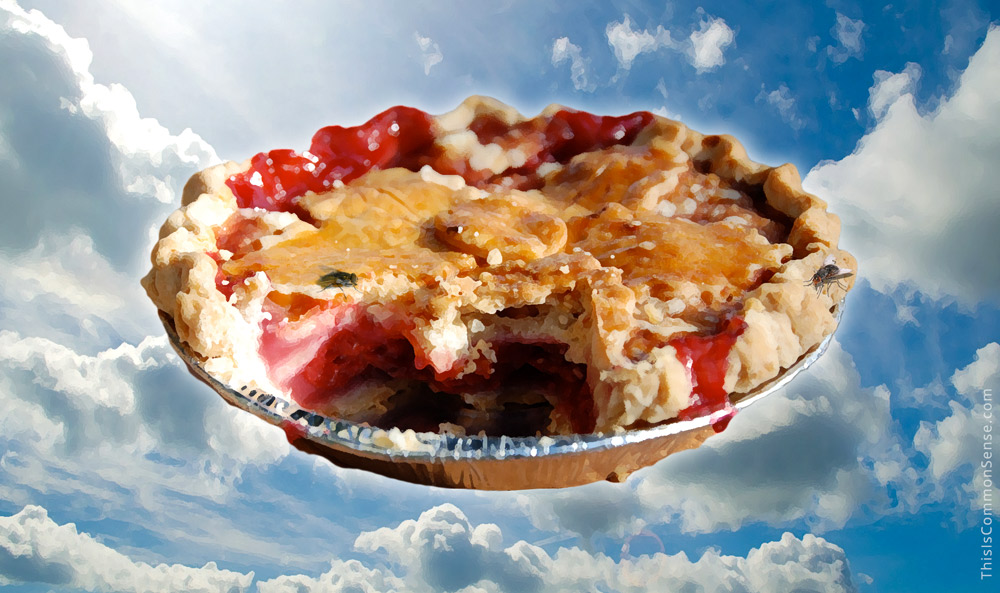
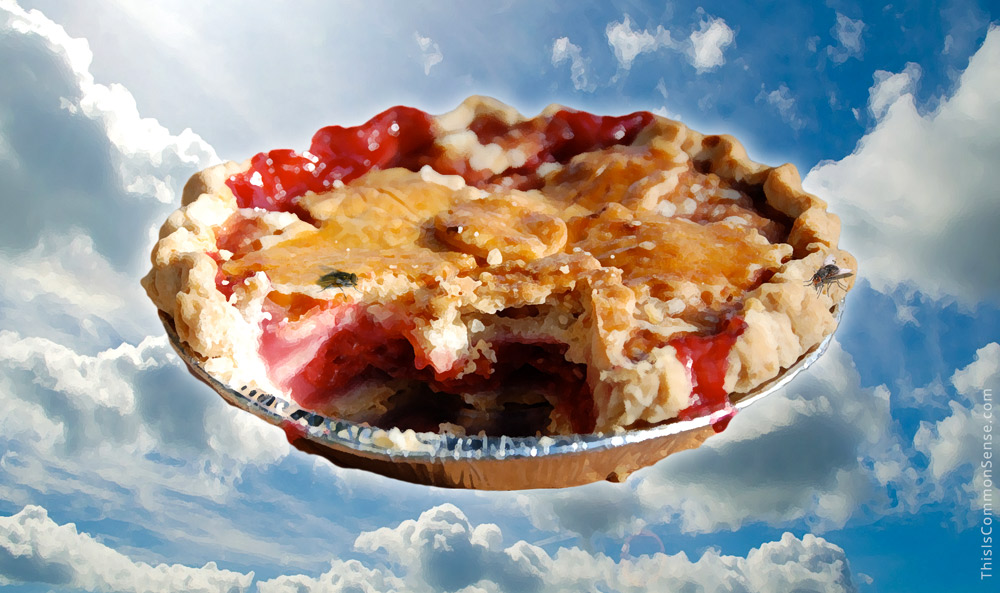
This is pie-in-the-sky stuff. Utopianism. The state government of New York is not going to succeed — or even actually try — to “engage” every citizen “fully.” Neither will the Empire State help “every” female New Yorker to self-actualize . . . while magically wiping out “stereotyping.”

When very real governments fixate on fantasy, they can only fail. Achievable responsibilities — like fixing roads, improving schools, enforcing laws — fall by the wayside. 

Both President Trump and Governor Cuomo would do well to concern themselves with running the government. Leave the greatness to the rest of us.

Oh, and the rest of the story? 

“I’m Andrew Cuomo, and I work for you,” the governor said in a 2010 video announcing his entry into the gubernatorial race. 

“Together,” he went on to declare, “we can make New York great again.”

This is Common Sense. I’m Paul Jacob.


PDF for printing


Categories
Today

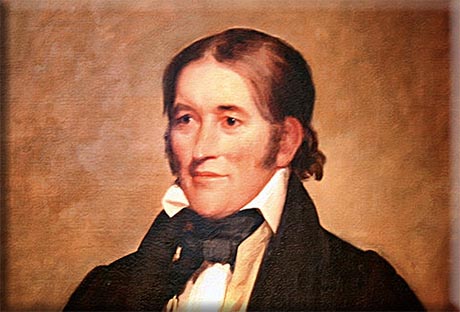
David Crockett

On August 17, 1786, American backwoods hero and politician, David Crockett, was born. Famous as a politician, he brought personal principle and honor and a “common sense” approach in representing Tennessee in the U.S. House of Representatives. He later served in the Texas Revolution, dying at the Battle of the Alamo.

Crockett grew up in East Tennessee, where he gained a reputation for hunting and storytelling, which helped make him a legend in his own time. After being made a colonel in the militia of Lawrence County, Tennessee, he was elected to the Tennessee state legislature in 1821.

In 1825, Crockett was elected to the U.S. Congress, where he vehemently opposed many of the policies of President Andrew Jackson, most notably the Indian Removal Act.

Categories
Thought

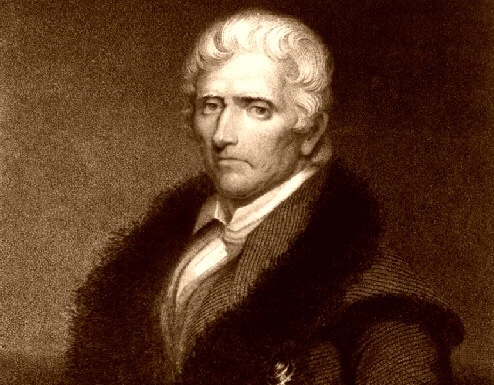
Daniel Boone

You see now how little nature requires, to be satisfied. Felicity, the companion of content, is rather found in our own breasts than in the enjoyment of external things, and I firmly believe it requires but a little philosophy to make a man happy in whatsoever state he is.

Daniel Boone, Daniel Boone’s Own Story & The Adventures of Daniel Boone

Categories
national politics & policies responsibility too much government

The Problem with Public Accounts

President Trump’s promise not to cut one dime from Social Security and Medicare doesn’t square with the fiscal cliff these programs are headed for. To save the system, benefits must be cut, taxes must be raised, or both.

Or else replace the system.

No wonder, then, that John Stossel insists we “Fix Social Security Before It Goes Broke,” and rescues a decades-old proposal: “private accounts,” which he says “would certainly pay retirees more than Social Security will ever pay.”

In Chile, where they have tried this, private accounts have worked out pretty well, contributing to the once-impoverished country’s rise to “the richest country in Latin America.” 

Had the United States adopted such a system, at Social Security’s inception, the amount of capital flowing into projects big and small would have not merely prevented the stagflation of the Seventies and brought us almost unimaginable wealth, it might have turned political eyes towards accountability, prudence and stability.

But, because Social Security was set up as a Pay As We Go system, we paid . . . and the money went.

It got so messed up that by the 1980s Ronald Reagan charged Alan Greenspan with “fixing” it. That “fix” mainly meant increasing taxation. The decades of revenue surge over outflow was spent by Congress for war and handouts. And now we’re reaching a repeat of the late 1970s’ Social Security insolvency.

Meanwhile, Chilean leftists “hold street protests against private accounts,” Stosssel reminds us. “They’re angry because capitalists get a slice of the pie.”

Back in the USA, Democrats demand that more benefits be wrung from Social Security. Are they dead set on proving why socialism doesn’t work?

This is Common Sense. I’m Paul Jacob.


PDF for printing


Categories
Today

The WINO!

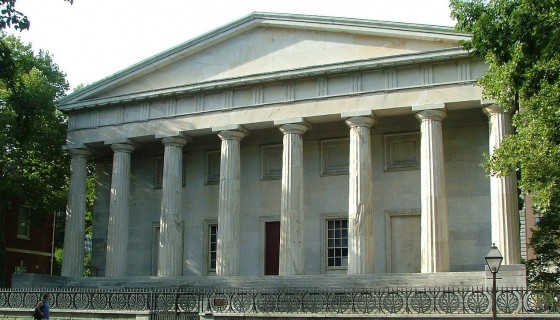
On August 16, 1841, U.S. President John Tyler vetoed a bill to re-establish the Second Bank of the United States (pictured). Enraged Whig Party members — feeling betrayed by the WINO* Tyler — rioted outside the White House in history’s most violent demonstration on White House grounds.


* “Whig In Name Only,” anachronistic joke term. A play on the contemporary initialisms “Republican in Name Only” (RINO) and “Democrat in Name Only” (DINO).

Categories
Thought

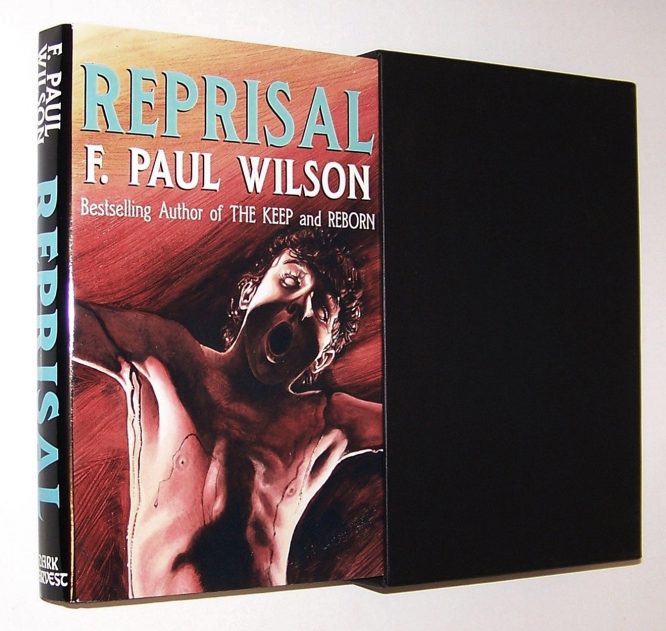
F. Paul Wilson

War, hate, jealousy, racism — what are they but manifestations of fear?

Categories
free trade & free markets government transparency media and media people national politics & policies too much government

Most Outrageous Negotiation Strategy Yet

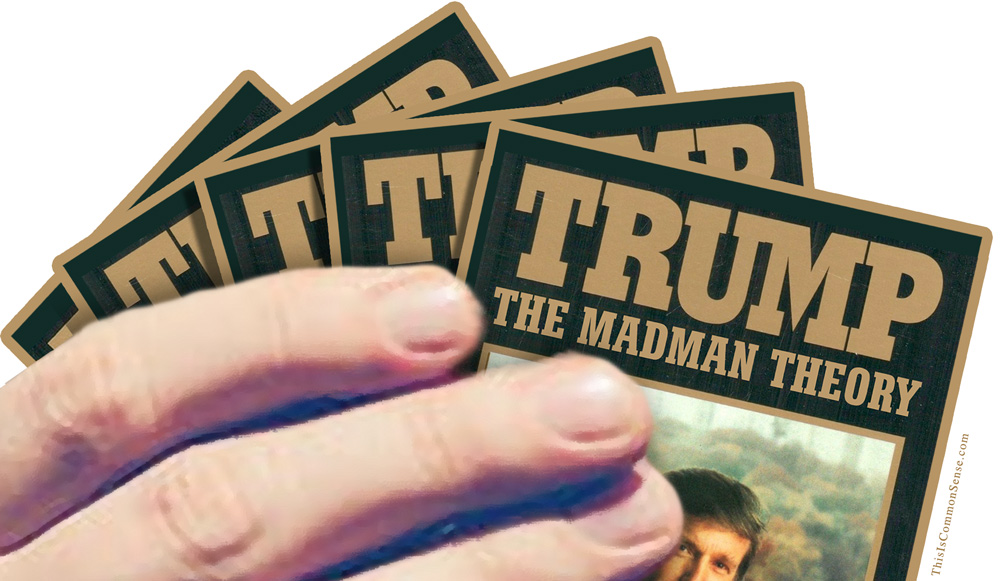
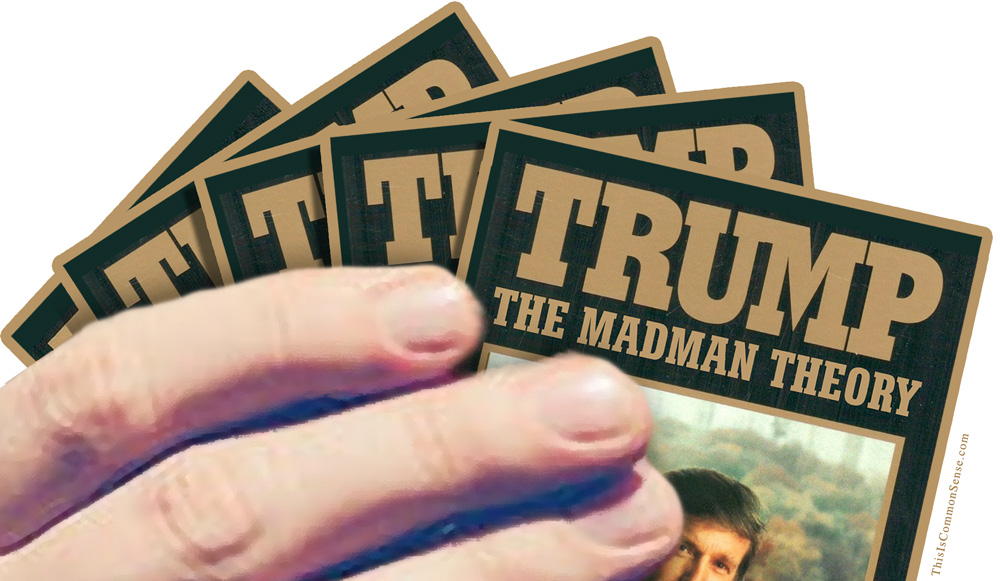
The best defense of Donald Trump’s presidency, so far? He is smarter than the rest of us, and knows how to negotiate with bad guys and insider players. We have to discount what he is saying, the theory goes, because he is not telling truths . . . obviously. 

He is negotiating.

Take nothing at face value, including Trump’s professed beliefs.

Protectionism, for example. Trump has long been against NAFTA and the modern version of “free trade.”* But, as I noted in late July, Trump does not seem to be demanding managed trade, or high tariffs as a means to protect American producers, or even tariffs as a means to increase government revenue. He appears — at least some of the time — to be using tariffs as a way to bargain other countries to reduce their tariffs.

This method has not worked in the past.

But is Trump different enough a politician to pull off a “madman” strategy to get leaders in other countries to do the right thing and reduce their tariff and regulatory burdens on their own countries?

A long shot — and several sectors of American business are being hurt right now in this “negotiating” (threat) phase of Trump’s outrageous gambit.

Another area where one might express such hope for a master-negotiator president is in reining back the Pentagon. In the run-up to November 2016, Trump sure seemed defiant of the neo-conservative/neo-“liberal”/center-left establishment on foreign policy.

But now he just signed a huge increase in the Pentagon budget: an $82 billion increase.

Is Trump’s plan to bring big-spending military-industrial complex lobbyists to heal by first giving them what they want?

That. Won’t. Work. 

This is Common Sense. I’m Paul Jacob.


* Post-WWII trade policy has consistently defended treaty-based global trade, but with heavy elements of protective tariffs, regulations and subsidies, making the whole thing look less like Free Trade and more like Mis-Managed Trade.

PDF for printing


Categories
Thought

Stefan Zweig

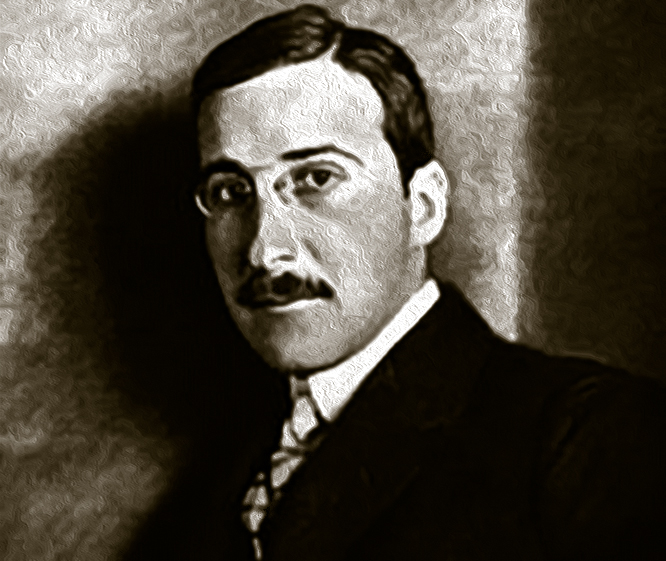
No guilt is forgotten so long as the conscience still knows of it.


Stefan Zweig, Beware of Pity (1939)

Categories
Today

6EQUJ5

On August 15, 2012, a complex, high-powered radio transmission was sent from the Arecibo Observatory in Puerto Rico towards the constellation Sagittarius. The signal consisted of a digital stream of approximately 10,000 Twitter messages solicited for the purpose by the National Geographic Channel, bearing the hashtag “#ChasingUFOs” (a promotion for one of the channel’s TV series). The sponsor also included a series of video vignettes featuring verbal messages from various celebrities.

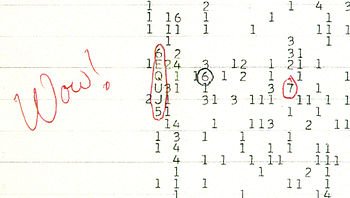
The transmission was sent on the 35th anniversary of the reception of a mysterious signal that was interpreted as an alphanumeric sequence, “6EQUJ5,” dubbed the “Wow!” signal, from the general direction of the star Tau Sagittarius. This signal was received by Ohio State University’s Big Ear radio telescope in the United States, and was noticed a few days after August 15, 1978, by astronomer Jerry R. Ehman.


On a sad August 15 in 1971, President Richard Nixon removed the last vestiges of the once-great bulwark of capitalism, America’s adherence to the international gold standard, ending convertibility of the United States dollar into gold by foreign investors. The dollar has remained fiat money ever since, but did not succeed in retaining its previous value.

But then, the dollar under the previous quasi-gold, Bretton-Woods Agreement wasn’t stable either, which is why Nixon felt compelled to close the gold window.