Categories
Today

Buchanan & Vidal

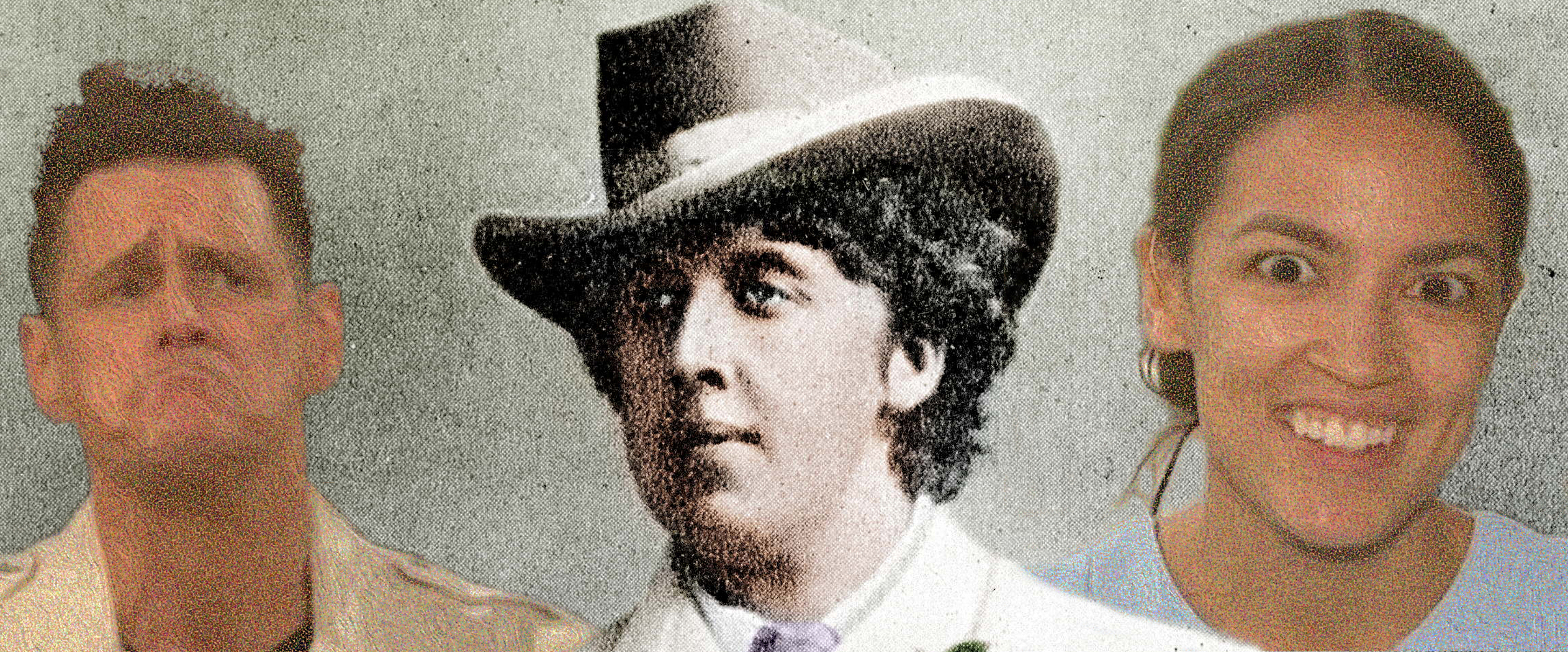
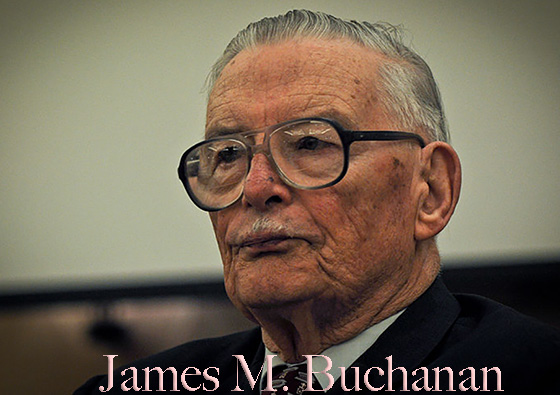
On October 3, 1919, James M. Buchanan was born. Buchanan would go on to an illustrious career in economics, developing the theory of “Public Choice,” and receiving the 1986 Nobel Memorial Prize in Economic Sciences for his work. His books include Cost and Choice, The Calculus of Consent (with Gordon Tullock), and The Limits of Liberty: Between Anarchy and Leviathan. Some of his most interesting research was into the realm of constitutional theory and practice.


In 1925, on this date, Gore Vidal was born. Vidal would go on to become one of the leading post-WWII liberal essayists as well as a major novelist and screenwriter. His most famous novels include Burr, 1876, and Lincoln, installments in his American history series; his collection of essays, The United States, was one of his many bestsellers. Vidal was an elitist who expressed sympathy for populism and socialism, but also was a radical civil libertarian, and may occupy the extreme of the “liberal” quadrant in American political ideology: great on personal liberties but quite bad one market/property liberties.
Categories
government transparency ideological culture national politics & policies

Last Week’s Least Credible Answer

So, who was lying, last week, at America’s big show trial — er, Senate Judiciary Committee hearing?

Professor Christine Blasey Ford or Judge Brett Kavanaugh?

Many Americans took sides. I cannot. Both said believable as well as scarcely believable things, but I’m with that minority who admits not to know what to believe.

Except for one thing: I am pretty sure I know who told the biggest whopper.

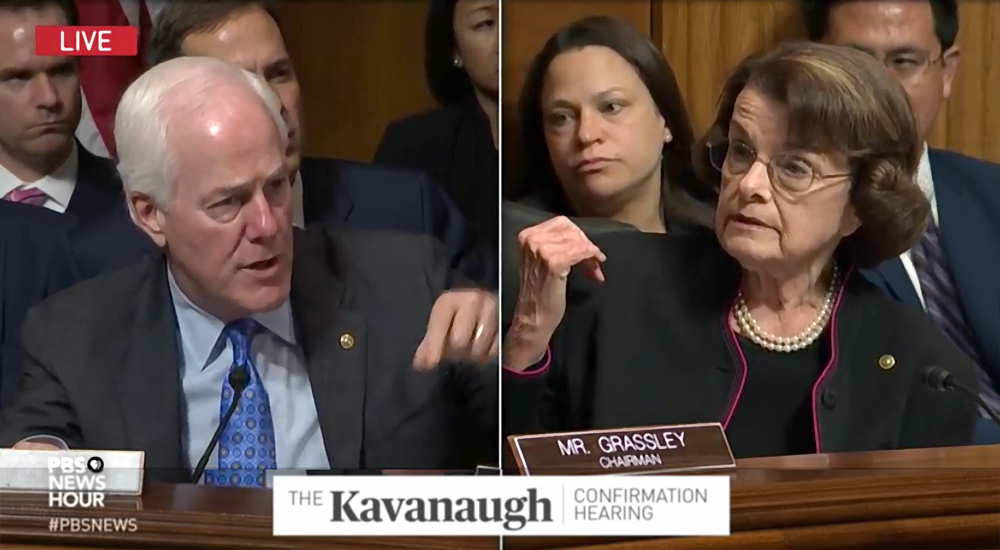
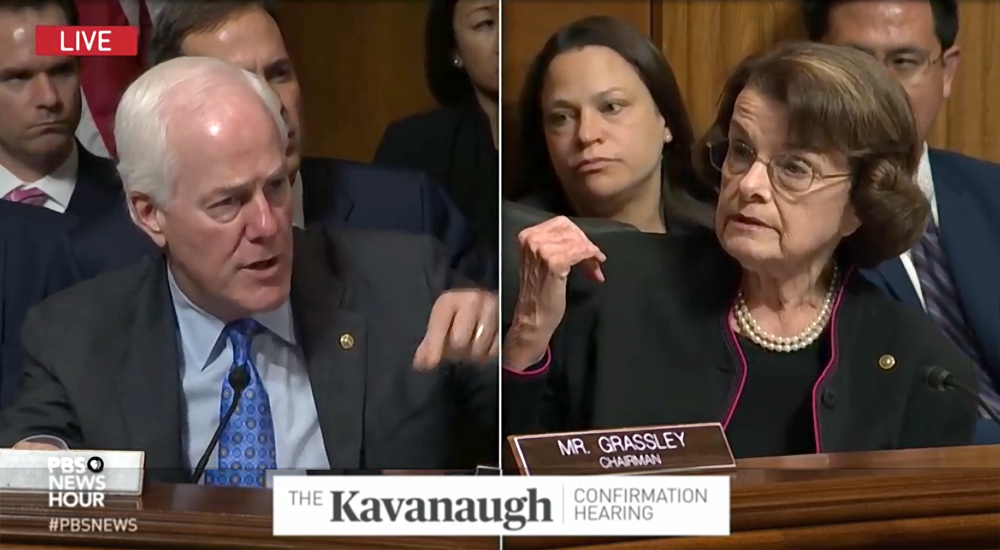
Senator Dianne Feinstein.

Democratic senators, especially Kamala Harris (D-Calif.), repeatedly pressured Kavanaugh to himself demand an FBI investigation to clear his name. It all seemed Orwellian: to make the accused insist on an investigation into allegations he had denied. It was also odd, considering, as Kavanaugh reminded his inquisitors, that he had repeatedly accepted any investigation the committee desired.

They just wanted him to demand it.

All of which is nuts, since the Committee possesses subpeona power, and can do an investigation itself.

But the weirdest aspect? The FBI had already checked Kavanaugh’s background, had performed an official investigation. But since Senator Feinstein had not tipped the agency off to Professor Ford’s confidential accusation — had effectively sat on the letter — the FBI hadn’t covered that precise avenue of inquiry.

And then, after the hearings were nearly over . . . the leak. And the bouhaha.

When asked whether she leaked Ford’s epistle, Feinstein said No. When asked if her staff did, she said she . . . hadn’t asked them.

Oh, come on.

Not as believable as either Ford or Kavanaugh.

This is Common Sense. I’m Paul Jacob.


PDF for printing


Categories
Thought

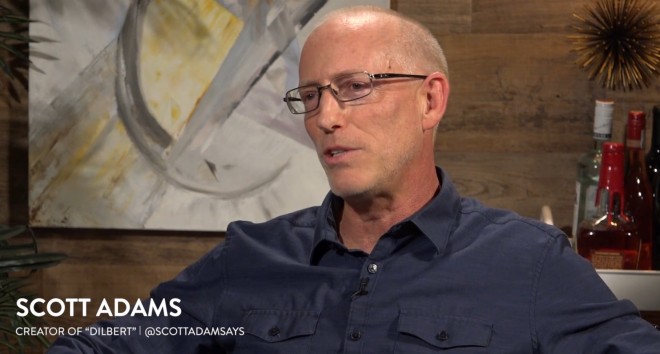
Scott Adams

What can be done in a week? Nothing. There is almost nothing that can be done in a week by any large organization anywhere on any topic ever in the history of large organizations. Large organizations cannot do anything in a week.


Scott Adams, admittedly exaggerating in live online talk (Bitchute archive), September 29, 2018 (40:50), referring to the Kavanaugh hearing.

Categories
Today

Stroke?

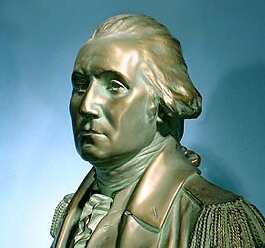
On October 2, 1789, George Washington sent the proposed Constitutional amendments (the United States’ Constitution’s Bill of Rights) to the States for ratification.

On the same date in 1919, U.S. President Woodrow Wilson suffered a massive stroke, leaving him partially paralyzed, preventing him from reacting to the economic downturn following the Great War in a Progressive fashion, making his response de facto laissez faire. One insider, and skeptic of Progressive hubris, cattily referred to Wilson’s incapacitation as “a stroke of luck.”

His successor in office, President Warren G. Harding, would go on to massively cut spending as well as taxes, and take on regulation as well. He also released Woodrow Wilson’s domestic war prisoners — ranging from journalists, ordinary folk to socialist presidential candidate Eugene V. Debs — who had dissented from Wilson’s involvement in the war.

The Depression of the early 1920s, though as deep as the early 1930s’, proved remarkably brief, thanks to Harding . . . and Wilson’s “stroke of luck.”

Categories
ideological culture

The Opposite Party Is Partisan!

When departing Senator Jeff Flake indicated, the other day, that he would vote to place President Trump’s nominee Brett Kavanaugh onto the Supreme Court — despite the ugly accusations of Kavanaugh’s youthful sexual misconduct — much re-tweeted actress Alyssa Milano called him a “coward.”

We understand what she means. Because Flake “caved” to pressure from his party* — the GOP — he proved himself “spineless,” in another Twitterer’s terminology.

But the thing is, calling your opponent a coward because he does not do what you want is at least a bit odd. One does not approach a knight defending his castle and call him a coward for not surrendering.

Weird world, eh? Where our enemies are cowards for opposing us!

This is not new. Remember George W. Bush calling the terrorists of 9/11 “faceless cowards”? Bill Maher lost his comedy newschat show at the time because he made the obvious point that people who give their lives to a cause, even if terrible, are anything but cowards.

Human beings are a mixed bag — of virtues and vices. This should be treated as a given . . . for folks on all sides.

In one sense, however, Ms. Milano and many others in the Twitter brigades are not wrong. In politics, today, our biggest challenge is often resisting the besetting sins of our respective tribes.

But the fact that she and her friends “call out” the Senator for his partisan moral failings while rigorously maintaining their partisan ranks does not exactly indicate a moral heroism transcending partisanship.

This is Common Sense. I’m Paul Jacob.


* Some Republicans likely regard Flake as “caving” to pressure from the left, by calling for an FBI investigation before a Senate floor vote on the Kavanaugh nomination. Flake did this after a confrontation with two women who were victims of sexual assault.

PDF for printing


Categories
Today

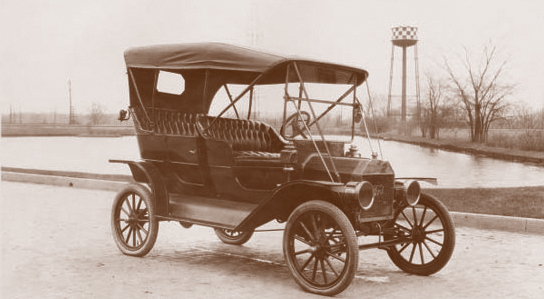
Model T

On October 1, 1908, Ford produced the first Model T at a plant in Detroit. The auto could travel 40 miles per hour and ran on gasoline or hemp-based fuel. (As oil prices fell, Ford phased out the hemp option.) The Model T was the first car designed for a mass market, rather than as a luxury item. By 1927, Ford had built 15 million Model T cars – the longest production run of any car model until the Volkswagen Beetle surpassed it in 1972.

On October 1, 1918, Lawrence of Arabia (T.E. Lawrence) helped lead a combined Arab and British force that captured Damascus from the Turks during World War I.

Categories
Thought

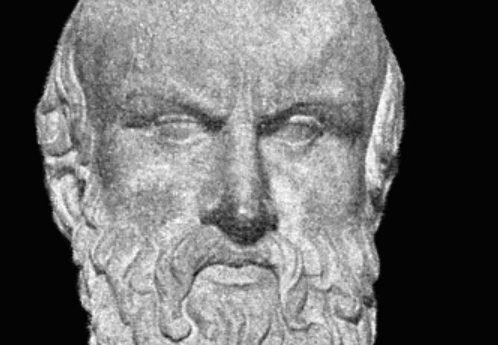
Aeschylus

ὅπου γὰρ ἰσχὺς συζυγοῦσι καὶ δίκη
ποία ξυνωρὶς τῆσδε καρτερωτέρα

For where might and justice are yoke-fellows —
What pair is stronger than this?


Categories
links

Townhall: Socialism’s Irony Law

Is capitalism old hat? Or is socialism’s new chapeau only just a tad trendier?

Be a hipster for once and click on over to Townhall . . . for the latest fashion critique.

Then come back here for the full inventory.

Socialism, recently on Common Sense (with more links):

This column will be published on this site on Tuesday.

Categories
Today

Blasphemy? Independence?

Botswanans celebrate their independence from Great Britain with an official day on September 30.

Also, September 30 has served as Blasphemy Rights Day since 2009, when it was initiated by the Center for Inquiry.

Categories
Thought

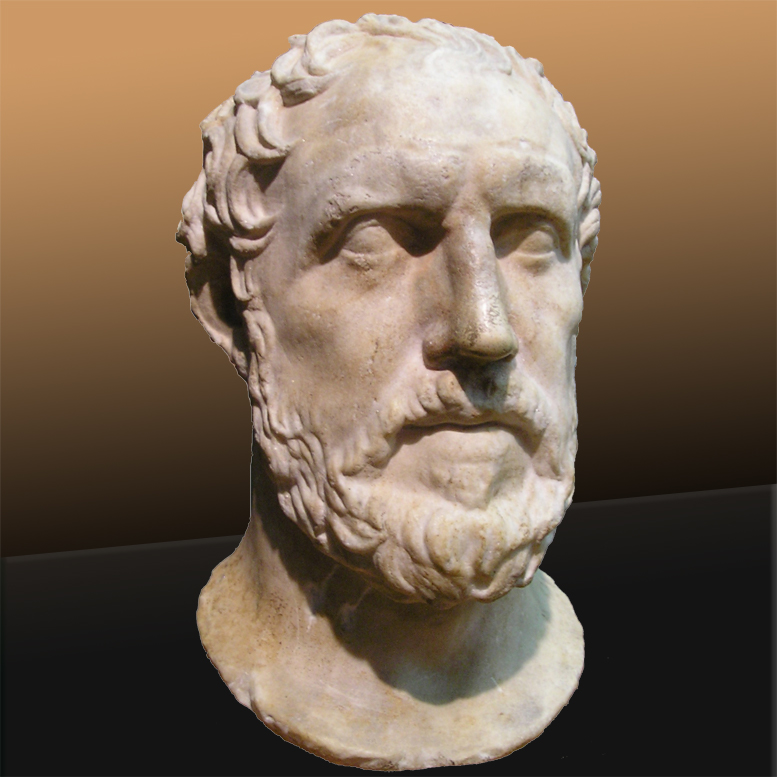
Thucydides

The secret of happiness is freedom and the secret of freedom is courage.


Thucydides, History of the Peloponnesian War, Book II, 2.43.