A paradigmatic Tweet gets a thorough examination.
Categories
AOC Misfires on Guns

A paradigmatic Tweet gets a thorough examination.
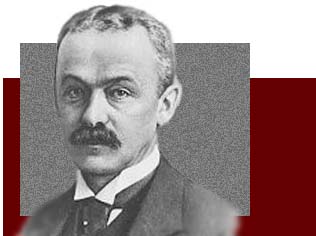
On March 30, 1864, German sociologist and economist Franz Oppenheimer was born. This sociologist is most famous for his 1908 book The State, in which he elaborated some consequences of two means for acquiring wealth, the “economic means,” by which he meant private production or by trade, and the “political means,” by which he meant forcible extraction from one group or person by another person or group. Oppenheimer taught in Palestine in the mid-1930s, and fled the Nazis to the United States, via Japan in 1938. In 1941 he became a founder of The American Journal of Economics and Sociology, and died two years later.
From the beginnings of recorded thought, intellectuals have told us their activity is most valuable. Plato valued the rational faculty above courage and the appetites and deemed that philosophers should rule; Aristotle held that intellectual contemplation was the highest activity. It is not surprising that surviving texts record this high evaluation of intellectual activity. The people who formulated evaluations, who wrote them down with reasons to back them up, were intellectuals, after all. They were praising themselves. Those who valued other things more than thinking things through with words, whether hunting or power or uninterrupted sensual pleasure, did not bother to leave enduring written records. Only the intellectual worked out a theory of who was best.
Robert Nozick, “Why Do Intellectuals Oppose Capitalism?” Cato Policy Report January/February 1998

Special Olympics has found a way to get kids and young adults with disabilities to feel something important: Able.
Three decades ago, as part of a community service requirement, I spent one day each week working with physically and intellectually-challenged adults at Easter Seals in Little Rock, Arkansas. I loved it.
Most unforgettable were their beaming smiles of pride when they got a chance to show what they could do. I’ve always loved sports, but never as much as there and then. In the decades since, my family has given to the Special Olympics what financial support we could afford.
So, can you imagine how I must feel hearing Education Secretary Betsy DeVos testify in favor of cutting all $17.6 million in federal funding for the Special Olympics?
“It’s appalling,” declared Rep. Barbara Lee (D-Calif.).
John Kasich, the former Republican governor of Ohio, called the cut “outrageous” and “ridiculous.”
“Cruel and reckless” were the words Rep. Rosa DeLauro (D-Conn.) used.
“The Special Olympics is . . . a private organization. I love its work, and I have personally supported its mission,” countered Sec. DeVos.* “But given our current budget realities, the federal government cannot fund every worthy program, particularly ones that enjoy robust support from private donations.”
Federal funding provides only 10 percent of Special Olympics revenue, with over $100 million raised annually in private donations.
So, how must I feel about DeVos’s suggested cuts?
Gratitude . . . for her generous contributions to Special Olympics — and for her fiscal responsibility. Let’s fund this wonderful program without the government forcing (taxing) support from others.
Check, cash or credit card is always preferable to virtue-signaling gum-flapping.
This is Common Sense. I’m Paul Jacob.
* Special Olympics is one of four charities to which DeVos donated her entire 2017 federal salary.

See all recent commentary
(simplified and organized)
See recent popular posts
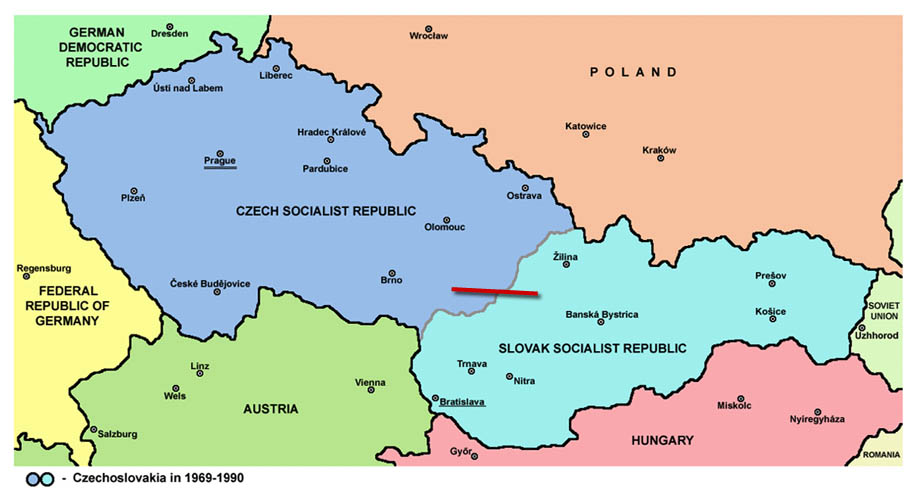
On March 29, 1990, the Czechoslovak parliament proved unable to reach an agreement on what to call the country after the “Velvet Revolution” — in which the Communist Party was booted from sole power. This sparked the “Hyphen War,” a tongue-in-cheek moniker for the dispute between Czechs and Slovaks about official recognition of the two nations’ equal status. (The Slovak representatives wanted to insert a hyphen into the name, to make the Slovak part stand out.) Eventually, the dispute was resolved with the “Velvet Divorce,” in which the two countries split up, on New Year’s Day, 1993.
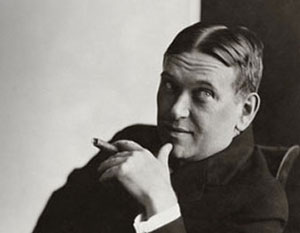
To die for an idea; it is unquestionably noble. But how much nobler it would be if men died for ideas that were true!
H. L. Mencken, Prejudices: First Series (1919)
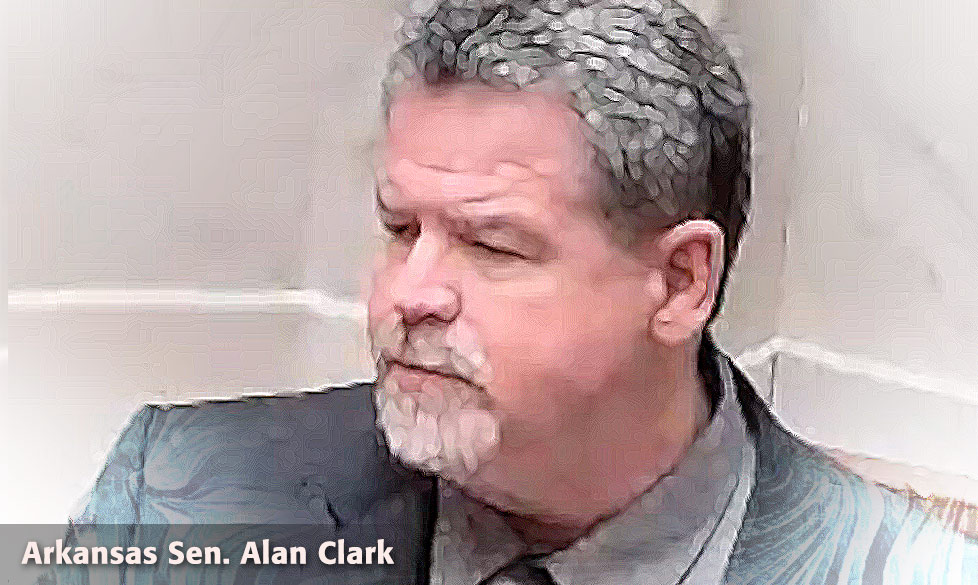
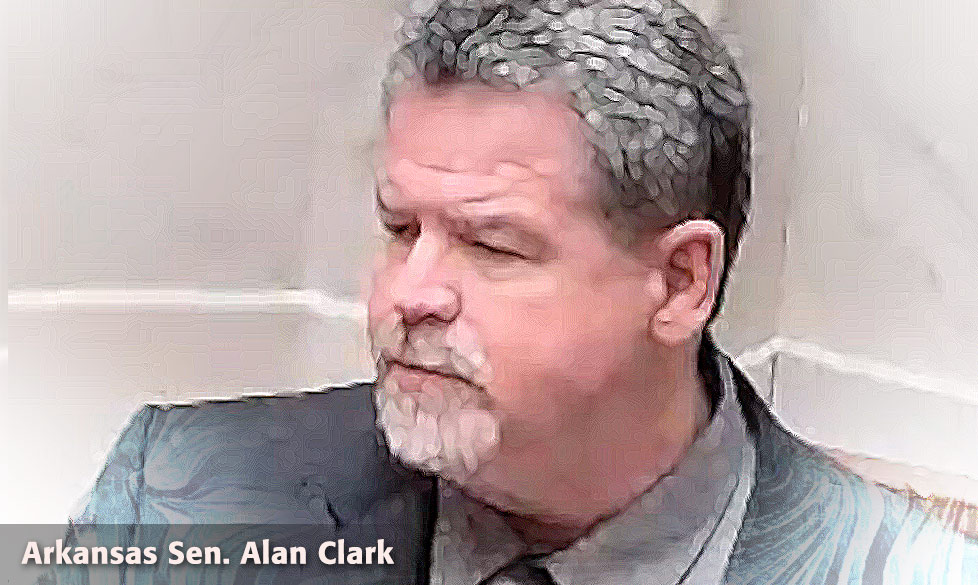
Arkansas Sen. Alan Clark pretends that his bill, Senate Joint Resolution 15, would toughen the term limits that apply to him.
Clark’s masterpiece, which sailed through the Senate 27–3 on Tuesday, most certainly does not. While it purports to toughen term limits from 16 years to 12 years, read the fine print.*
First, these legislators are grandfathering themselves in at 16 years.
Second, Clark’s amendment removes the current lifetime limit, allowing politicians to return to office after just four years out.
For another 12 years.
And then perhaps an additional dozen years.**
What is going on here, you ask?
Well, in 2014, Arkansas legislators had tricked voters, referring a dishonestly worded measure onto the ballot. It claimed to establish term limits and ban gifts from lobbyists to legislators. The amendment accomplished neither; lobbyists continue to ply legislators with food and drink while existing term limits were weakened.
Last year, a citizens group turned in 135,000 voter signatures to place the strict limits citizens had originally enacted (1992) onto the ballot. But a lobbyist lawsuit with technical signature challenges won a 4-3 state supreme court decision blocking the initiative.
Nonetheless, it was too late to remove the measure from the ballot. Votes were cast, just not counted. Fortunately, the Arkansas Times’ Max Brantley released vote totals in three large counties showing that the citizen-sponsored term limits had won big.
Which scared Arkansas’ prima-donna careerists, Clark especially, to create the current exercise in representing themselves, not the citizens of Arkansas.
This is Common Sense. I’m Paul Jacob.
* Clark’s constitutional amendment originally contained a provision taking term limits for state legislators out of voters’ hands by banning use of the initiative process to propose changes. Thereafter, only legislators could address the length of their own careers. That bit of self-interested boss-rule was jettisoned, apparently, as too obviously and arrogantly anti-voter.
** Those additional years — which, depending upon longevity, could extend past three decades — come with additional pension benefits, too.
See all recent commentary
(simplified and organized)
See recent popular posts
Though not part of the official curricula, in the schools the intellectuals learned the lessons of their own greater value in comparison with the others, and of how this greater value entitled them to greater rewards.
The wider market society, however, taught a different lesson. There the greatest rewards did not go to the verbally brightest. There the intellectual skills were not most highly valued. Schooled in the lesson that they were most valuable, the most deserving of reward, the most entitled to reward, how could the intellectuals, by and large, fail to resent the capitalist society which deprived them of the just deserts to which their superiority “entitled” them? Is it surprising that what the schooled intellectuals felt for capitalist society was a deep and sullen animus that, although clothed with various publicly appropriate reasons, continued even when those particular reasons were shown to be inadequate?
Robert Nozick, “Why Do Intellectuals Oppose Capitalism?” Cato Policy Report January/February 1998

On March 28, 1936, Peruvian author Mario Vargas Llosa was born. This recipient of the 2010 Nobel Prize in Literature ran, in 1990, for the presidency of Peru, but lost to Alberto Fujimori. His novels include La casa verde (The Green House), La guerra del fin del mundo (The War of the End of the World), La fiesta del chivo (The Feast of the Goat), and Aunt Julia and the Scriptwriter, which was filmed as Tune in Tomorrow.
On the same date in 1970, Vince Vaughn, American actor, producer, and screenwriter, was born.
Vaughn is one of a small minority of non-left-leaning Hollywood stars; his ideas on politics and economic policy were greatly influenced by Ron Paul.
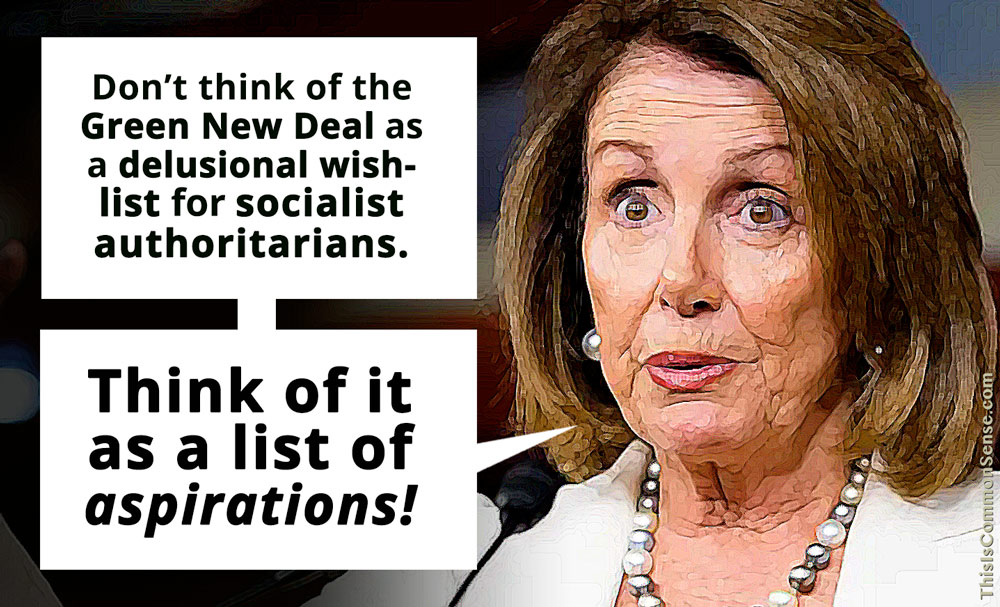
A funny thing happened on the way to voting on the Democrats’ Green New Deal (GND). With ‘earth in the balance,’ the proposal for fixing climate change — and so much more! — was granted its first procedural vote in the GOP-controlled U.S. Senate.
It failed, 0-57.
Sen. Edward Markey (D-Mass.), the Senate sponsor, along with 41 other Democrats* and independent Bernie Sanders, voted “present” to protest what he called “sabotage,” claiming Majority Leader Mitch McConnell (R-Ky.) “wants to silence your voice.”
Au contraire! McConnell longed to hear Democrats sing the bill’s praises — loud, proud, and on the record.
After the vote, Rep. Alexandria Ocasio-Cortez (D-N.Y.) absurdly made the opposite accusation: Republicans were “climate delaying . . . costing us lives + destroying communities.”
Meanwhile, “If the Green New Deal came up for a vote in the Democrat-controlled House,” USA Today reports, “it would have trouble passing.”
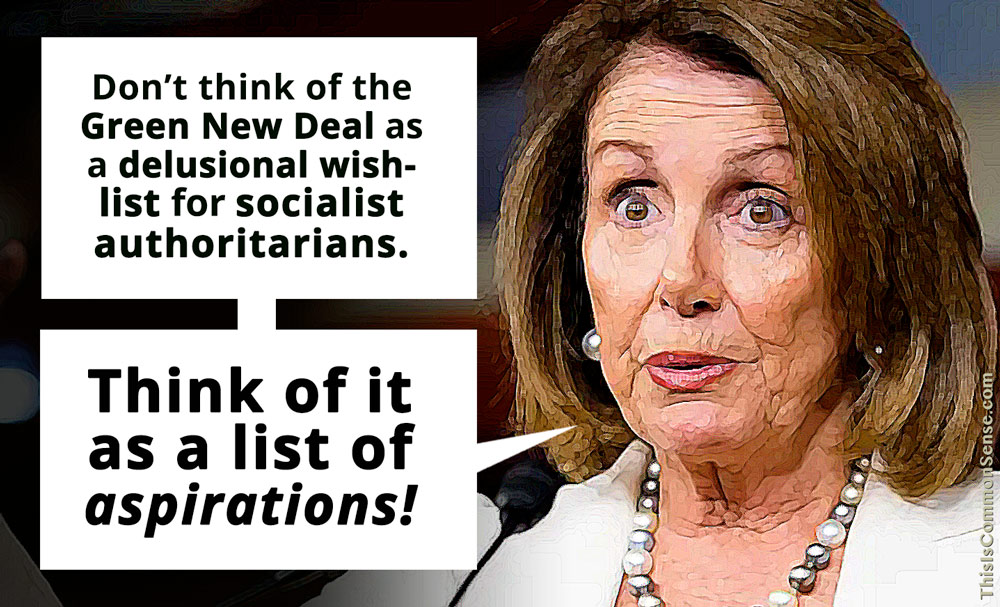
“It’s a list of aspirations,” says Speaker Nancy Pelosi, who does not plan to bring it to a vote. Though Democrats want to address climate change, the speaker points out that the “bill has many things that have nothing to do with climate.”
Rep. Elaine Luria, (D-Va.) echoes Pelosi: “[T]he Green New Deal is aspirational.” Rep. Sean Casten, (D-Ill.) adds, “The aspirations of the Green New Deal are great.”**
But is the GND something “great” to which Americans should aspire?
Only if they yearn for government-monopolized healthcare, free college tuition, micro-management of the economy, and government providing everyone a job, except those who don’t want one . . . who would get a guaranteed income, regardless.
I aspire to “life, liberty and the pursuit of happiness.”
This is Common Sense. I’m Paul Jacob.
* In the Senate, three Democrats — Sens. Doug Jones (Ala.), Joe Manchin (W.Va.), and Kyrsten Sinema (Ariz.) — and independent Sen. Angus King (Maine) joined all 53 Republicans in voting No.
** All four House co-chairs of the New Democrat Coalition’s Climate Change Task Force — Casten and Luria as well as Don Beyer, (D-Va.) and Susan Wild, (D-Pa.) — have come out in opposition to the GND.
See all recent commentary
(simplified and organized)
See recent popular posts