As for the loss of experience and expertise if there were no career politicians, much — if not most — of that is experience and expertise in the arts of evasion, effrontery, deceit and chicanery. None of that serves the interest of the people
On August 24, 1682, William Penn received an area of territory to add it to his colony of Pennsylvania. The area comprises, today, the state of Delaware.
In 1814 on this day, British forces burnt down the White House. Unlike audience reaction to the 1996 movie Independence Day (pictured), there was no widespread cheering among Americans for the building’s destruction.
One year later, the modern Constitution of the Netherlands received its empowering signatures.
August 24 birthdays include that of British anti-slavery activist William Wilberforce (1759-1833), Argentine literary genius Jorge Luis Borges (1899-1986), and French historian and author of a magisterial study of the rise of capitalism in Europe, Fernand Braudel (1902-1985),
The Ukraine celebrates its independence from the Soviet Union with a National Day on August 24.
Man’s concern is not with government; he should look on government as no more than a very secondary thing — we might almost say a very minor thing. His goal is industry, labour and the production of everything needed for his happiness. In a well-ordered state, the government must only be an adjunct of production, an agency charged by the producers, who pay for it, with protecting their persons and their goods while they work. In a well-ordered state, the largest number of persons must work, and the smallest number must govern. The work of perfection would be reached if all the world worked and no one governed.
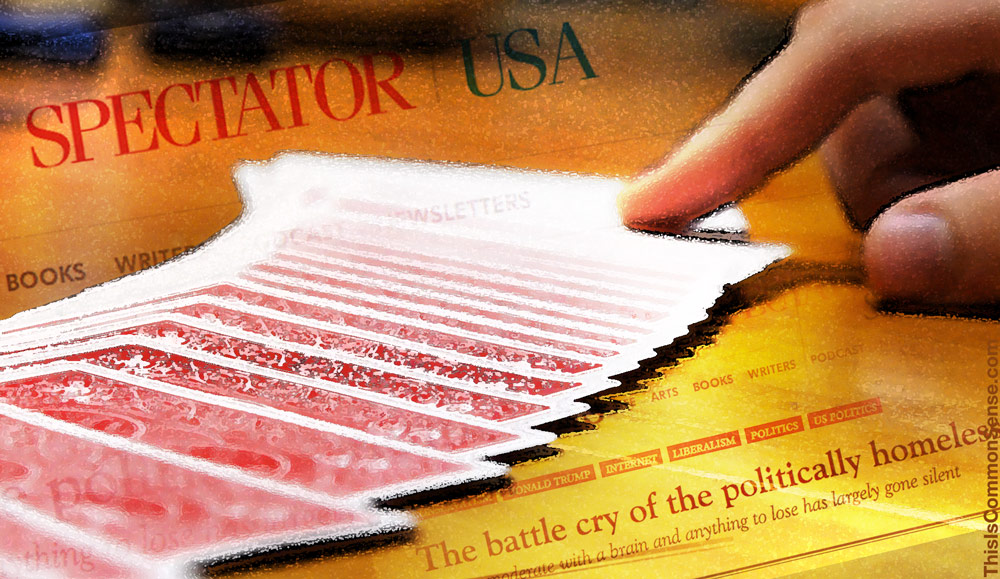
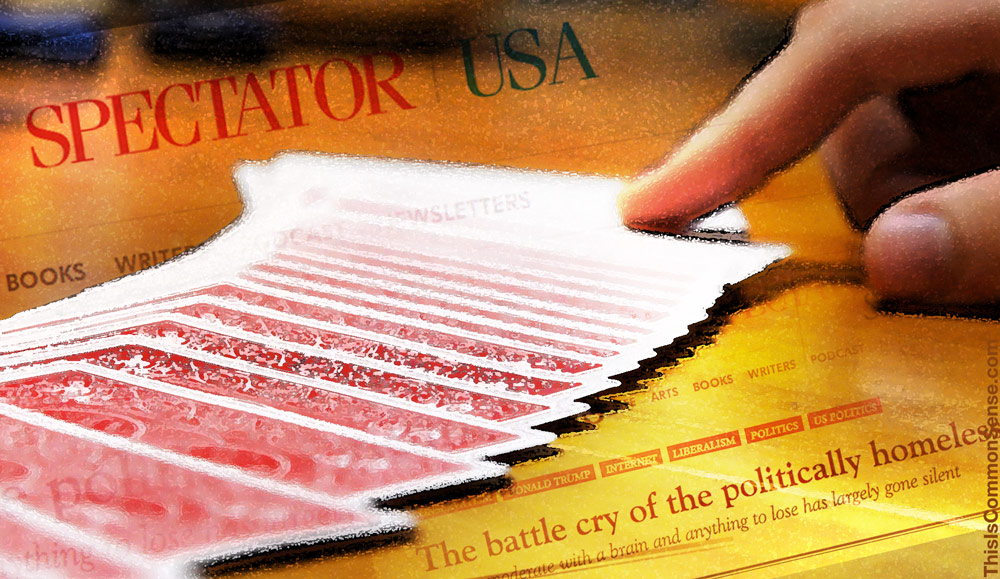
Characterizing herself as a “moderate with a brain,” Bridget Phetasy writes that things have gotten so bad that now “every vote is considered a statement on your personal identity and worth.” Her article in Spectator USA, “The battle cry of the politically homeless,” paints a bleak picture.
“Your value, who you are, what kind of world you want, whether or not you’re a good person or an evil person . . . it all boils down to which lever you pull. Damn your reasons. Vote for the ‘right’ person, or else you are a fascist, or a racist, or a globalist, or a communist.”
Ms. Phetasy expresses fatigue at “being afraid to voice my own opinions, of knowing how saying the wrong thing at a barbecue while someone is filming on their iPhone could result in a nationwide clarion call for my head on a pike.”
I, however, feel not one whit of a compulsion to cave to what Phetasy says is the “totalitarian-like” demand of the two parties for “devotion to their ideology.”
How did I become so blessed?
I know that Trumpians have almost no way to rationally defend their major positions — protectionism being the tippy-top of an Everest of an iceberg. Meanwhile, the far left is worse, flushing the old wine of socialism through the new-but-leaky bottles of racist (“anti-racist”) resentment.
Can we really fear such intellectual paper tigers?
There is a way out: Ranked choice voting. Witless partisanship rests on the A/not-A (=B/not-B) duality rut of the two-party system, intowhich I have never purchased admission. None of us are required to — and won’t be tempted to once our absurd electoral system is swapped for one not programmed to create false binaries.
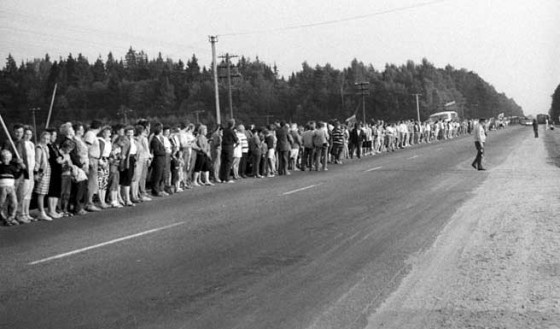
On August 23, 1989, two million people from Estonia, Latvia and Lithuania stood on the Vilnius-Tallinn road, holding hands, as part of the “Singing Revolution” that helped set the Soviet Union to its implosion.
“You keep using that word,” said Inigo Montoya in The Princess Bride. “I do not think it means what you think it means.”
He might as well have been talking to David Hogg — not Vizaini — and young Hogg’s March For Our Lives gun control advocacy group.
The word?
Partisan.
“On Wednesday,” writes Christian Britschgi at Reason, “the group released its Peace Plan for a Safer Americawith the ambitious goal of reducing gun deaths and injuries by 50 percent in 10 years.”
Among the issues their plan — a sort of “Gun New deal” — aims to tackle is the Supreme Court’s make-up of justices who support a common sense reading of the Second Amendment, which Hogg & Co. characterize as the result of “partisan political influence and interference.”
Favoring the right to bear arms or opposing socialized medicine isn’t “partisan” any more than favoring gun control and “Medicare for all.” We use the word “partisan” when members of parties behave in ways that align with their respective parties for little reason other than power, or when they cannot muster or even try for bipartisan support for their legislation.
When Speaker of the House Nancy Pelosi and President Barack Obama pushed through “Obamacare” without one Republican vote, that was partisan only because the Democrats could not muster any support across the aisle, quite astounding for a major new program.
Regarding the Supreme Court, we should remember that the standard for judgment is neither party nor policy, but constitutional law.
March for Our Lives wants a “national conversation” on restructuring the Supreme Court.
A better conversation would deal with actual partisan perversity.
On August 22, 1952, France closed its penal colony on Devil’s Island.
At first a leper colony, it had been transformed by the end of the 19th century into a prison tasked primarily with housing enemies of the French state.
In whatever manner one participates in a harmful action, one is not a “man of industry” if one takes part. I am not saying that there is always virtue in producing. What I do say is that crime is never productive. I say that as a result of a bad action there is destruction or displacement of wealth but never an increase in the world’s total wealth. In one word I say that brigandage, by whatever instruments it employs or whatever way it uses them, ought always to be distinguished very carefully from industry.