Categories
Today

Shays’ Constitution

On September 26, 1786, protestors shut down the court in Springfield, Massachusetts, beginning a military standoff and ushering in Shays’ Rebellion. This anti-tax revolt spurred a dramatic reaction on the part of the day’s politicians, including their attempts to reform the Articles of Confederation and to figure out better ways than high state taxes to pay off Revolutionary War debts. These efforts directly led to the adoption of a new Constitution.

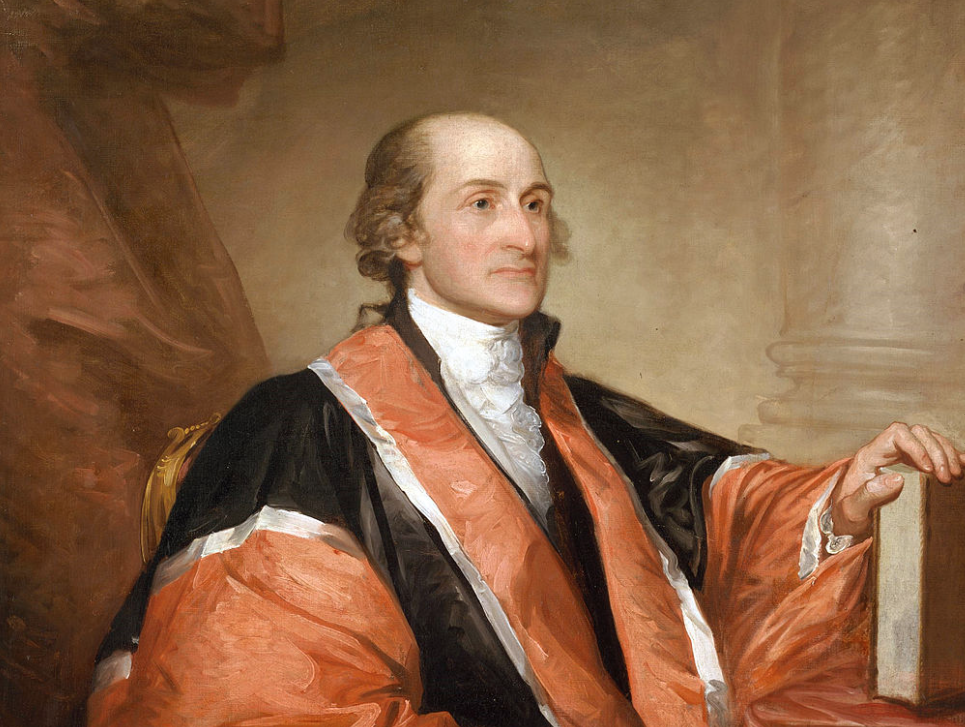
Three years later, to the day, Thomas Jefferson was appointed the first United States Secretary of State, John Jay (pictured) was appointed the first Chief Justice of the United States, Samuel Osgood was appointed the first United States Postmaster General, and Edmund Randolph was appointed the first United States Attorney General — all under the new Constitution.

In 1960 on this date, John F. Kennedy and Richard M. Nixon engaged in the first televised presidential campaign debates.

September 26 is celebrated, by some who know history, as “Petrov Day,” after Yevgrafovich Petrov, who on this day in 1983 may have saved civilization by resorting to hunch. While serving as a lieutenant colonel in the Soviet Air Defense Forces, he took the initiative to downgrade information from the USSR’s computerized early warning missile defense system that the United States had initiated a nuclear first strike against the Soviet Union. He interpreted the warning as a false alarm. His hunch was correct; the U.S. had not initiated a first strike: the data he had received was misleading. A later investigation determined it was the result of high altitutde cloud interference with a satelite view of a U.S. Air Force base. Petrov was not rewarded for his decision, however. His decision showed up the military higher-ups and scientists to have concocted an extremely faulty system, so a reward would also have required some sort of punishment. He retired soon after with a very, very small pension.

Petrov died on May 19, 2017.

Categories
Thought

Jean-Baptiste Say

The external commerce of all countries is inconsiderable, compared with the internal.

Categories
ideological culture

Mad Prophetess?

The latest scandal of the How Dare You Say That!?! variety features The Daily Wire’s Michael Knowles, who is banned from Fox News, we learn, because he characterized the celebrated “climate activist” Greta Thunberg as “mentally ill.”

He said it while serving as one of those invited talking heads. The other guest immediately cried “how dare you?” 

And censoriousness ensued, with high moral dudgeon and nasty put-downs and the whole shebang.

While I don’t really know much about Miss Thunberg’s mental health going into all this, I do not believe it can be much improved by playing Prophetess on the world stage. 

Which also gives too much cultural power to someone so young. And since power corrupts . . . that’s not good for Greta, and it makes her promoters corruptors.

And that is the point Mr. Knowles appeared to be trying to make. Reasonable people can disagree on the propriety of how “the execrable Michael Knowles” (as his fellow Daily Wire colleagues jovially refer to him) referred to the Swedish prophetess, of course. But it nevertheless remains rather shocking to witness 

  1. activist adults abuse 
  2. one child to 
  3. scare millions of children to 
  4. pressure powerful adults to 
  5. engage in precipitous policy action.

“Adults sometimes like to use children to carry their messages,” vidcaster and Dilbert creator Scott Adams points out, “because it makes it hard for the other side to criticize them without seeming like monsters.”

How can we “listen to the scientists,” as Miss Thunberg recently implored, if the talking is being done by a young teenage non-scientist?

This is Common Sense. I’m Paul Jacob.


PDF for printing

GretaThurnberg

See all recent commentary
(simplified and organized)
See recent popular posts

Categories
Thought

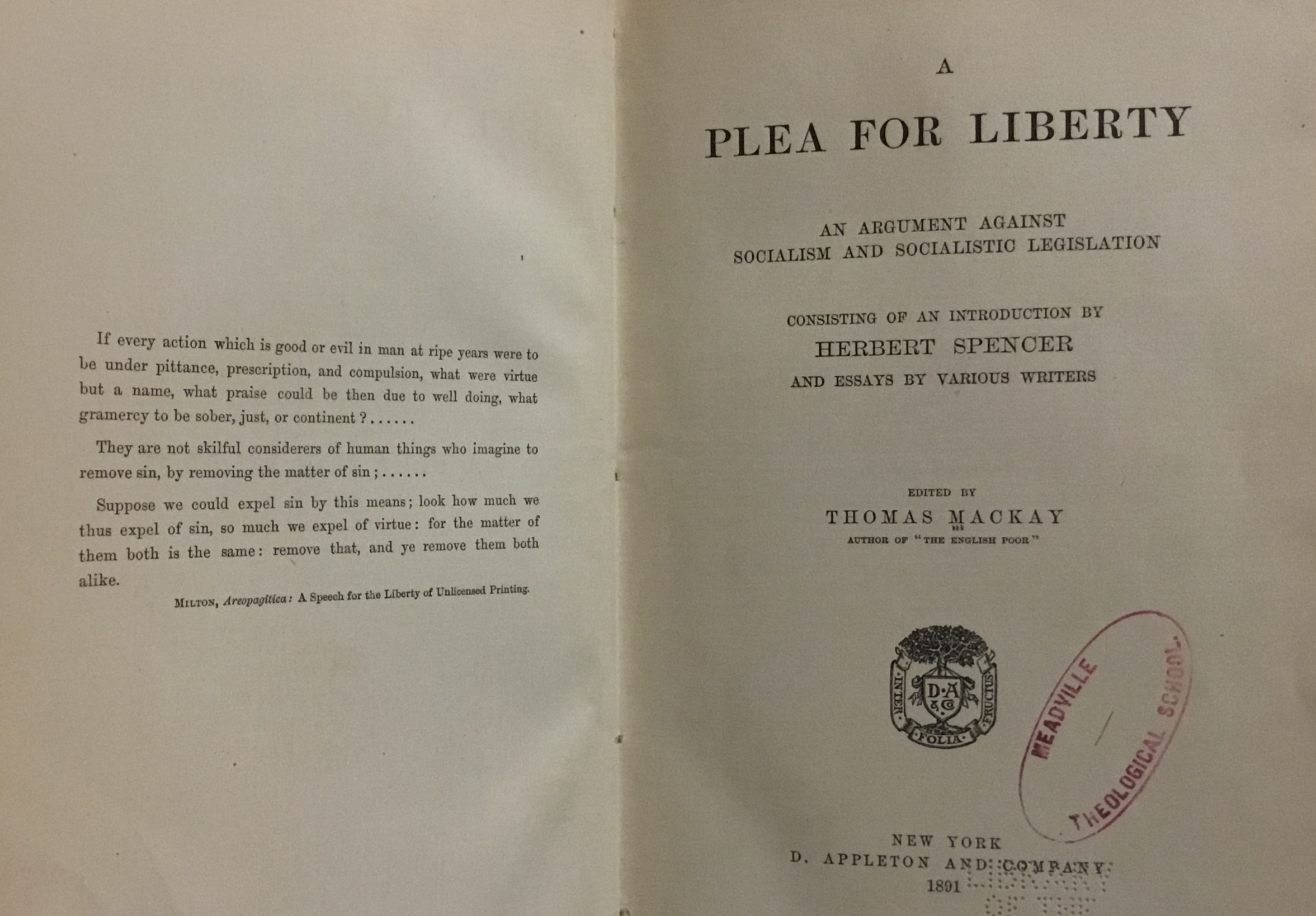
Thomas Mackay

We can have exactly as many paupers as the country chooses to pay for.

Categories
Today

Augsburg, Bill of Rights

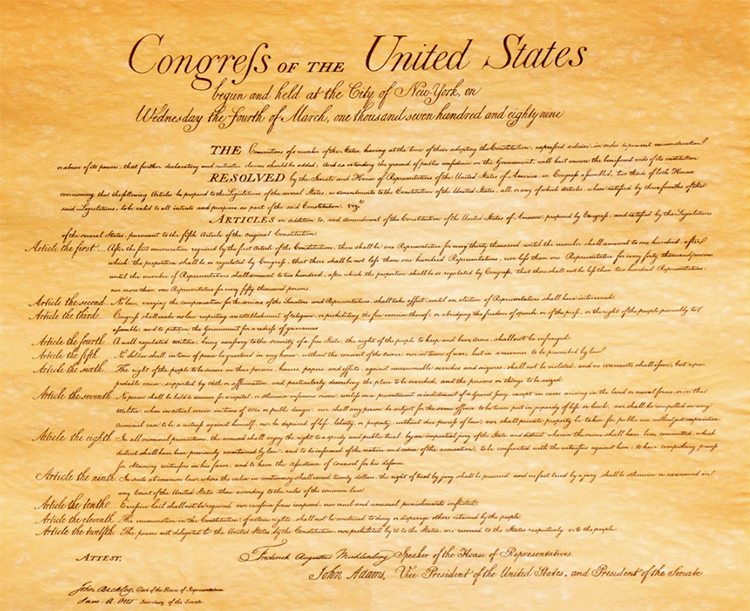
On September 25, 1789, the U.S. Congress passed twelve amendments to the United States Constitution: the Congressional Apportionment Amendment (which was never ratified), the Congressional Compensation Amendment, and the ten that are known as the Bill of Rights.

Earlier on that date, in 1555, the Peace of Augsburg was signed in Augsburg by Charles V and the princes of the Schmalkaldic League.

Categories
Accountability

Sinkhole States

What do citizens lack most at all levels of government? Truth in accounting. 

So Sheila Weinberg really has her work cut out. This very morning, her Chicago-based research-tank called, not coincidentally, Truth in Accounting released its annual Financial State of the States report. The new data shows that “the total debt among the 50 states decreased by $62.6 billion in FY 2018 due to a prosperous economy.”

But that’s where the good news ends. “Every state, except for Vermont, has balanced budget requirements,” notes the report, “yet even with these rules in place, states have accumulated more than $1.5 trillion in debt.”

Almost entirely from unfunded pension and employee benefit liabilities. 

“At the end of the fiscal year (FY) 2018, 40 states did not have enough money to pay all of their bills. This means that to balance the budget . . . elected officials have not included the true costs of the government in their budget calculations and have pushed costs onto future taxpayers.”

Put another way: Your government is lying to you.

One interesting feature of the analysis is its top five “Sunshine States” —

  1. Alaska
  2. North Dakota
  3. Wyoming 
  4. Utah
  5. Idaho 

— and its bottom five “Sinkhole States” — 

  1. Hawaii
  2. Massachusetts
  3. Connecticut
  4. Illinois
  5. New Jersey

Fun fact: It just so happens that all five of the top states have a statewide process of voter initiative and referendum, while none of the “sinkhole states” have this democratic check. 

The new online State Data Lab has the skinny on every state. Compare your state against the rest. 

Be brave.

This is Common Sense. I’m Paul Jacob.


PDF for printing

Truth in Accounting, states, debt,

See all recent commentary
(simplified and organized)
See recent popular posts


Categories
Today

Judiciary Act

On September 24, 1789, the United States Congress passed the Judiciary Act, creating the office of the United States Attorney General and the federal judiciary system, and ordered the composition of the Supreme Court of the United States.

On the same day that President George Washington signed the bill into law, he officially nominated John Jay to the new position of Chief Justice of the Supreme Court. Jay (pictured in his official portrait, above) served in that position until 1795, when he resigned to take up his elected position as second governor of the State of New York. The Supreme Court heard only four cases during Jay’s Chief Justiceship; Jay refused to consult, officially, on legislation written by Alexander Hamilton, establishing the precedent that the Supreme Court has followed to this day: the Court would only rule on cases tried before it.

Categories
Thought

Destutt de Tracy

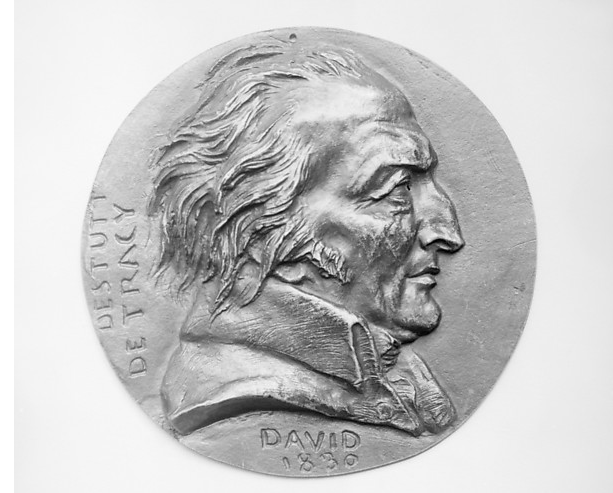
It is scarcely two hundred years since the progress of civilization, of industry, of commerce, that of the social order, and perhaps also the increase of specie, have given to governments the facility of making loans; and in this short space of time these dangerous expedients have led them all either to total or partial bankruptcies, sometimes repeated, or to the equally shameful and more grevious resource of paper money, or to remain overburdened under the weight of a load which daily becomes more insupportable.

But I go farther. I maintain that the evil is not in the abuse; but in the use itself of loans, that is to say that the abuse and the use are one and the same thing; and that every time a government borrows it takes a step towards its ruin. The reason of this is simple: A loan may be a good operation for an industrious man, whose consumption reproduces with profit. By means of the sums which he borrows, he augments this productive consumption; and with it his profits. But a government which is a consumer of the class of those whose consumption is sterile and destructive, dissipates what it borrows, it is so much lost for ever; and it remains burdened with a debt, which is so much taken from its future means.

Categories
national politics & policies Popular too much government

E-Panic

One of the better arguments for government relies upon sobriety: we want rational, measured responses to threats, not panicky, hot-headed reactions. We have a rule of law to prevent revenge and vendetta, replacing them with justice and civil order.

But when we expand the concept of “threat” far beyond interpersonal violence and to dangers from our own foolish or merely misguided behavior, “sobriety” too often doesn’t even seem an option.

Take drugs. 

Specifically, take “vaping.” 

That is the innovative technology of “e-cigarettes” that can be used to replace the smoking of tobacco and other drugs with inhaling drug-laced water vapor.

Vaping is far less dangerous than tobacco, at least for emphysema and lung cancer, but it is not harmless. Several hundred people across several of these United States have become very ill and a few have died of a mysterious lung disease.

So of course the Surgeon General calls it an epidemic, and the White House and Congress take up the cause to regulate and even prohibit vaping. And India just “became the latest country to ban electronic cigarettes,” according to Bloomberg

Whoa, the subject has barely been studied, and what we know so far is that it was not major-brand nicotine e-liquid, but, instead, boutique product that has caused most of the casualties. 

The leap to legislation has been too quick for consumers to alter their own behavior with new information.

Besides, prohibition and regulation haven’t worked to prevent the current opiate overdose crisis.

The rush to “do something very, very strong,” as President Trump puts it, is the very opposite of why we say we want government.

Its lack of sobriety is . . . sobering.

This is Common Sense. I’m Paul Jacob.


PDF for printing

vape, vaping, law, ban, prohibition,

See all recent commentary
(simplified and organized)
See recent popular posts


Categories
Today

Sweden minus Norway

On September 23, 1905, Norway and Sweden signed the “Karlstad treaty,” peacefully dissolving the union between the two countries.