Categories
insider corruption

Nepotism Today

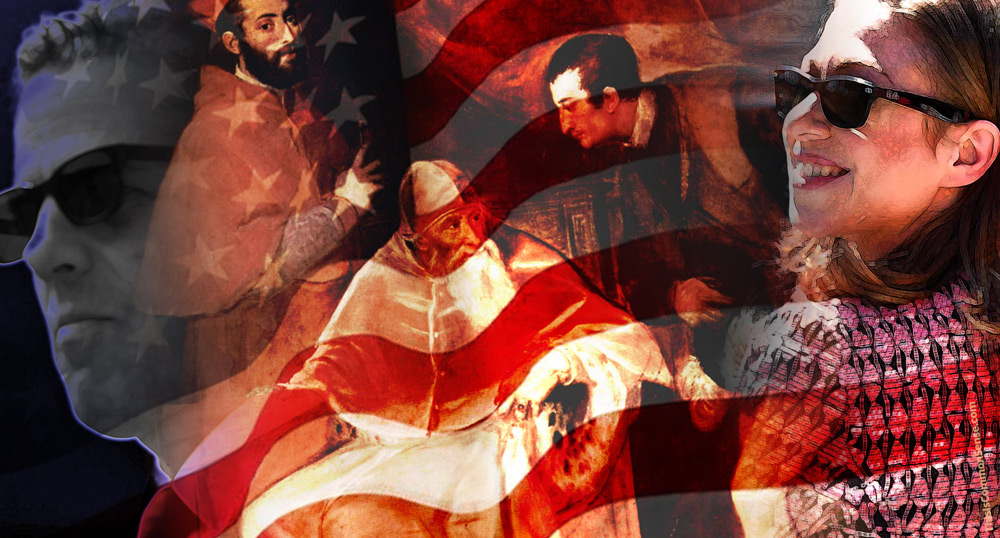
The Democrats’ impeachment of Donald Trump has made us all familiar with Joe Biden’s son, Hunter — for his Burisma boardroom gig, anyway. Raking in millions despite lack of knowledge of the country or the business of the Ukrainian corporation in question certainly has the appearance of corruption.

But don’t forget Chelsea Clinton, also recently in the news.

“Chelsea Clinton reaps $9 million from corporate board position,” read the headline at The Hill, referring to her position on the board of IAC/InterActiveCorp (ticker: IACI). That’s a bit of spin, since the Barron’s article it’s based on has a more informational headline: “Chelsea Clinton’s IAC Stock Is Now Worth $9 Million,” which clearly shows that it is not her $50,000 per annum retainer that’s making her rich. 

It’s her annual booty of $250,000 in restricted IAC stock units that’s the source of her boon. 

And the fact that IAC stock has increased “89%, 50%, and 36% in 2017, 2018, and 2019, respectively.” 

Since the company is going gangbusters, her position doesn’t look worthless.

But why would she be valuable?

There’s no more evidence for her ‘business genius’ than for Hunter’s.*

It’s connections that matter, especially those that make up the systemic corporatism of our Big Business/Big Government reality.

And that family angle? Well, economist Joseph Schumpeter argued that class is based on family success, coordinated and accumulated generation by generation. But since the advantages that the children of Democratic pols bring to corporations actually depend on government policy, this makes modern technocracy look less democratic and more old-fashioned oligarch.

This is Common Sense. I’m Paul Jacob.


* Chelsea Clinton holds a Doctor of Philosophy in international relations from the University of Oxford. And, by the way, she also doesn’t “care” about money.
PDF for printing

nepotism, Hunter Biden, Chelsea Clinton, corruption,

See all recent commentary
(simplified and organized)
See recent popular posts


Categories
Thought

Gore Vidal

TV-watchers have no doubt noted so often that they are no longer aware of how often the interchangeable TV hosts handle anyone who tries to explain why something happened. “Are you suggesting that there was a conspiracy?” A twinkle starts in a pair of bright contact lenses. No matter what the answer, there is a wriggling of the body, followed by a tiny snort and a significant glance into the camera to show that the guest has just been delivered to the studio by flying saucer. This is one way for the public never to understand what actual conspirators — whether in the F.B.I. or on the Supreme Court or toiling for Big Tobacco — are up to.

Categories
Today

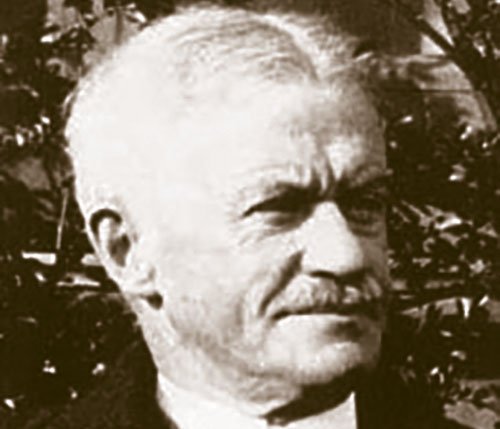
Sir Robert Peel

On February 5, 1788, Robert Peel was born. He would become one of the most important of the United Kingdom’s prime ministers, ushering in some reforms that led to the liberalization of England in the 19th century.

Peel is also regarded as the father of the modern British police — the popular term “bobbies” refers to “Bob” Peel — and as one of the founders of the modern Conservative Party. Robert Peel died in 1850.

Categories
ideological culture political economy too much government

Ex-Californians

California, “the U.S. state most synonymous with all varieties of growth — vegetal, technological, and human — is at the precipice of its first-ever population decline,” writes Derek Thompson of The Atlantic. And folks in other states like Texas and Idaho are none too happy. 

You see, the Californians fleeing are finding new homes elsewhere. Especially in Texas and Idaho.

Oddly, Mr. Thompson breezes by the biggest source of anxiety: ideology. “Texas Governor Greg Abbott issued a warning on Twitter to Californians moving to his state: ‘Remember those high taxes, burdensome regulations, & socialistic agenda advanced in CA? We don’t believe in that.’ The sentiment was echoed in various warnings in Dallas newspapers about the awful ‘California-ing’ of North Texas.” Thompson quickly moves on to interrogate how real the general exodus from the Golden State is.

Which is interesting — but much more important is the main worry about all immigration: will these new citizens vote to overturn the order that attracted them in the first place?

There is certainly anecdotal evidence that this can be a real problem.

Also not mentioned in the The Atlantic squib is just how messed up California now is.

What can be done? The idea humorously floated by an Idaho politician — a “$26 billion wall to keep out people moving from the Golden State” — is just a joke.

And secession/expulsion of the 23rd state in the union is not realistic, either.

What is realistic is for non-California politicians to float in the U.S. Congress a willingness to break up the state into separate pieces, creating at least two new states. At least then, Jefferson State citizens could put up with West California émigrés. 

This is Common Sense. I’m Paul Jacob.


N.B. There are very serious political problems of representation in California that breaking up could help fix, by increasing the number of legislators and minimizing the ratio between representatives and the people they serve.

PDF for printing

Texas, California, democracy, migration, immigration,

See all recent commentary
(simplified and organized)
See recent popular posts
Categories
Today

First President

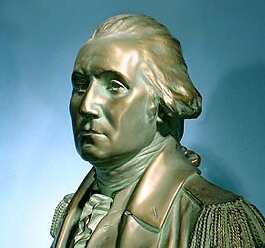
On February 4, 1789, George Washington was unanimously elected as the first President of the United States, under the new Constitution, by the U.S. Electoral College.

On the same date five years later, the French legislature abolished slavery throughout all territories of the French Republic.

Categories
Thought

Albert Jay Nock

Price-regulation by State authority (through State purchase, like our Farm Board) was tried in China about 350 B.c. It did not work. It was tried again, with State distribution, in the first century A.D., and did not work. Private trading was suppressed in the second century B.C., and regional planning was tried a little later. They did not work; the costs were too high. In the eleventh century A.D., a plan like the R.F.C. was tried, but again cost too much. State monopolies are very old; there were two in China in the seventh century B.C. I suppose there is not a single item on the modern politician’s agenda that was not tried and found wanting ages ago

Categories
free trade & free markets international affairs

Albion, Weak or Strong?

The European Union is an anti-democratic, quasi-tyrannical mess. And Great Britain, having Brexited over the weekend, has a chance at a clean-up job. But that doesn’t mean that Britain won’t go down a very dark path, creating an even bigger mess.

Freedom provides opportunities to fail as well as to succeed.

On page 17 of the latest issue of The Economist, we get a hint at what can go wrong.

In a word: too much government. Too much regulation, taxation, etc.

“No longer such a smooth ride” reads the headline, with a tag just below it: “A weakened Britain hopes to draw strength from its alliance with the United States. Good luck with that.”

Snark aside, there is a lot wrong here. Post-Brexit Britain is not obviously weaker — indeed, actually following through on the Brexit issue itself is a sign of strength. Admittedly, Theresa May was weak. And the nearly destroyed communists of the Labor Party are weaker yet. 

But Britain has great opportunity to strengthen itself, now.

The first issue that The Economist notes throws cold water on Brexit ebullience is trade. “If the British government persists with plans for a digital-services tax that would hit tech giants, America has said it will retaliate with punitive tariffs on British car exports.” Well, yeah.

Britain would harm itself by not embracing a free trade agreement with the United States, post haste. The model should be the Cobden-Chevalier Treaty of 1860, which set Britain on a major upward course — and France, too. A similar treaty could be a bounty for both Britain and America.

But the usual ardor for taxes, regulation, and intrusive government could transform Brexit from boon to bust.

This is Common Sense. I’m Paul Jacob.


PDF for printing

British Liberty, British Flag, Brexit,

See all recent commentary
(simplified and organized)
See recent popular posts

Categories
Today

Arkansas at the Apex

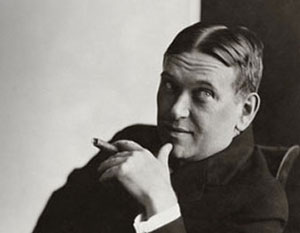
On February 3, 1931, the legislature of the State of Arkansas passes a motion to pray for the soul of journalist H. L. Mencken, after he calls the state the “apex of moronia.”

Categories
Today

The Free Constitution of Nationality?

On March 3, 1924, the 407-year-old Islamic caliphate was abolished, when Caliph Abdülmecid II of the Ottoman Caliphate was deposed. The last remnant of the old regime gives way to the reformed Turkey of Kemal Atatürk. On the same day, the Free State of Fiume was annexed by the Kingdom of Italy.

On March 3, 1931, the United States adopted The Star-Spangled Banner as its national anthem.

Eight years later, in Bombay, Mohandas Gandhi began a hunger strike in protest at the autocratic rule in British India.


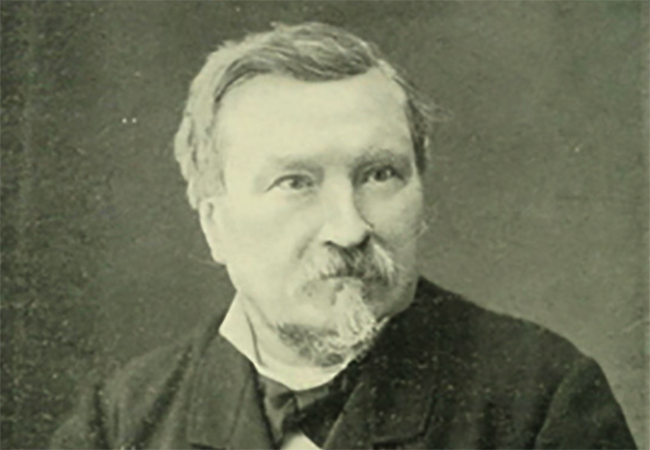
Belgian economist Gustave de Molinari (pictured) was born on March 3, 1819. Associated with French laissez-faire economists Frédéric Bastiat and Yves Guyot, he was the longest-serving editor of Guillamin’s Journal des économistes. Today chiefly known in the English-speaking world for his authorship of one article, “The Production of Security” (1849), he was, as Ludwig von Mises described, the most productive economist in his school. Despite this, and his worldwide recognition, only one of his many books was translated from the French into English during his lifetime, The Society of To-morrow (1904), his final book. Molinari died on January 28, 1912.

Man is an organism composed of vital, physical, intellectual, and moral forces. This matter and these forces, which form the individual and the species, can only be preserved and developed by the assimilation, or, to use the economic term, the consumption of materials and forces of like nature. Failing this consumption, their vitality wastes and is finally extinguished. But waste and extinction of vitality cause pain and suffering, and it is the stimulus of pain and suffering which impels man to acquire the materials necessary for the development and preservation of his life. All these materials are present in his environment, air, &c.; and nature gives him a small number free of cost. But with the exception of this minority they must be discovered, acquired, and adapted to the purposes of consumption. Man must be a producer.

Opening paragraph, The Society of To-morrow (1904).

In this final book, Molinari offered a political program he called the “free constitution of nationality.”

Categories
Thought

Max Weber

Politics is a strong and slow boring of hard boards.