The rules of navigation never navigated a ship. The rules of architecture never built a house.
Categories
Thomas Reid
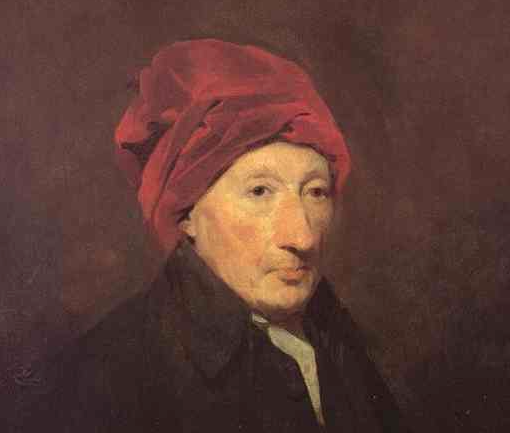
The rules of navigation never navigated a ship. The rules of architecture never built a house.
If I am free to be a pitcher or a poet, I am freer than if my options are being a pitcher or a shortstop.
Christine Swanton, Endoxa 15, Freedom: A Coherence Theory (1992), p. 194.
Nowadays, all sorts of people call their political opponents “fascist,” often on the shakiest of rationales. Well, The Manifesto of Fascist Intellectuals was first published in Il Mondo, then by most Italian newspapers on April 21, 1925 — the national, anniversary-day celebration of the Founding of Rome (ca. April 21, 753 BC).
It might be a good idea to consult this original document, for a good idea what politics’ “f-word” originally meant:
Fascism was . . . a political and moral movement at its origins. It understood and championed politics as a training ground for self-denial and self-sacrifice in the name of an idea, one which would provide the individual with his reason for being, his freedom, and all his rights. The idea in question is that of the fatherland. It is an ideal that is a continuous and inexhaustible process of historical actualization. It represents a distinct and singular embodiment of a civilization’s traditions which, far from withering as a dead memory of the past, assumes the form of a personality focussed on the end towards which it strives. The fatherland is, thus, a mission.
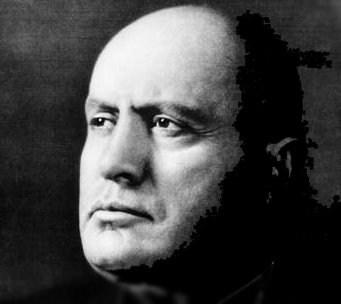
The manifesto was written by Giovanni Gentile, in support of the regime of Benito Mussolini (pictured above).
Less than two weeks later, on May 1, 1925, Il Mondo published philosopher Benedetto Croce’s The Manifesto of the Anti-Fascist Intellectuals.
“As the lock-downs come to an end,” writes economist Daniel Kian Mc Kiernan, “it will be expected by many — including many not on the political left — that the economy will pick-up at about where it was before the lock-downs.”
Mc Kiernan thinks a popular misconception will get in the way.
Those who see the economy as “a kernel of processes that take inputs and produce outputs based upon purely technologic considerations” will let this techocratic model cloud their thinking. Viewing this “kernel” as producing not only “everything necessary to maintain itself” but also, and more importantly, a surplus that they treat as a zero sum affair — requiring the State to redistribute — they will regard the re-start as if a mere flipping on of a switch.
But the economy is not something to be un-plugged and plugged back in, and the lock-down super-quarantine was not a mere interruption of service. It was a huge blow that will demand uncountable adjustments. Those quite necessary adjustments may seem random, even wild, and because of this those on the “political left” will, Mc Kiernan predicts, do what they always do: “diagnose the failure to restore the economy quickly as ‘a failure of capitalism.’”
In other words, the bully knocks the victim down, stomps on him, and then taunts him for not getting up right away.
Still worse: those taunts will become excuses for more kicking and stomping. And the flailing economy will be seen as all the more justification for more of the bully-boy Big Government policies that caused the “failure.”
This is Common Sense. I’m Paul Jacob.
See all recent commentary
(simplified and organized)
See recent popular posts
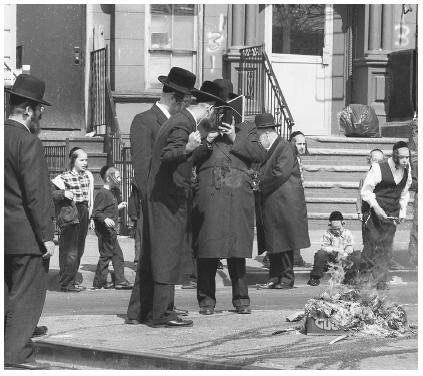
On April 20, 1657, freedom of religion was granted to the Jews of New Amsterdam (which was later renamed New York City).
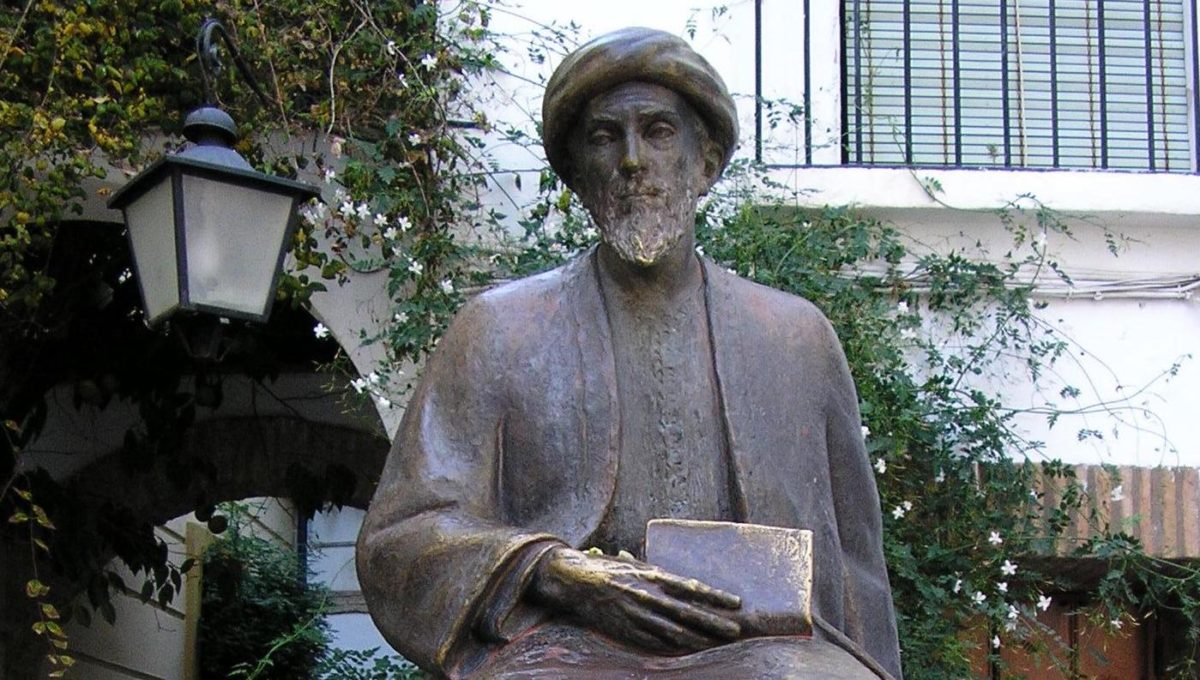
It is better and more satisfactory to acquit a thousand guilty persons than to put a single innocent one to death.
Moshe ben Maimon (commonly known as Moses Maimònides), Sefer Hamitzvot [Book of the Commandments], commentary on Negative Commandment 290, as translated by Charles B. Chavel (1967).

This is the first episode of the podcast that has a little something extra in the video version, other than the visuals. Banter. Is banter worth switching from audio to full A/V? Only you can decide:
On April 19, 1775, the American Revolution began when the “shot heard around the world” was fired between the 700 British troops on a mission to capture Patriot leaders Sam Adams and John Hancock and to seize a Patriot arsenal and the 77 armed minutemen under Captain John Parker waiting for them on the Lexington town green. The Battle of Lexington ended with eight Americans killed and ten wounded, along with one wounded British soldier.
In Concord, a couple of hours later, British troops were encircled by hundreds of armed Patriots. The British commander ordered his men to return to Boston without directly engaging the Americans, but on the 16-mile journey they were constantly attacked by Patriot marksmen firing at them Indian-style from behind trees, rocks, and stone walls. By the time the British reached the safety of Boston, nearly 300 soldiers had been killed, wounded, or were missing in action. The Patriots suffered fewer than 100 casualties. (See Liberty’s Kids for a video on these events, or the video featured on this page.)
On April 19, 1782, John Adams secured the Dutch Republic’s recognition of the United States as an independent government.
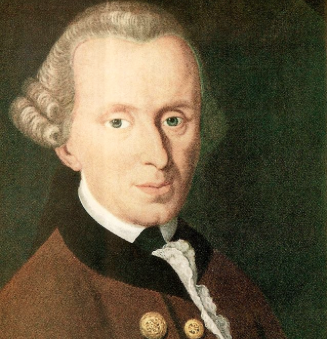
Out of the crooked timber of humanity, no straight thing was ever made.
The shutdowns are under way, and the questions are only accumulating: