On May 28, 1952, the women of Greece gained the right to vote.
Categories
Greek voters

On May 28, 1952, the women of Greece gained the right to vote.
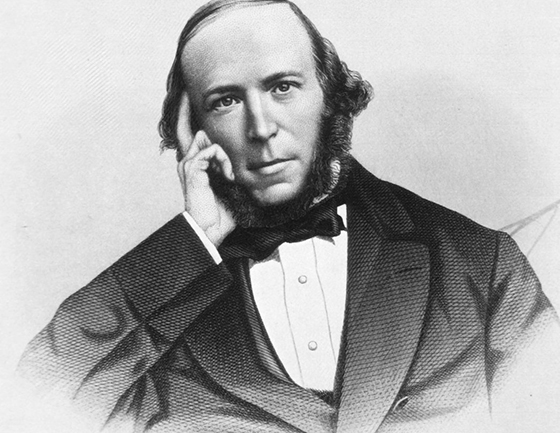
“The great aim of education is not knowledge but action.”
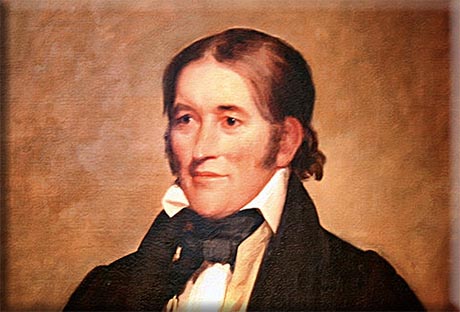
We have the right as individuals to give away as much of our own money as we please in charity; but as members of Congress we have no right to appropriate a dollar of the public money.
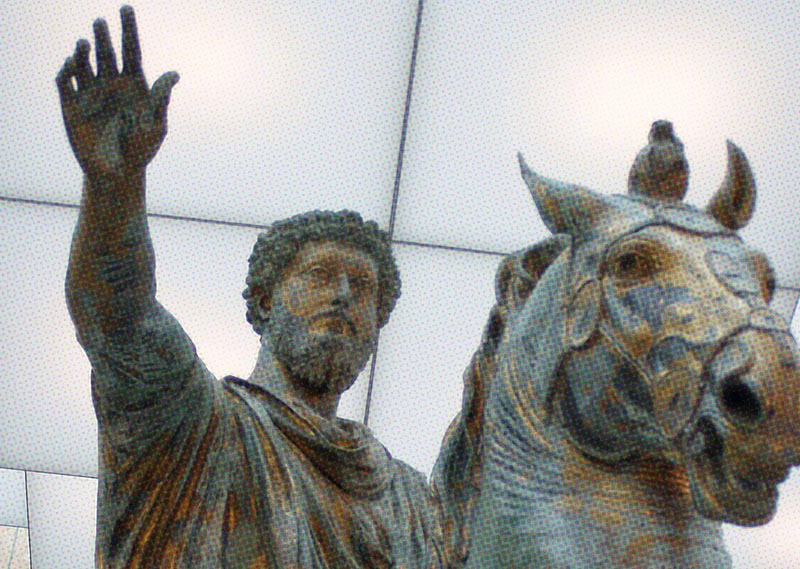
“The happiness of your life depends upon the quality of your thoughts.”

“Salon À la Mode owner Shelley Luther was sentenced to seven days in jail for criminal and civil contempt and a $7,000 fine,” the Dallas-Ft. Worth CBS affiliate reported Tuesday, “for defying Governor Greg Abbott’s stay-at-home rules.”
She dared to open her beauty salon . . . and tore up a county judge’s related and official-looking cease and desist order.
Another judge offered to spare her jail if she would confess that her “actions were selfish” and, the judge lectured, “putting your own interest ahead of those in the community in which you live.” Luther responded decisively: “Feeding my kids isn’t selfish.”
Calling for Luther’s “immediate release,” Attorney General Ken Paxton articulated smart policy: “The judge should not put people in jail like her who are just trying to make a living.”
That should be written in law — sans the “like her” part.
The agile Governor Abbott, the rule’s originator, ducked responsibility with “surely there are less restrictive means to achieving [public safety] than jailing a Texas mother.”
Then, governor, why the command?
“I am modifying my executive orders,” Abbott declared yesterday, “to ensure confinement is not a punishment for violating an order.”
The Lieutenant Governor paid her fine.
Shelley Luther was “free” — and on Fox News last night.
But have we learned anything?
Why not provide the public with the best information available and allow people to make their own decisions? No orders. Businesspeople would be free to do what they think is best. At-risk folks would be free to be very careful.
Obviously, governments can help. But best through persuasion, remembering they work for us.
Free people.
This is Common Sense. I’m Paul Jacob.
Note: In The Wisdom of Crowds (2004), James Surowiecki posited that “a diverse collection of independently deciding individuals” can make complex decisions better than the experts. Exactly.
See all recent commentary
(simplified and organized)
See recent popular posts
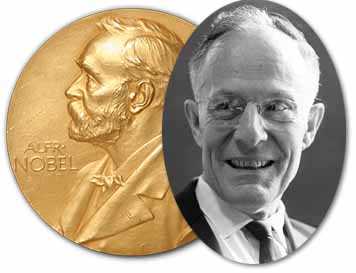
On April 30, 1902, economist Theodore W. Schultz was born. His work studying the quick post-war recovery in Germany and Japan led to his development of “human capital theory,” explicated in many books, including Investing in People (1981). He was co-winner (with William Arthur Lewis) of the 1979 Alfred Nobel Memorial Prize in Economic Sciences. Schultz died in 1998.
Herbert Spencer, “State-Tamperings With Money and Banks,” Westminster Review (January 1858), which is a review of J. S. Mill’s Principles of Political Economy (1857), Henry Dunning Macleod’s The Elements of Political Economy (1857), Thomas Tooke’s On the Bank Charter Act of 1844 (1856), and James Wilson’s Capital, Currency and Banking (1847). This aphorism was “memed” on this site at https://thisiscommonsense.org////2015/02/09/something-about-folly/.
The ultimate result of shielding men from the effects of folly, is to fill the world with fools.
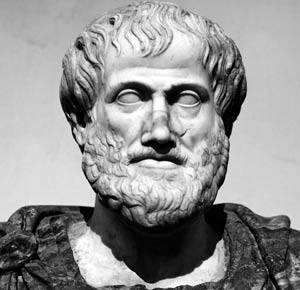
Any one can get angry — that is easy — or give or spend money; but to do this to the right person, to the right extent, at the right time, with the right motive, and in the right way, that is not for every one, nor is it easy.
Aristotle, Nicomachean Ethics, Book Two.

On April 23, 1968, students at New York City’s Columbia University held a demonstration to protest military research and the condemnation of part of the neighboring Morningside Heights section of Harlem to make way for a new student gymnasium. The protest escalated into a week-long occupation of five campus buildings before police moved in. Some 712 students were arrested, and over 100 injured during the forcible eviction. After the university-ordered police response, a student strike shut down the campus for the rest of the semester.
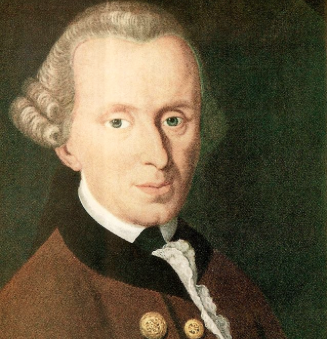
On April 22, 1724, philosopher Immanuel Kant was born.
Aside from being the pre-eminent modern philosopher and originator of transcendental idealism, Kant was also a major figure of Enlightenment thought, a classical liberal, and the originator of the notion of the Categorial Imperative. He was an early and important astronomical theorist in his early career, but produced his greatest works towards the end of his life, including The Critique of Pure Reason and The Groundwork for the Metaphysics of Morals. He was also author of the 1795 essay “Perpetual Peace: A Philosophical Sketch.”
Arthur Schopenhauer is widely known as an admiring and astute critic of Kant’s thought, while philosophical opponents include Friedrich Nietzsche and Ayn Rand. Kant’s approach to ethics continues to excite interest today, with some of the revival a result of the work of John Rawls.
Kant died on February 12, 1804, in Königsberg, Prussia (now Kaliningrad, Russia), where he had lived the bulk of his life.