Categories
Thought

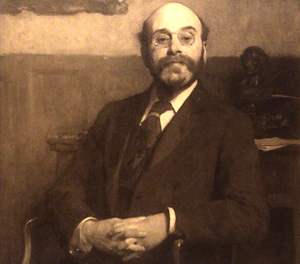
Comte de Volney

Who knows but that hereafter some traveller like myself will sit down upon the banks of the Seine, the Thames, or the Zuyder Zee, where now, in the tumult of enjoyment, the heart and the eyes are too slow to take in the multitude of sensations? Who knows but he will sit down solitary amid silent ruins, and weep a people inurned and their greatness changed into an empty name?

Constantin-François de Chassebœuf (1757–1820), Comte de Volney, The Ruins; Or, Meditation on the Revolutions of Empires: And The Law of Nature, Chapter II (Thomas Jefferson, translator).
Categories
Today

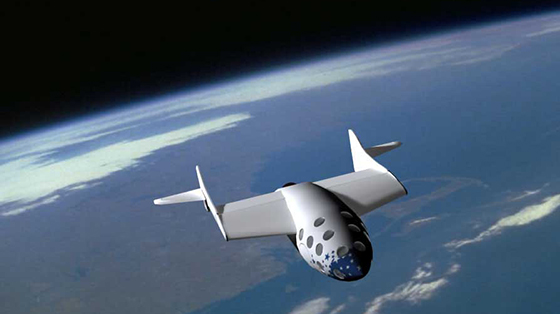
SpaceShipOne

On October 4, 2004, SpaceShipOne became the first private craft to fly into space, thereby winning the Ansari X Prize for private spaceflight.

Categories
too much government

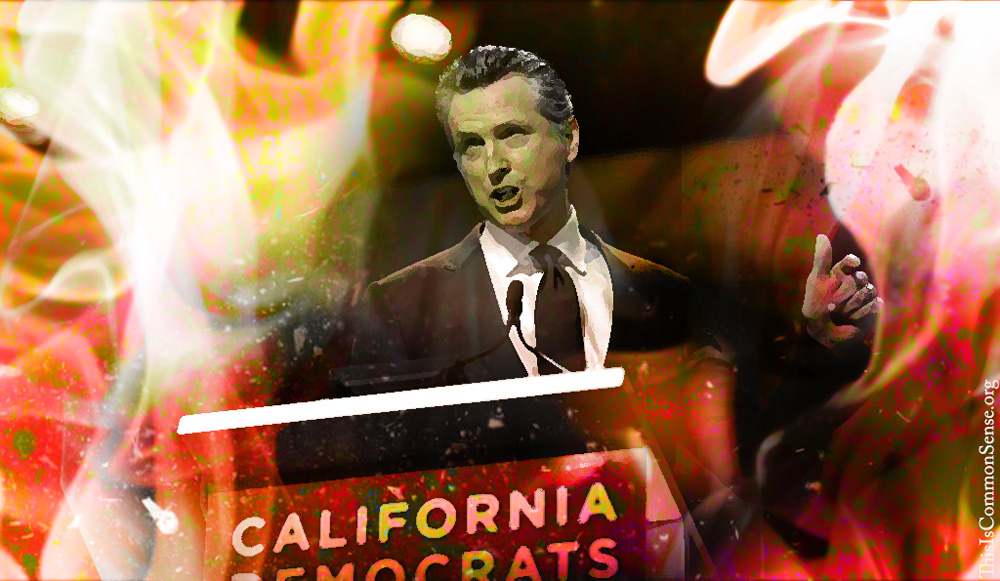
How Quickly Can California Be Destroyed?

It’s hard to destroy a state. Or rather, the advanced industrial economy of a state.

Mud slides, eco-policy-abetted wildfires, exploding taxes and spending and regulations, riots, pandemics — such things go only so far. After the latest holocausts and catastrophes abate (if they do), survivors can still soldier on. Mow the lawn, say hello to neighbors, hop in the car to get to work, and so forth.

Is there a solution? Yes! Pile on the calamities thicker, faster, harder. While people are still reeling from one natural disaster or lunatic policy decision, slug them again!

California Governor Gavin Newsom is taking this lesson to heart, bless him. He has signed an order banning production of emission-emitting cars and light trucks by 2035, in hopes of eliminating “sales of internal combustion engines.”

He also wants lawmakers to get cracking on banning fracking. No point helping to produce abundant means of combustion if you’re outlawing combustion.

Alas, though Newsom’s heart is in the right place, he’s still somewhat pandering to friends of civilization and transportation. If gas be so wicked, turn off the spigot ipso pronto. Well, maybe in a month or two to give people a chance to practice their walking. Then shutter all carbon-emitting factories that make all the cars, including electric cars.

If the key to life is paying fealty to environmentalist pieties immunized from cogent analysis, we must end industry ASAP. Stopping plastic straws and internal combustion isn’t enough.

Sock it to ’em!

This is Common Sense. I’m Paul Jacob.


PDF for printing

See all recent commentary
(simplified and organized)
See recent popular posts
Categories
Today

Stroke?

On October 2, 1789, George Washington sent the proposed Constitutional amendments (the United States’ Constitution’s Bill of Rights) to the States for ratification.

On the same date in 1919, U.S. President Woodrow Wilson suffered a massive stroke, leaving him partially paralyzed, preventing him from reacting to the economic downturn following the Great War in a Progressive fashion, making his response de facto laissez faire. One insider, and skeptic of Progressive hubris, cattily referred to Wilson’s incapacitation as “a stroke of luck.”

His successor in office, President Warren G. Harding, would go on to massively cut spending as well as taxes, and take on regulation as well. He also released Woodrow Wilson’s domestic war prisoners — ranging from journalists, ordinary folk to socialist presidential candidate Eugene V. Debs — who had dissented from Wilson’s involvement in the war.

The Depression of the early 1920s, though as deep as the early 1930s, proved remarkably brief, thanks to Harding . . . and a “stroke of luck.”

Categories
Thought

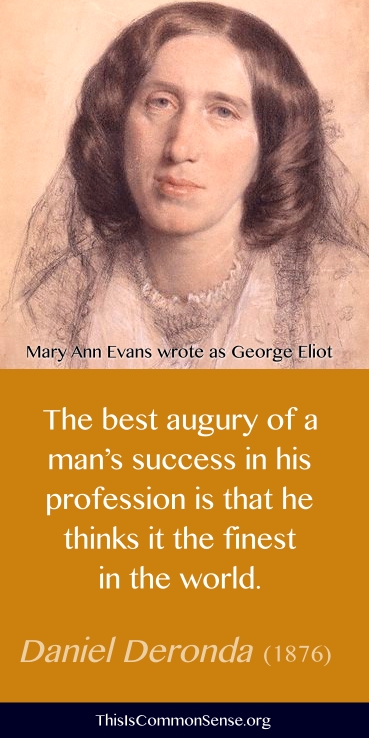
George Eliot

The best augury of a man’s success in his profession is that he thinks it the finest in the world.

Mary Ann Evans, writing as George Eliot, Daniel Deronda (1876).

Categories
Today

Model T

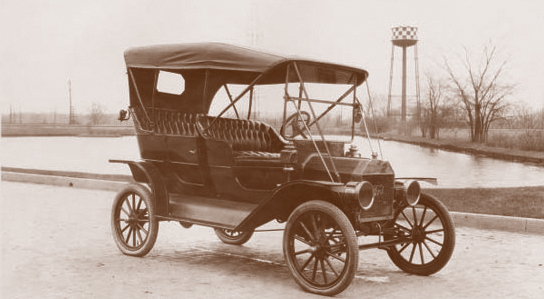
On October 1, 1908, Ford produced the first Model T at a plant in Detroit. The auto could travel 40 miles per hour and ran on gasoline or hemp-based fuel. (As oil prices fell, Ford phased out the hemp option.) The Model T was the first car designed for a mass market, rather than as a luxury item. By 1927, Ford had built 15 million Model T cars – the longest production run of any car model until the Volkswagen Beetle surpassed it in 1972.

On October 1, 1918, Lawrence of Arabia (T.E. Lawrence) helped lead a combined Arab and British force that captured Damascus from the Turks during World War I.

Categories
Today

Buchanan & Vidal

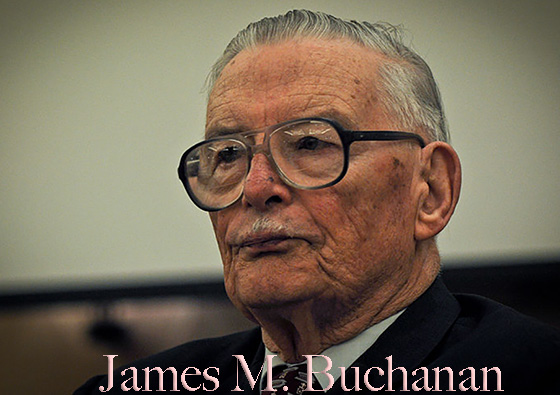
On October 3, 1919, James M. Buchanan was born. Buchanan would develop the theory of “Public Choice,” and receiving the 1986 Nobel Memorial Prize in Economic Sciences for his work. His books include Cost and Choice, The Calculus of Consent (with Gordon Tullock), and The Limits of Liberty: Between Anarchy and Leviathan. Some of his most interesting research was into the realm of constitutional theory and practice.

He died January 9, 2013.


In 1925, on this date, Gore Vidal was born. Vidal would go on to become one of the leading post-WWII liberal essayists as well as a major novelist and screenwriter. His most famous novels include Burr, 1876, and Lincoln, installments in his American history series; his collection of essays, The United States, was one of his many bestsellers. Vidal was an elitist who expressed sympathy for populism and socialism, but also was a radical civil libertarian, and may occupy the extreme of the “liberal” quadrant in American political ideology: great on personal liberties but quite bad one market/property liberties.

He died on July 31, 2012.

Categories
Thought

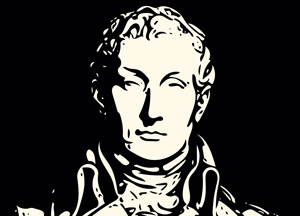
Lord Acton

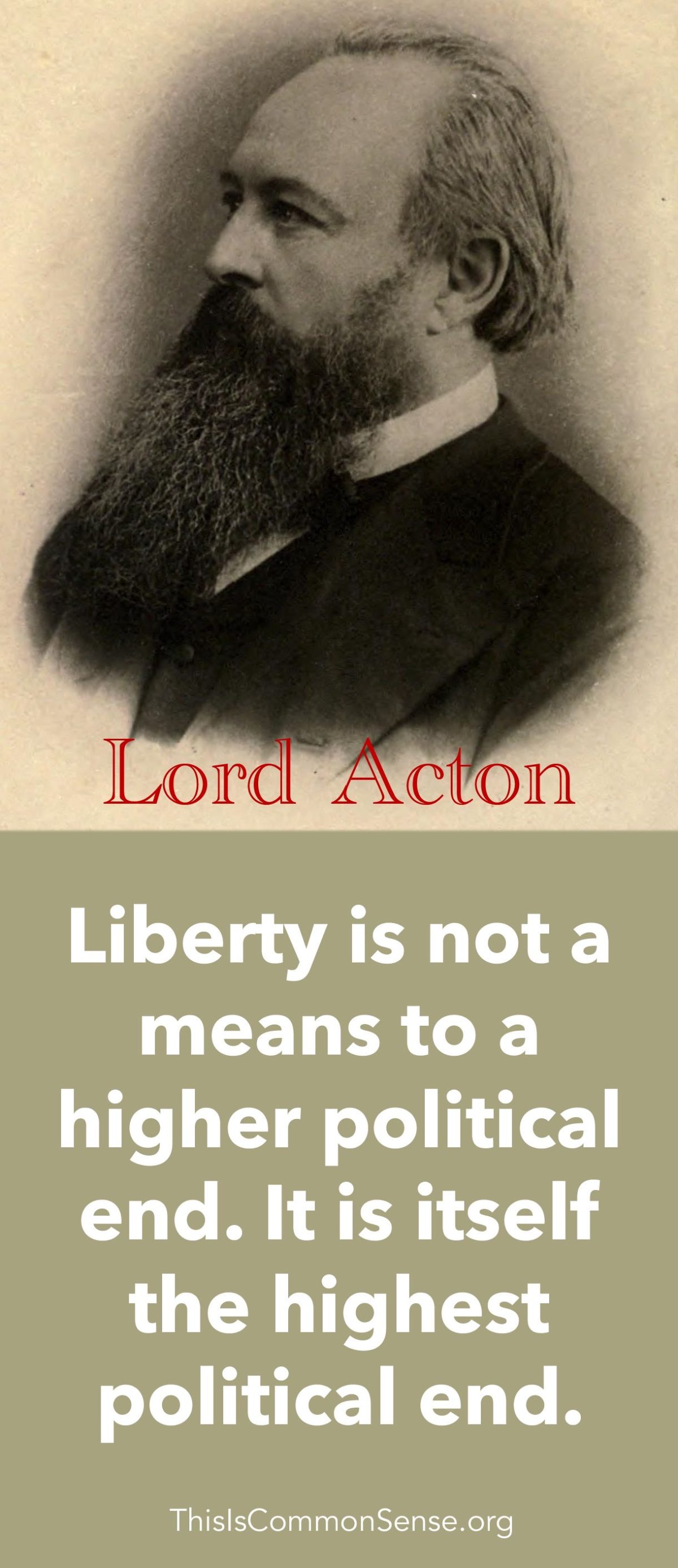
Liberty and good government do not exclude each other; and there are excellent reasons why they should go together. Liberty is not a means to a higher political end. It is itself the highest political end. It is not for the sake of a good public administration that it is required, but for security in the pursuit of the highest objects of civil society, and of private life.

John Dalberg-Acton, 1st Baron Acton, The History of Freedom in Antiquity (1877).
Categories
by Paul Jacob video

Watch: Who Is Responsible.

Asked and answered:

This Week in Common Sense, September 25, 2020.
Categories
Thought

J.H. Levy

Our intellectual and moral natures come into play only when we discriminate and decide for ourselves. Just so far as this discrimination and decision are taken away from us, we are deprived of the most essential element of our manhood and womanhood, and are turned into mere tools propelled from without. That any community can, in the long run, gain by thus dwarfing and paralyzing the humanity of its members — that we could long succeed, even for administrative purposes, under such a system, is the notion of a moral spendthrift.

Joseph Hiam Levy, The Outcome of Individualism (Third Edition, 1892).