On December 4, 1783, at Fraunces Tavern in New York City, General George Washington formally bade his officers farewell.
Categories
A Farewell to Arms
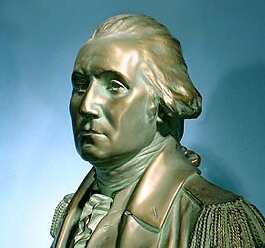
On December 4, 1783, at Fraunces Tavern in New York City, General George Washington formally bade his officers farewell.
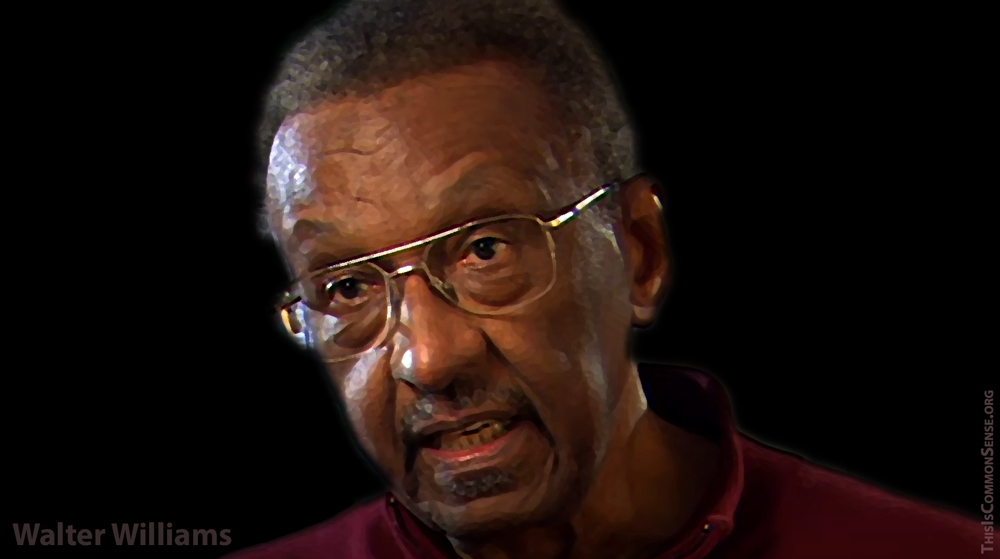
Walter Williams died today. Or, by the time you read this, yesterday.
Williams was a major figure in economics education, instrumental in building an economics program at George Mason University. Plus, he popularized economics for a wider audience with books, columns, and regular guest radio appearances on Rush Limbaugh’s show.
Dinesh D’Souza, in his video tribute, called Williams “an economist, an individualist, and an African-American conservative” when such people were rare. Especially the African-American variety.
Now, Williams’ main themes were not so much conservative as libertarian, citing Frédéric Bastiat a whole lot more than Edmund Burke. But D’Souza no doubt indicates that when he calls Williams an individualist. Consider it a euphemism for libertarian.
And Williams certainly was an Individual — an individualist in more than just the political sense — though, we saw his resistance to mob pressure and groupthink most clearly in the realm of ideology.
He could certainly have gotten wider praise had he stuck closer to the culturally dominant notion of what an African-American intellectual’s role was supposed to be. But instead of pushing “discrimination” as the major factor in differences of wealth and health outcomes in ethnic and racial groups in America, he insisted that actions have consequences, constantly reiterating the major themes of the classical liberal economists Adam Smith and Milton Friedman: people provide greater benefit to the general welfare when they marshal their own resources in a private property/free trade framework than when they pretentiously talk about the “public good” through special government programs.
When two people trade, both gain.
In politics, it’s too often about taking from some to give to others.
By being himself, going his own way, Walter Williams himself provided a great example of how to serve the common good.
This is Common Sense. I’m Paul Jacob.
See all recent commentary
(simplified and organized)
See recent popular posts
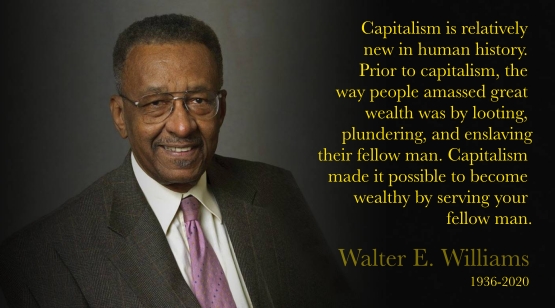
Capitalism is relatively new in human history. Prior to capitalism, the way people amassed great wealth was by looting, plundering, and enslaving their fellow man. Capitalism made it possible to become wealthy by serving your fellow man.
Walter E. Williams (born March 31, 1936), Bradley Prize Winner 2017, was Professor of Economics at George Mason University. He died on December 2, 2020.

We don’t live in a Star Wars universe. Not yet. But certain themes crop up: republic gives way to empire, and elite corps of . . . magic fighters? . . . seek to run a technocratic state.
Donald Trump was cast by Democrats as an evil emperor sort of figure, but he didn’t quite fit that script — being the only president in two decades not to engage in a regime-change war.
So, with President-not-quite-Elect Joe Biden publicly announcing his new cabinet heads, we can see the old script followed closely, with the imperial guard piling up outside the fence at 1600 Pennsylvania, panting for power.
Though there are reams of news stories about this to pore over — the picks are big news — I’ll focus on Reason’s round-up. Of course, Biden is offering up Big Spenders (for whom deficits and debts just don’t matter*) as well as gung-ho interventionists. Take the Secretary of State candidate, Antony Blinken, profiled by Bonnie Kristian. While the proposed Secretary pro forma admitted that America cannot “solve all the world’s problems alone,” he then suggested that “our government can solve all the world’s problems if only it partners with other governments,” Ms. Kristian relates. She notes that Blinken has supported “U.S. military action in Libya, Yemen, and Syria.
“And though he has since regretted the Yemen call, he believes the mistake in Syria was a failure to escalate.”
President Donald John Trump has followed the bomber love of his advisors, but has never quite bought into the need to escalate every conflict. And for that audacity, the foreign policy establishment has loathed him.
When Biden does hobble into the White House, we can unfortunately expect fewer ‘failures to escalate.’
This is Common Sense. I’m Paul Jacob.
* While Republicans do almost nothing to hold back deficit spending, and consequent debt accumulation, Democrats increasingly demonstrate a special zealotry in confessing their lack of concern.
See all recent commentary
(simplified and organized)
See recent popular posts
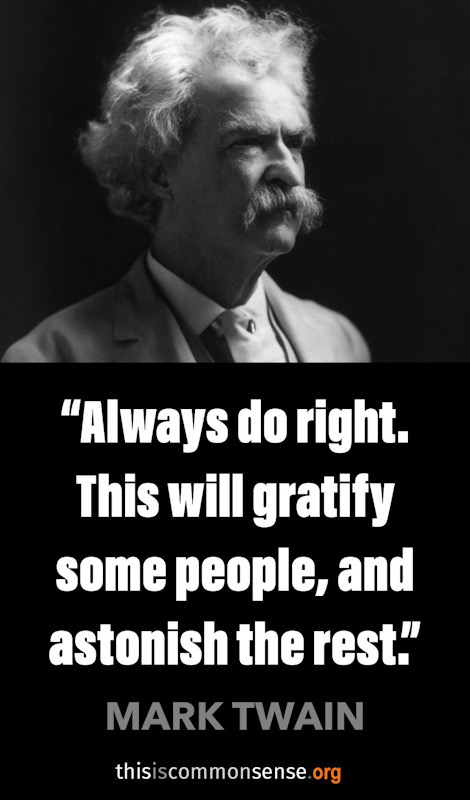
Always do right. This will gratify some people, and astonish the rest.
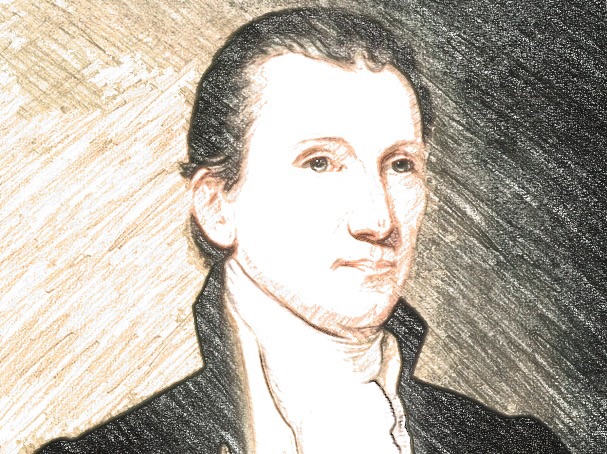
On December 2, 1823, U.S. President James Monroe delivered a speech establishing American neutrality in future European conflicts. The policy became known as the Monroe Doctrine.
Though a much-discussed principle of American foreign policy, it was undermined by the Spanish-American War and proved a dead letter as the U. S. entered World War I.
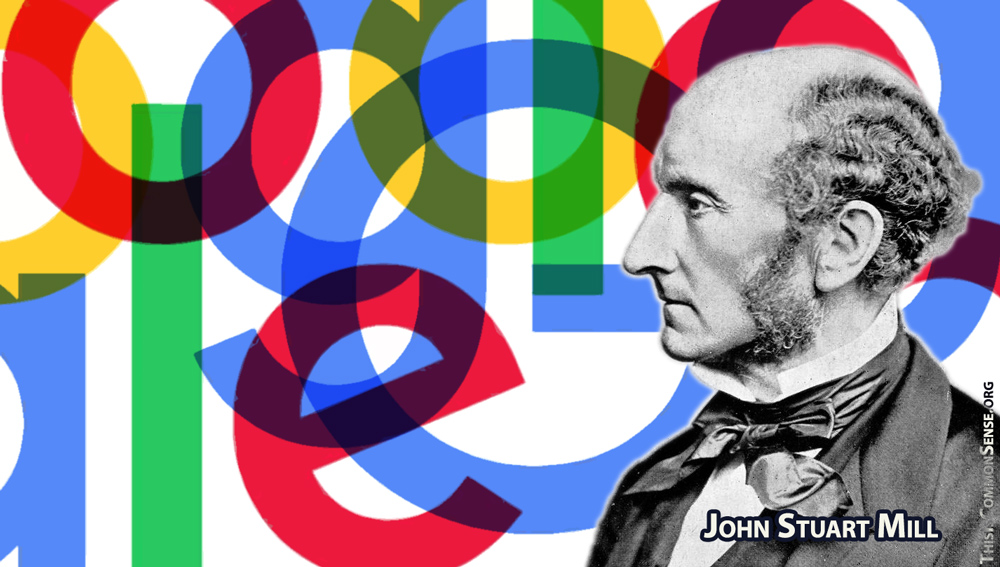
Maybe it’s an honor when big-tech companies gag you. Maybe you’re doing something right.
Google-owned YouTube has yanked a Mises Institute talk by Tom Woods (“The COVID Cult”) from the Institute’s YouTube channel for challenging orthodox views of the pandemic. Google is also threatening the Mises Institute with further sanctions if the Institute’s YouTube channel sponsors further prohibited discourse.
In response, Mises Institute President Jeff Deist observes that Google and other big-tech firms have become de facto extensions of the state, “governmentalities . . . committed to ideological service. . . .”
To fight back, he says, we must “build our own platforms.” YouTube alternatives include Bitchute and Odysee, which still host the forbidden talk.
In On Liberty, John Stuart Mill argued that there’s a big difference “between presuming an opinion to be true, because, with every opportunity for contesting it, it has not been refuted, and assuming its truth for the purpose of not permitting its refutation. Complete liberty of contradicting and disproving our opinion, is the very condition which justifies us in assuming its truth for purposes of action; and on no other terms can a being with human faculties have any rational assurance of being right.”
Not every word of this passage is incontestable, but Mill had a point. If Google is so sure it is so right about COVID-19 policy and Woods so wrong, why try to kill an “opportunity for contesting” Google’s view?
Maybe Google’s “assurance of being right” is not so rational.
This is Common Sense. I’m Paul Jacob.
See all recent commentary
(simplified and organized)
See recent popular posts

Freedom, privileges, options must constantly be exercised, even at the risk of inconvenience. Otherwise they fall into desuetude and become unfashionable, unorthodox — finally irregulationary. Sometimes the person who insists upon his prerogatives seems shrill and contentious — but actually he performs a service for all. Freedom naturally should never become license; but regulation should never become restriction.
The character Amiante, in Jack Vance, Emphyrio (1969).

Paul Jacob’s weekend wrap-up in color:
Paul hopes for you, in your escapades and escapes, moves towards freedom.