The TIME “Person of the Year” deserves the pronouns ‘they/them/their’ — but should have been one Chinese politician….
Categories
Watch: Signs o’ the Times

The TIME “Person of the Year” deserves the pronouns ‘they/them/their’ — but should have been one Chinese politician….

Paul Jacob covers the big stories from democracy to TIME magazine’s cover story, to . . . UFOs:

On December 12, 1939, Finnish forces defeated those of the Soviet Union in the first major victory of what became known as the Winter War, in the Battle of Tolvajärvi.
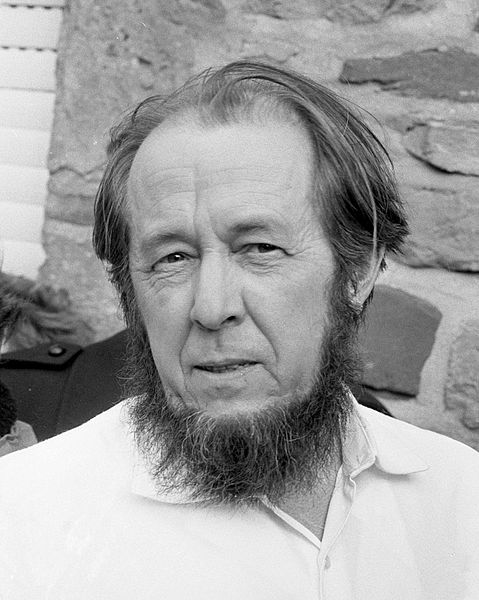
Aleksandr Isayevich Solzhenitsyn was born on December 11, 1918 (died, August 3, 2008) and, as a novelist, philosopher, historian, short story writer and dissident helped bring down the totalitarian Soviet Union. Solzhenitsyn’s novels include One Day in the Life of Ivan Denisovich (1962) and Cancer Ward (1966). His behemoth history of Soviet prison camps, The Gulag Archipelago, was a major event in the cultural eclipse of far left ideology in the West, when it was published in 1973.

Two huge stories broke this week.
The first is that the “People’s Republic” of China guided American policy for decades using “old friends” who had “penetrated the highest levels of the U.S. government and financial institutions before the Trump administration.”
Bill Gerz, writing in The Washington Times, reported that “Di Dongsheng, a professor and associate dean of the School of International Studies at Renmin University in Beijing, also suggested in a Nov. 28 speech that China’s Communist Party helped Hunter Biden, a son of presumptive President-elect Joseph R. Biden, obtain Chinese business deals.”
These remarks were posted as a video on the professor’s Weibo account (think “Chinese Facebook”). Though quickly removed, copies went viral.
The second story? “Did Donald Trump Nearly Confirm Existence of Aliens? Israeli Ex-Space Chief Makes Bizarre Claim,” by Jeffrey Martin, writing at Newsweek. “Professor Haim Eshed, who served as the head of Israel’s space program from 1981 to 2010 spoke to the Hebrew newspaper Yediot Aharonot on Sunday. On Tuesday, the Jerusalem Post published some of Eshed’s quotes in English and they contained the most incredible claims made about Trump, who has long [been] the center of conspiracy theories—some of which he has actively encouraged.”
Eshed claims that both the U.S. and Israel have had contact with extraterrestrial civilizations (a “Galactic Federation,” no less) and that President Trump was about to go full-on Full Disclosure but — somehow — the aliens stopped him.
Quite a yarn, not unfamiliar to science fiction readers and moviegoers. But note: quite a few de-classified Pentagon, FBI and CIA documents suggest something very much like this. And in the last few years we’ve covered the U.S. Government’s trickling admissions that the UFO phenomenon is not all fakery, but real and odd.
Both stories hail from professors with close ties to foreign governments. Both point to actual conspiracies. Both present “epistemic” problems for us: they are neither easily proved or disproved.
Both, also, are too eerily plausible.
This is Common Sense. I’m Paul Jacob.
See all recent commentary
(simplified and organized)
See recent popular posts
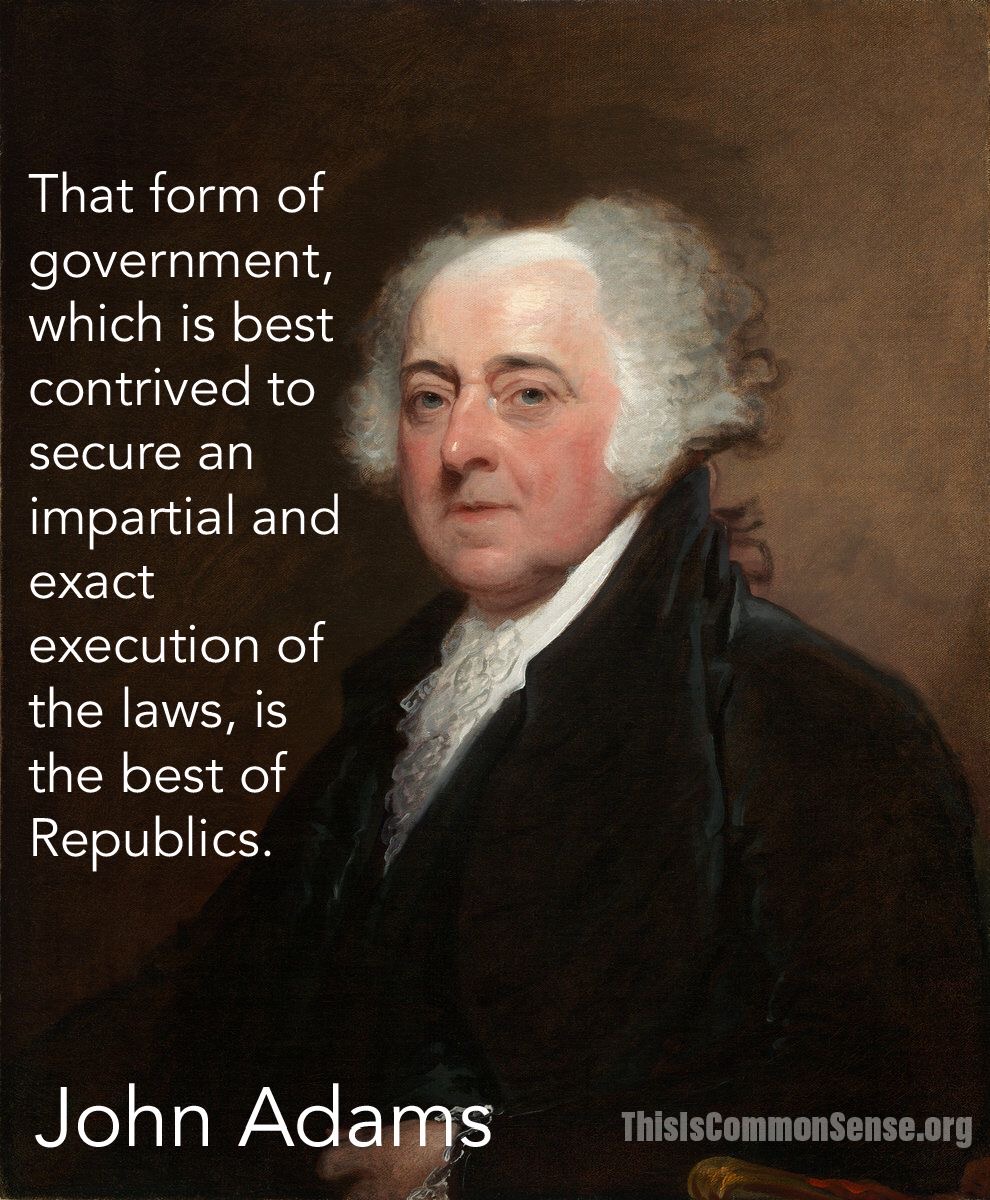
[A]s a Republic is the best of governments, so that particular arrangement of the powers of society, or in other words that form of government, which is best contrived to secure an impartial and exact execution of the laws, is the best of Republics.
John Adams, “Thoughts On Government, Applicable to the Present State of the American Colonies” (1776), passage quoted as epigraph in The State of Texas v. Commonwealth of Pennsylvania, State of Georgia, State of Michigan, and State of Wisconsin (see Viva Frei Vlawg, December 9, 2020).
On December 10, 1884, Mark Twain’s Adventures of Huckleberry Finn was first published. This novel, narrated in the first person by the title character, is a dark comedy of the antebellum South and slavery, and has been considered by many American critics and writers to qualify as the “Great American Novel.”
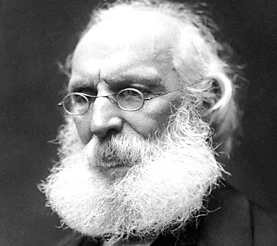
On this date in 1901, the first Nobel Peace Prizes were awarded — to economist Frédéric Passy (pictured above), co-founder of the Inter-Parliamentary Union; and to Henry Dunant the founder of the International Committee of the Red Cross.
Passy was an admirer of Richard Cobden and an active member in the French Liberal School of Political Economy that developed in the tradition of J.B. Say, Destutt de Tracy, and Frédéric Bastiat. His published works include Leçons d’économie politique (1860-61); La Démocratie et l’Instruction (1864); L’Histoire du Travail (1873); Malthus et sa Doctrine (1868); and La Solidarité du Travail et du Capital (1875).
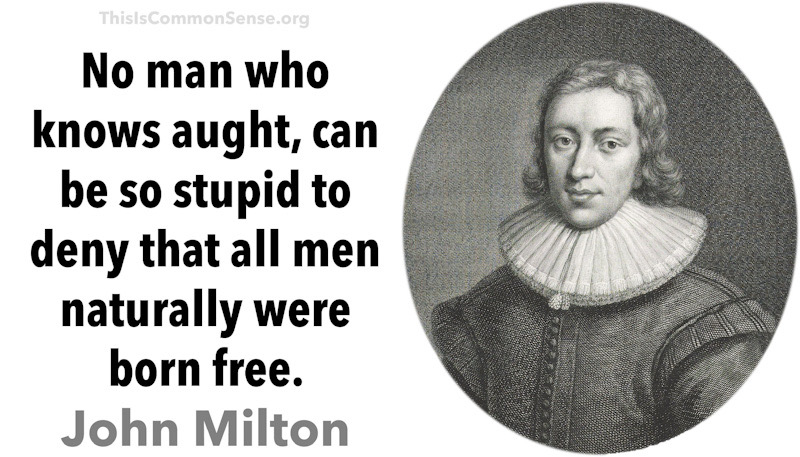
No man who knows aught, can be so stupid to deny that all men naturally were born free.
John Milton, “The Tenure of Kings and Magistrates” (1650).
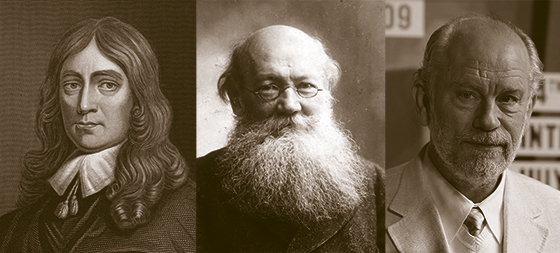
On December 9, 1958, the John Birch Society was founded in the United States. December 9 also marks the birthdays of

“Propositions are a pure democracy,” Allen Thomas declares, “and a threat to the rights of our republic.”
Citizen-initiated ballot measures, he contends, “bypass the system.”
Thomas’s wrongheaded essay — completely outside any right-minded head — “A Proposition To End Ballot Propositions,” appeared on the website of KLZ 560 AM talk show host Kim Monson.
Thomas, an author and commentator in Colorado, refers to the electorate as “the mob” and offers the old standby wolves-and-sheep-voting analogy. “Our Republic works,” informs Mr. Thomas, “because we bypass a direct democracy and instead balance the power of legislation between the state legislature and the governorship. It is a system of checks and balances.”
Yet, he does not mention the most critical check on both citizen-initiated and legislative lawmaking: judicial review. We have courts that protect our rights against encroachment in law. In fact, in the real world, it seems the courts are far more demanding in reviewing initiatives for constitutional violations than the bills legislatures pass.
Mr. Thomas also ignores that so many reforms — term limits jump to mind — would be impossible if only politicians acted.
Worse still, is the defeatism. “Progressives . . . are much better at it,” he concedes, adding “We also cannot count on the Colorado populace to think more reasonably.”
So, Thomas wants to “abolish” citizen initiatives.
More hopeful is George Mason University Professor Ilya Somin. “Referendums are a promising tool for libertarian progress,” argues Somin at Reason, “one with a proven record of success.” No need for despair.
“Much can be done,” Somin adds, “to build on that record and extend it.”
He’s right: Don’t be discouraged; take the initiative!
This is Common Sense. I’m Paul Jacob.
See all recent commentary
(simplified and organized)
See recent popular posts