Categories
general freedom

The Season of Not Demanding

Every day, in tandem with these columns, ThisIsCommonSense.org provides a bit of history (“Today”) and a wise or significant saying (“Thought”). Christmas Eve’s Thought is worth thinking about again. 

“Liberty is the only thing you cannot have,” wrote William Allen White, “unless you are willing to give it to others.”

While one could argue that trust and love and a number of other important things also require reciprocity, it is true, and profoundly so, that liberty is reciprocal — or non-existent: if you won’t let others be free, they won’t let you be free, either. 

Further, the responsibility that is freedom’s flip-side is something we must do together. 

That is where the idea of shared burdens comes in. Freedom is not itself a non-economic, or free good, in that those who won’t leave us free must be fought, sometimes with a lot of time and effort and resources. And even danger.

The key to not turning the burden of defending freedom into a form of oppression itself is to respect individual liberty in doing so — not turning our wants into commands.

This year, 2020, the challenge has been bigger than usual. Governments’ demands have been breathtakingly extensive: to not work, not trade, to not engage in business or worship or even going to the beach.

That burden has been so oppressive — and so much worse for some (small business folks and their employees, especially, and those with mental health issues) than others (like retirees, people in government, those working from home) — that surely it is too much to demand of others.

That’s something to consider in this “gift-giving” season: Don’t play the spoiled child, with a gift-demanding attitude toward others.

Freedom is the gift we can all afford to exchange.

This is Common Sense. I’m Paul Jacob.


PDF for printing

See all recent commentary
(simplified and organized)
See recent popular posts
Categories
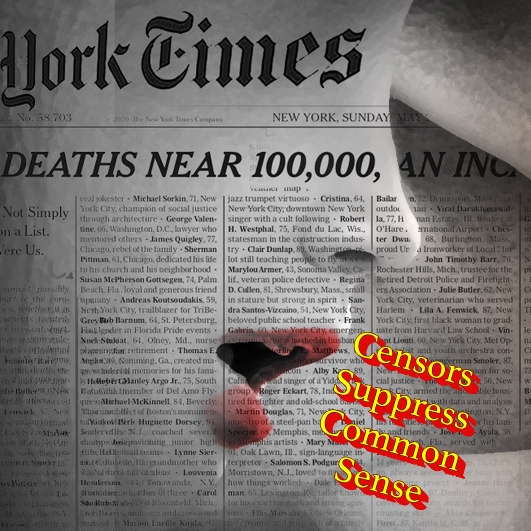
by Paul Jacob video

Watch: What Censors Do

Categories
Today

Flushing Remonstrance

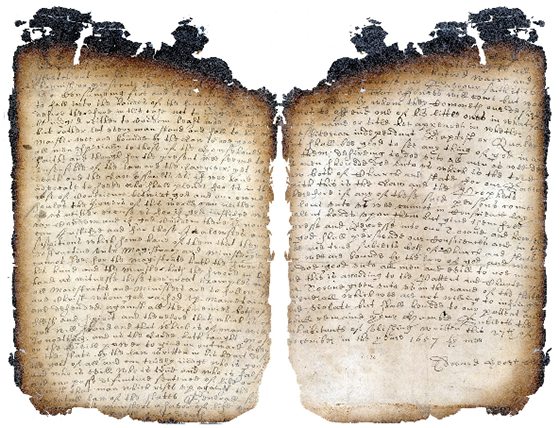
On December 27, 1657, a group of English citizens in Flushing, New York, who were not themselves Quakers, signed a petition protesting the persecution of Quakers, a document that has become known as the Flushing Remonstrance. An eloquent statement of the principle of religious liberty, it is widely regarded as a forerunner to the U.S. Constitution’s First Amendment.

The petition was delivered to Director-General of New Netherlands, Peter Stuyvesant.

Categories
Thought

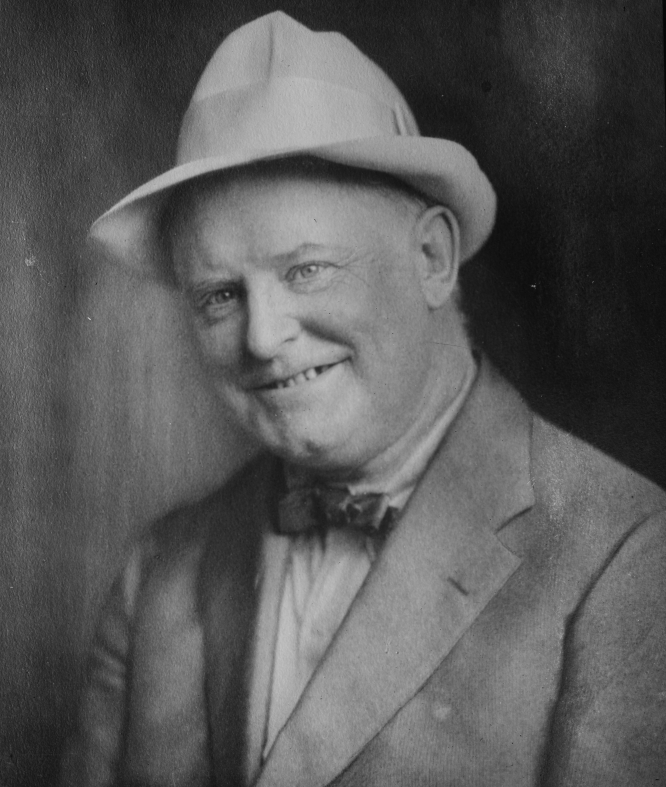
William Allen White

Liberty is the only thing you cannot have unless you are willing to give it to others.

William Allen White (February 10, 1868 – January 31, 1944),
photograph courtesy Library of Congress.
Categories
by Paul Jacob video

Watch: Nightmares Not Yet Over

The week’s biggest stories, from Seattle’s soft-on-theft socialism to our planet’s biggest Maybe Benefactors: the Galactic Federation — in full video:

This Week in Common Sense, December 2020: #3.

Categories
Today

Diplomat and Spy

On December 20, 1740, Arthur Lee — Revolutionary Era diplomat, spy, and Virginia delegate to the Continental Congress — was born. He practiced law in London from 1770 to 1776, where he wrote polemics against slavery and in defense of the American colonies’ resistance to the Townshend acts and other tyrannical British policies.

He was brother to Richard Henry Lee and Francis Lightfoot Lee.

Categories
audio podcast

Listen: National Nightmare NOT Over!

Paul wraps up the big stories of the week, from theft-excusing socialists to war-stopping UFOs.

Categories
Today

American Crises

On December 19, 1776, Tom Paine published one of a series of pamphlets in the Pennsylvania Journal titled The American Crisis. Exactly one year later, George Washington’s Continental Army went into winter quarters at Valley Forge, Pennsylvania.

On December 19, 1828, Vice President of the United States John C. Calhoun penned the South Carolina Exposition and Protest, protesting the Tariff of 1828, a key moment in what became known as the Nullification Crisis.

Categories
Thought

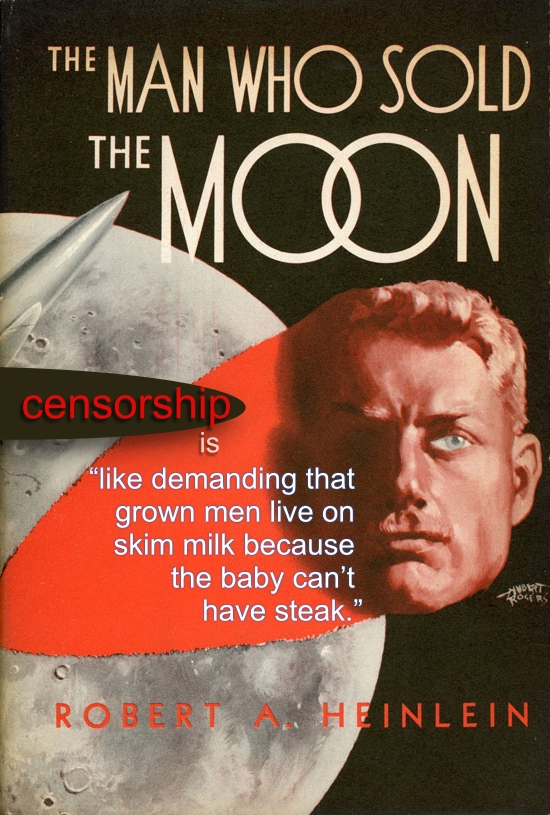
Robert A. Heinlein

censorship, n,

The whole principle is wrong. It’s like demanding that grown men live on skim milk because the baby can’t have steak.

Robert A. Heinlein, The Man Who Sold the Moon (1951), p. 188.

This quotation is reminiscent of one often misattributed to Mark Twain:

Censorship is telling a man he can’t have a steak just because a baby can’t chew it.

(Unknown)
Categories
Today

Thanksgiving in December

On December 18, 1777, the United States celebrated its first official Thanksgiving, marking the then-recent October victory by the Americans over General John Burgoyne in the Battle of Saratoga.