On March 26, 1991, local self-government in South Korea was restored after three decades of centralized control.
Categories
South Korea
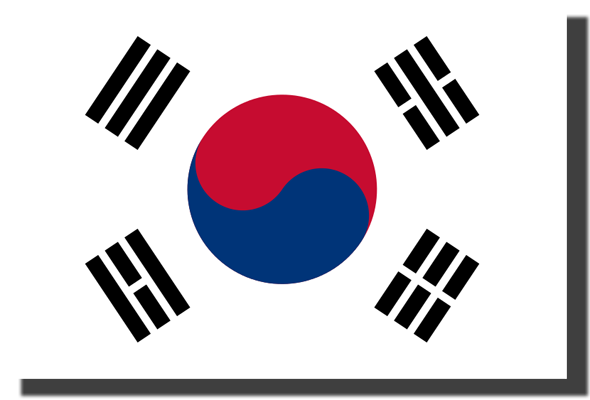
On March 26, 1991, local self-government in South Korea was restored after three decades of centralized control.
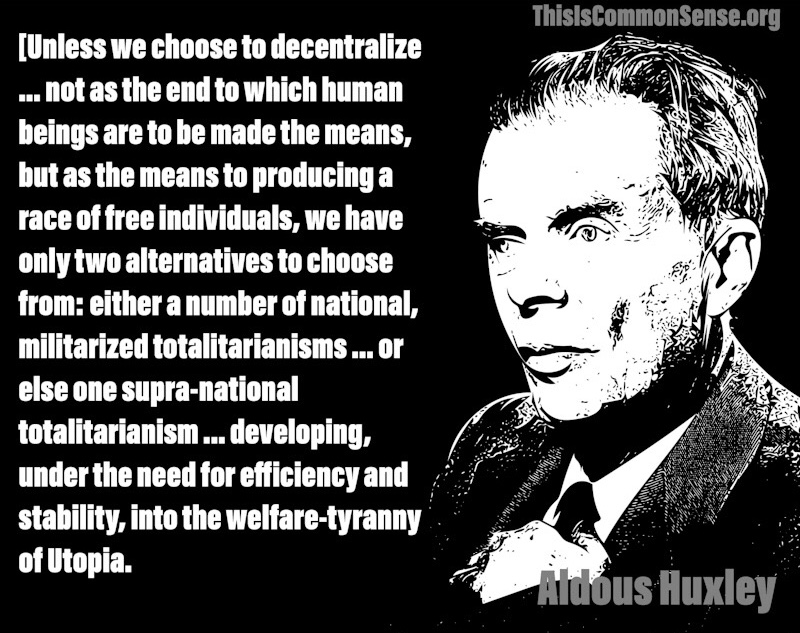
[U]nless we choose to decentralize and to use applied science, not as the end to which human beings are to be made the means, but as the means to producing a race of free individuals, we have only two alternatives to choose from: either a number of national, militarized totalitarianisms, having as their root the terror of the atomic bomb and as their consequence the destruction of civilization (or, if the warfare is limited, the perpetuation of militarism); or else one supra-national totalitarianism, called into existence by the social chaos resulting from rapid technological progress in general and the atomic revolution in particular, and developing, under the need for efficiency and stability, into the welfare-tyranny of Utopia. You pays your money and you takes your choice.
Aldous Huxley, foreword to a later edition of Brave New World (first published 1932).
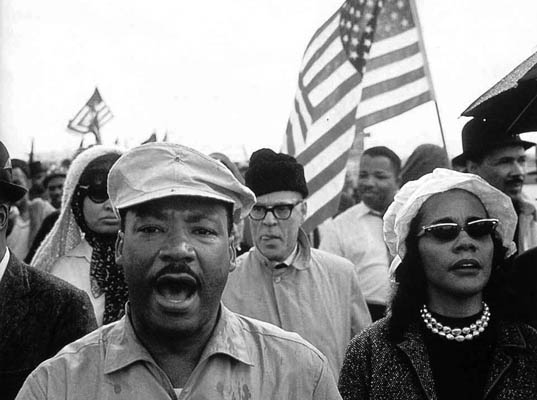
On March 25, 1965, civil rights activists led by Martin Luther King, Jr., successfully completed their four-day, 50-mile march from Selma to the capitol in Montgomery, Alabama.

One would have thought that in these anti-monopoly days, when the calamities resulting from selfish legislation have awakened public attention, men would take especial care not to permit anything involving an approach to exclusive privileges, to make its appearance upon the political arena, without raising a vigorous outcry against it. But the expectation is not realised. The doctrine that it is the duty of the state to protect the public health, contains the germ of another gigantic monopoly.
Herbert Spencer, The Proper Sphere of Government, Letter IX (W. Brittain of London, 1843), first appearing serially in The Nonconformist.
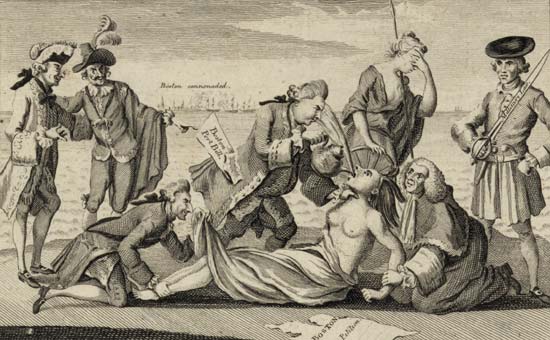
On March 24, 1765, the Kingdom of Great Britain passed the Quartering Act, which required the Thirteen Colonies to house British troops.
On the same date in 1855, slavery was abolished in Venezuela.
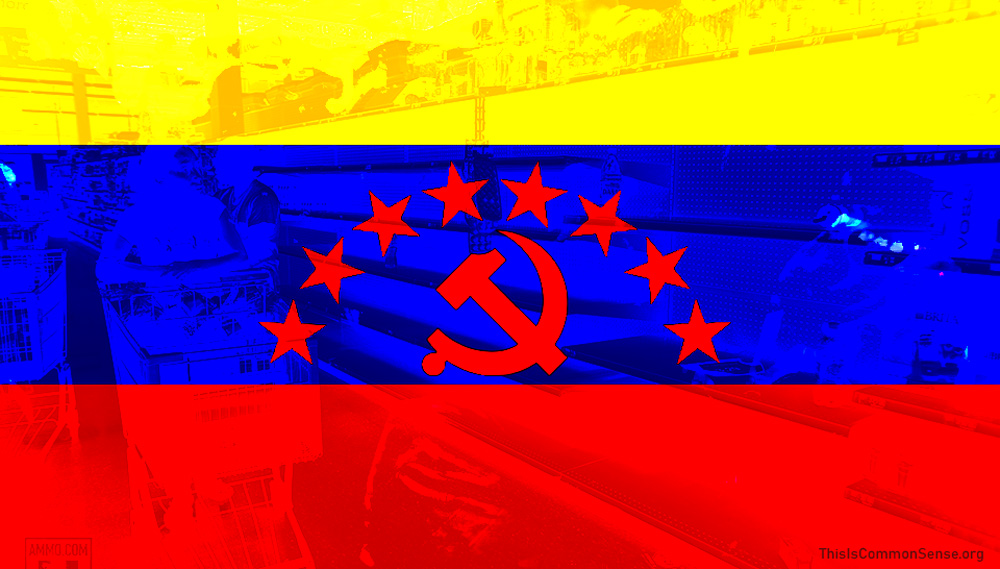
Democratic socialism might seem all fun and games . . . right up until one is forced to choose between democracy and socialism. Those countries that choose the latter, like Venezuela, lose both prosperity and democracy, and then things get really bad.
But what happens when such a society’s dictator wises up?
“Bankrupted by Socialism, Venezuela Cedes Control of Companies,” Fabiola Zerba reports for Bloomberg. “Saddled with hundreds of failed state companies in an economy barreling over a cliff, the Venezuelan government is abandoning socialist doctrine by offloading key enterprises to private investors, offering profit in exchange for a share of revenue or products.”
If that last sounds like less than full privatization, and unnecessarily cumbersome, it is. “Dozens of chemical plants, coffee processors, grain silos and hotels confiscated over the past two decades have been transferred — but not sold — to private operators in so-called strategic
“Strategic alliances” sounds ominously . . . fascistic.
This is not gratuitous, for, as Peter Drucker explained, “Fascism is the stage reached after communism has proved an illusion.” And it is definitely not directly towards “free markets” that Venezuela now moves. Dictators and ruling juntas don’t like free markets. It makes them less integral to the wealth extraction process.
And wealth, in their view, needs to be extracted!
It gives meaning to their lives.
Jon Miltimore, in an article at FEE, also uses the f-word, and quotes my friend Sheldon Richman’s definition: fascism, noun : “socialism with a capitalist veneer.”
Really moving beyond 20th century mistakes would entail reviving actual free markets. Not “so-called strategic alliances.”
This is Common Sense. I’m Paul Jacob.
See all recent commentary
(simplified and organized)
See recent popular posts
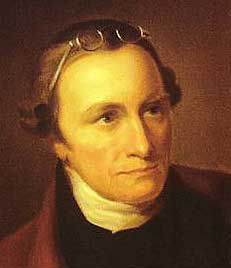
On March 23, 1775, Patrick Henry delivered his “Give me Liberty, or give me Death!” speech at St. John’s Church in Richmond, Virginia.
On this date in 1992, economist and social philosopher Friedrich August von Hayek died.
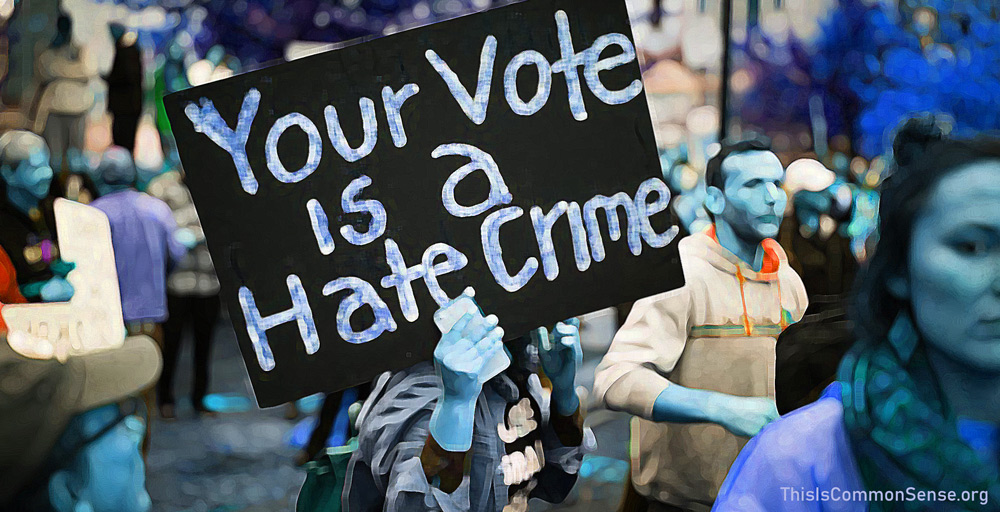
On NBC’s Meet the Press, Jon Ralston, editor of the Nevada Independent, acknowledged that “it’s unclear whether the Atlanta shootings were a hate crime or not,” but asserted that former President Trump’s use of “phrases like ‘the China Virus,’ clearly has exacerbated these problems.”
At the close of the program, host Chuck Todd warned “elected officials” that, “when [you] talk about China, the country, as a rival and an adversary to this country, be careful of your words. That matters too. And I know there’s a lot of fear that as the rivalry heats up with China, that these, these hateful incidents will also increase here.”
That’s really his takeaway? Be careful what you say about China?
Sure, let’s always remember that the genocidal regime running China — the Chinese Communist Party (CCP) that recognizes zero individual rights and permits no democratic checks on its power — is not the disenfranchised Chinese people.
Of course, most sane people understand the difference between ordinary folks and their government.
Frankly, Mr. Todd and NBC are as guilty as anyone in speaking of China while meaning the ruling CCP — just as we often say the U.S. when we really mean the U.S. Government.
But please, do not stop reporting when “China” does something bad, even genocidal. Lives everywhere depend on it.
And about that term, “rivals.” The problem with China is not that it rivals us — economically, or even militarily, per se. The problem is China’s tyranny, too easily exported.
Yes, watch your words, but don’t fear speaking out. The lives you save may be Asian.
This is Common Sense. I’m Paul Jacob.
Note: As faithful readers know, I prefer the term “CCP Virus,” directing blame for the worldwide pandemic to the Chinese government, which by lying and hiding information from the world unnecessarily unleashed death upon millions across the globe.
See all recent commentary
(simplified and organized)
See recent popular posts

On March 22, 1630, the Massachusetts Bay Colony outlawed the possession of cards, dice, and gaming tables. Exactly eight years later, the colony expelled Anne Hutchinson for religious dissent.
In 1812 on this date, Stephen Pearl Andrews was born. Andrews would go on to become an important American abolitionist, free love advocate, and theorist of “individual sovereignty,” promulgating the reforms of Josiah Warren.
The weekend podcast is up in vlog form at YouTube:
This Week in Common Sense, March 19, 2021.