Categories
audio podcast

Listen: Democrats Push Non-Citizen Voting

In this episode of the weekend podcast, Paul Jacob looks closely at two major stories: politicians’ itch to extend draft registration to young women, and Democrats scratching at their even bigger itch, the move to let non-citizens vote in American elections.

Categories
Today

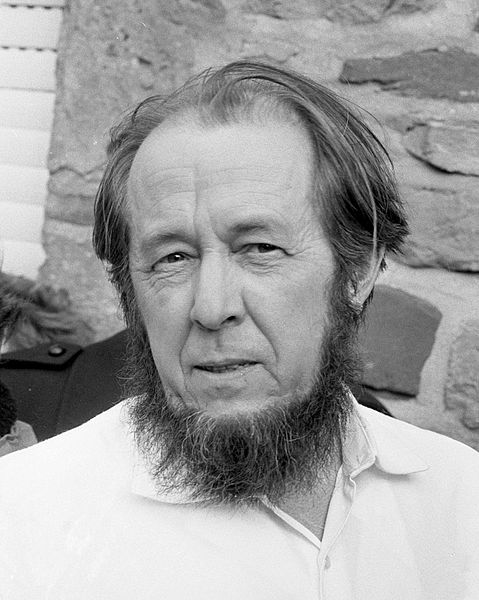
Solzhenitsyn

Aleksandr Isayevich Solzhenitsyn was born on December 11, 1918. Solzhenitsyn became a novelist, philosopher, historian, and dissident who helped bring down the totalitarian Soviet Union. Solzhenitsyn’s novels include One Day in the Life of Ivan Denisovich (1962) and Cancer Ward (1966). His behemoth history of Soviet prison camps, The Gulag Archipelago, was a major event in the cultural eclipse of far left ideology in the West, when it was published in 1973.

Solzhenitsyn died on August 3, 2008.

Categories
Thought

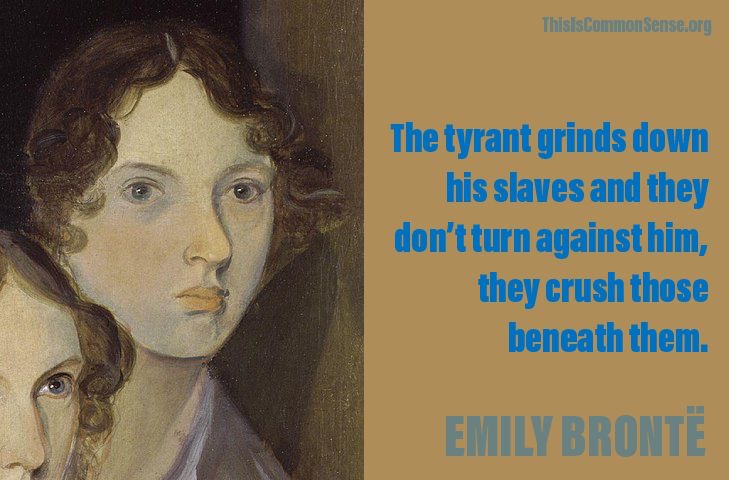
Emily Brontë

The tyrant grinds down his slaves and they don’t turn against him, they crush those beneath them.

The character Heathcliff, in Emily Brontë’s Wuthering Heights (1847).
Categories
Today

Passy, Dunant and Huck

On December 10, 1884, Mark Twain’s Adventures of Huckleberry Finn was first published. This novel, narrated in the first person by the title character, is a dark comedy of the antebellum South and slavery, and has been considered by many American critics and writers to qualify as the “Great American Novel.”

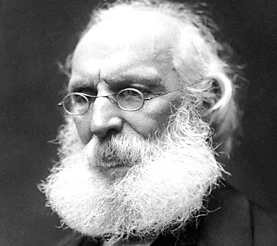
On this date in 1901, the first Nobel Peace Prizes were awarded — to economist Frédéric Passy (pictured above), co-founder of the Inter-Parliamentary Union; and to Henry Dunant the founder of the International Committee of the Red Cross.

Passy was an admirer of Richard Cobden and an active member in the French Liberal School of Political Economy that developed in the tradition of J.B. Say, Destutt de Tracy, and Frédéric Bastiat. His published works include Leçons d’économie politique (1860-61); La Démocratie et l’Instruction (1864); L’Histoire du Travail (1873); Malthus et sa Doctrine (1868); and La Solidarité du Travail et du Capital (1875).

Categories
general freedom ideological culture

The Pivotal Issue

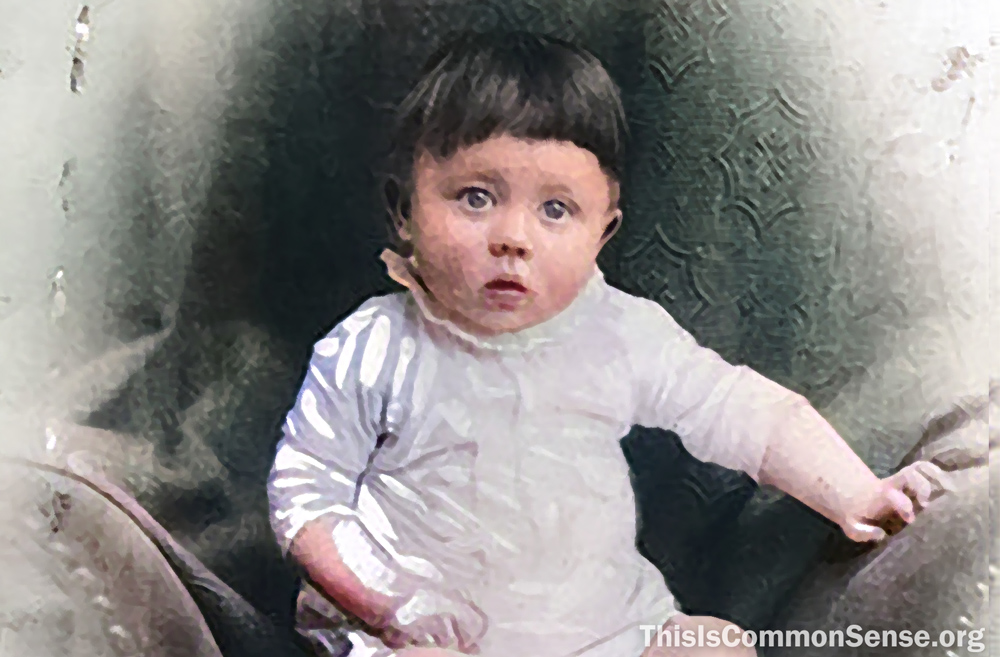
A recent video about vaccination passports brought to mind an old parlor game: “If you could go back in time, would you kill Baby Hitler?”

Most civilized people realize the moral problems of this thought experiment. Sure, Baby Hitler grew up to be Nazi Führer Hitler, a mass-murderer worthy of assassination. But young Adolf wasn’t a monster. Yet. 

Moreover, every step on the way to becoming a monster was accompanied by situations in which civilized people could have stopped the coming horrors without murdering a child:

  • World War I was a choice (or set of choices).
  • The Versailles Treaty was a choice.
  • The Weimar Republic hyperinflation was the result of bad decisions.

More interesting than Killing Baby Hitler would be a parlor game about who could have stopped each horrific event that went into the rise of Hitler’s Third Reich. What decisions could they have made that would have changed history?

The point of these counterfactual exercises? To learn how to make better policy.

Such as in a pandemic, when governments are expanding their power over citizens with lockdowns and business shutdowns and mask and vaccine mandates. While in America many such mandates are being struck down as unconstitutional, beyond the authority of officials, in Germany and Austria vaccine passports are going into tyrannical effect.  

We need to take seriously the warning in the video mentioned at top, This Pivotal Moment. Stop vaccine mandates. Reverse the mandates in effect. Abolish internal passports. Resist this tyrannical notion of a two-tier society.

In Europe, masses of people have taken to the streets in defiance.

Open defiance is also necessary here . . . in “the land of the free.”

That’s how you stop Baby Hitler.

This is Common Sense. I’m Paul Jacob.


PDF for printing

See all recent commentary
(simplified and organized)
See recent popular posts

Categories
Thought

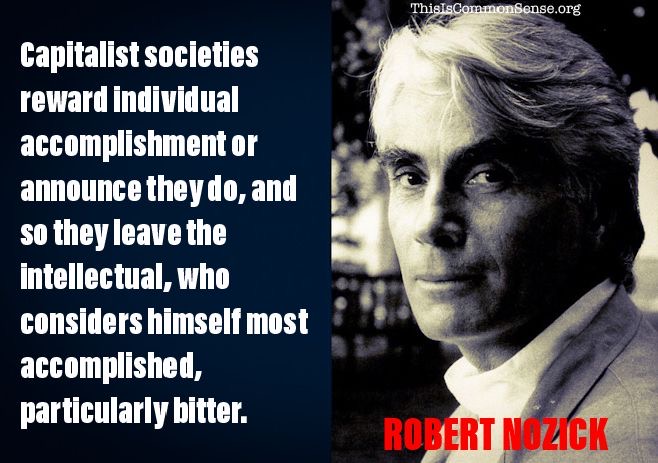
Robert Nozick

Capitalist societies reward individual accomplishment or announce they do, and so they leave the intellectual, who considers himself most accomplished, particularly bitter.

Robert Nozick, “Why Do Intellectuals Oppose Capitalism?”
Categories
Today

December 9th Birthdays

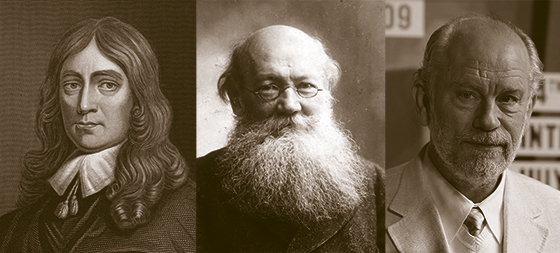
On December 9, 1958, the John Birch Society was founded in the United States. December 9 also marks the birthdays of

  • Poet and anti-censorship advocate John Milton (1608), author of the masterpiece of blank verse narrative, Paradise Lost (1667) and a classic prose defense of free speech and the press, Areopagitica (1644).
  • Russian prince and anarchist theoretician Peter Kropotkin (1842), author of Mutual Aid and other books and pamphlets.
  • John Malkovich (1953), who directed The Dancer Upstairs (2002) and starred in the odd eponymous film Being John Malkovich (1999).
Categories
ballot access Voting

Citizenship Not Required

Noncitizen voting is coming to New York City.

Tomorrow, the city council is expected to approve a measure permitting more than 800,000 noncitizens to vote in city elections.

Noncitizens will need to have a green card or the right to work in the United States, and will need to have been resident in the city for at least 30 days.

Opponents include Councilman Rubén Díaz, a Democrat. He observes that the requirements for becoming a naturalized citizen and thereby earning the right to vote, which include “understanding the basics of [our history] and how our government functions,” would thus be bypassed.

Whether the granting of American citizenship to newcomers has been too lax or too cumbersome is a separate question. But if a particular noncitizen deserves to vote, he or she surely deserves citizenship. Why not start with citizenship?

Opt in. Become an American before you vote in America. This seems basic.

Which is why de-linking voting from formal citizenship conjures up two worrisome questions: 

What agenda does this serve? and What’s next?

Next steps could include extending the franchise to those who do not “have the right to work” (as is already the case in San Francisco) and extending this new right, noncitizen voting, to state and federal elections.

That many Democratic congressmen are eager to obliterate any practical distinctions between citizen and noncitizen is shown by their support for HR1, the misnamed “For the People Act,” an assault on state-level laws intended to ensure that only (living) citizens are voting (only once) in elections.

Fortunately, that federal legislation has been blocked. For now.

This is Common Sense. I’m Paul Jacob.


PDF for printing

vote original photo credit

See all recent commentary
(simplified and organized)
See recent popular posts

Categories
Thought

Christine Anderson

I’m a German, and we once asked our grandparents how they could have just stood by in silence allowing a horrific totalitarian regime to come about. Anyone could have known — all they had to do was open their eyes and take a look: the vast majority chose not to. So, what will you tell your grandchildren? Will you tell them you didn’t know? Will you tell them you were ‘just following orders’? You need to understand: it is not about breaking the ‘fourth wave’; it is about breaking people. Australia does not need a ‘no-COVID strategy.’ What Australia needs is a ‘no-oppression strategy.’

Christine Margarete Anderson, a German politician serving as an Alternative for Germany (AfD) Member of the European Parliament, “answering an SOS call” from Australians, in which she designated the southern hemisphere country as “a former free and liberal democracy that has been formed into a totalitarian regime” in the cause of a zero-infection policy over the CCP virus.

Categories
Today

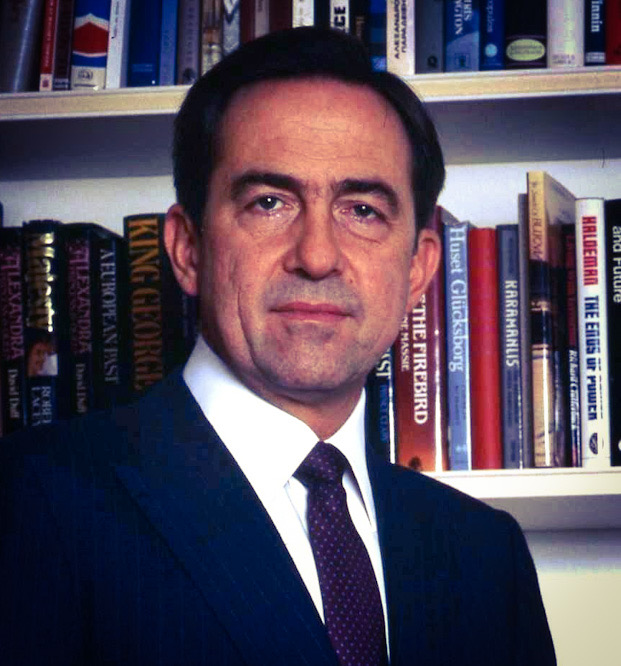
Greek Monarchy Ended

On December 8, 1974, a plebiscite finalized the abolition of the monarchy in Greece. The last Greek king, Constantine II, had ceased any royal pretensions while in exile on June 1. The December referendum was something of a formality.