On January 5, 1914, the Ford Motor Company announced an eight-hour workday and a minimum wage of $5 for a day’s labor.
Categories
Ford’s Five

On January 5, 1914, the Ford Motor Company announced an eight-hour workday and a minimum wage of $5 for a day’s labor.
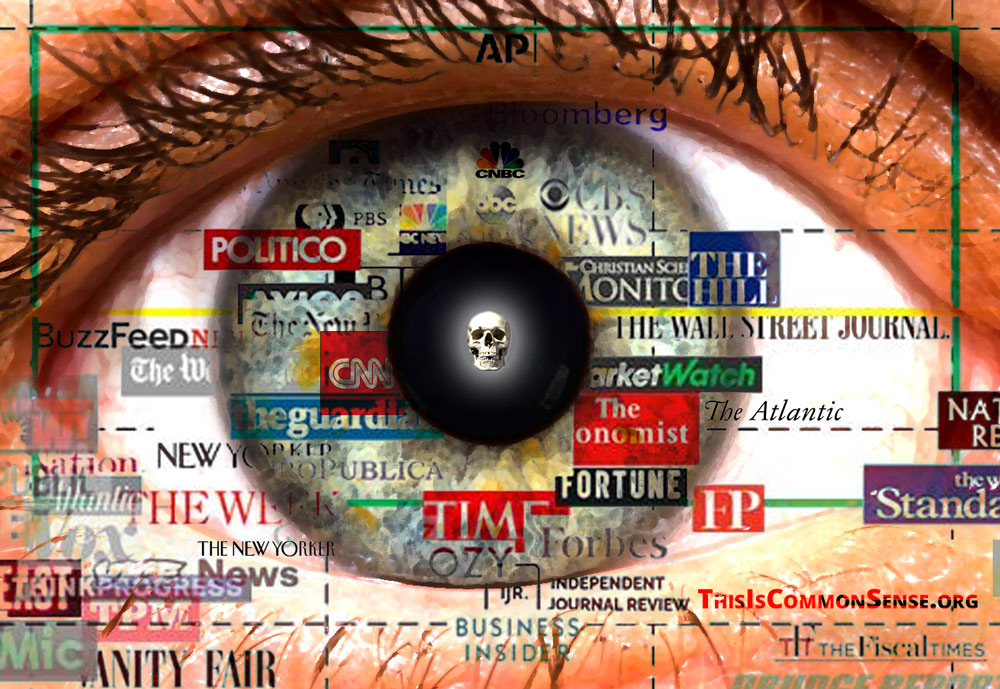
The revolving door between regulated big business and regulatory agencies is a known problem. “Regulatory capture” is one of the concepts economists have used to explain it.
We got used to this sort of corruption in finance: under the Bush and Obama administrations, with Goldman Sachs serving as the Executive Branch’s talent pool. The Pentagon and its major contractors have long had a cushy, cross-pollinating relationship. And we are just beginning to learn about Fauci’s close ties to Big Pharma.
But the most dangerous employment overlap? Between the Deep State and major media news services.
Glenn Greenwald, in a Substack column on Sunday, calls our attention to an MSNBC opinion article titled “Julian Assange extradition could mean even more legal trouble for Donald Trump.” It was written, explains Greenwald, “by former FBI Assistant Director and current NBC News employee Frank Figliuzzi, who played a central role during the Obama years in the FBI’s attempt to investigate and criminalize Assange: a rather relevant fact concealed by NBC when publishing this.”
We in America tend to think of the news media’s role as that of a watchdog — against government corruption. Instead, we see, that this direct seeding of media roles with Deep State agents “is how U.S. security state agents now directly control corporate news outlets.”
In the Sixties, there was a program called Operation Mockingbird, in which the CIA used a variety of techniques to control the media. Now “the CIA is the media.”
This is not a “free press.” It is a controlled press, with the mechanisms of the control right out in the open — simply look at the “journalists’” resumes.
Is this big business capturing regulators, or regulators capturing business?
This is Common Sense. I’m Paul Jacob.
See all recent commentary
(simplified and organized)
See recent popular posts
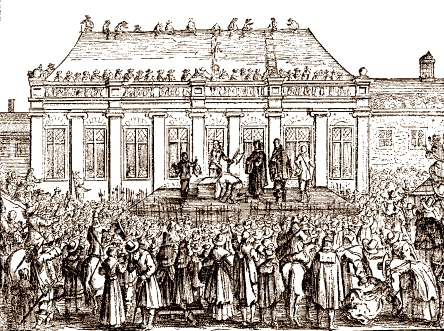
On Jan. 4, 1642, King Charles I of England sent soldiers to arrest members of Parliament, beginning England’s slide into civil war.
On Jan. 4, 1649, the English “Rump Parliament,” having purged those members willing to restore Charles I to the throne, voted to put Charles I on trial for high treason. Before the month was over, the king had been executed.
“Wait, it gets worse.”
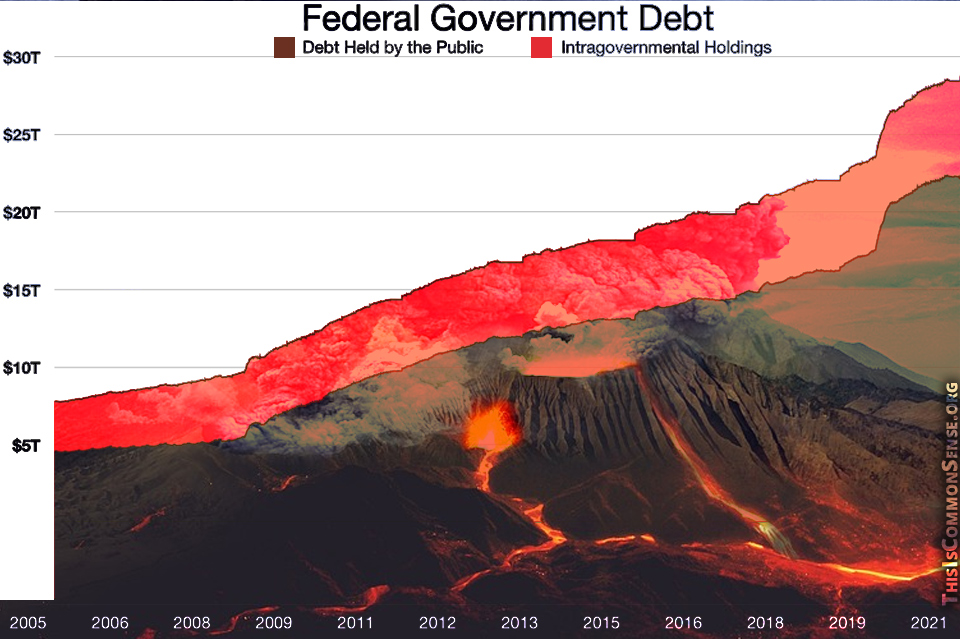
Over halfway through Eric Boehm’s Reason discussion of our government debt situation, he gets to a crucial point: “The federal government’s debt is particularly susceptible to rising interest rates . . . because so little of it is locked into long-term interest rates. If you have a 30-year fixed-rate mortgage on your house, rising interest rates won’t bother you much. But the federal government overwhelmingly relies on short-term debt, with an average maturity time of just 69 months.”
So the standard approach to inflation, with the Federal Reserve raising interest rates, would hit the federal budget like an exploding volcano.
When talking trillions, it’s hard to keep a sense of proportion. Boehm puts it this way: “A one percentage point increase in interest rates translates into a $30 trillion increase in interest costs.”
Debt service is one of the reasons why the sages at the founding of America were, if not united in opposition to federal debt, overwhelmingly leery of it. But that leeriness did not stop federal borrowing. Only for one brief moment did the United States’ government not hold debt.
Borrowing was one thing when gold or silver fettered our finances to some limits. But paper and digital money have divorced us from a sense of reality.
We pretend that debt’s reality can be perpetually postponed, but we always “pay” — in lost prosperity; in inequality; in economic dislocation; in political unrest. But when the volcano erupts, then we really pay.
As we awake to our indebtedness, let’s recognize that our political culture has allowed it to get so far out of hand. Fundamental political reform is imperative.
This is Common Sense. I’m Paul Jacob.
See all recent commentary
(simplified and organized)
See recent popular posts
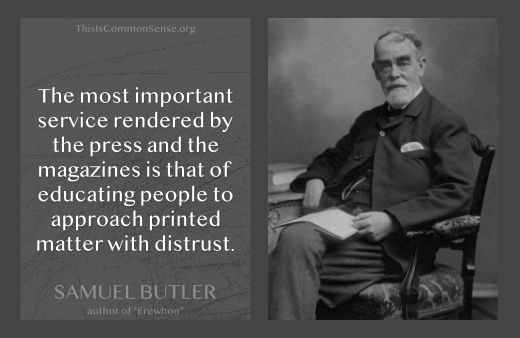
The most important service rendered by the press and the magazines is that of educating people to approach printed matter with distrust.
Samuel Butler’s Notebooks (1951), p. 221.
On the third of January in 1777, American General George Washington defeats British General Lord Cornwallis’s forces in the Battle of Princeton.
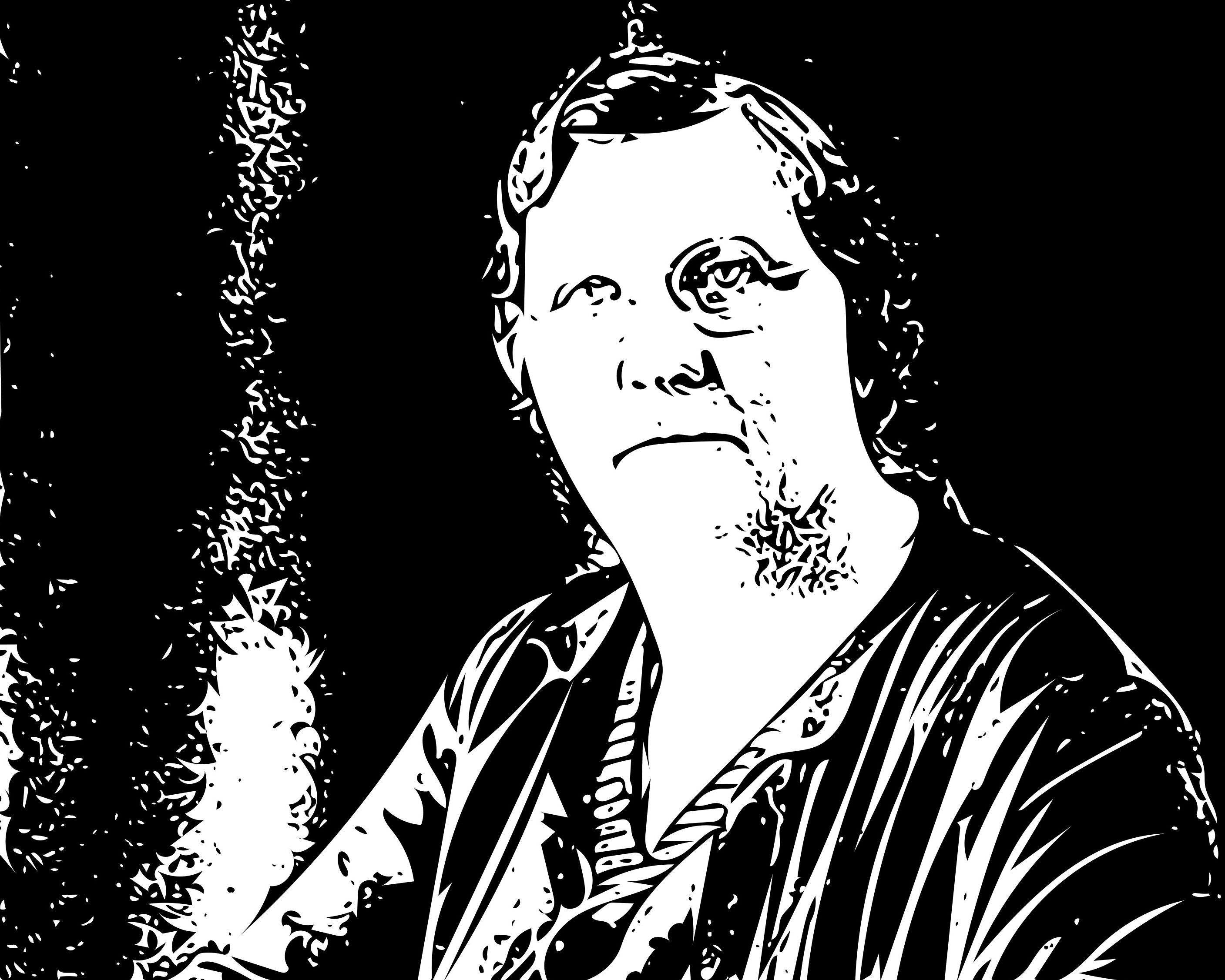
On January 3, 1933, Minnie D. Craig (pictured above) became the first woman elected as Speaker of the North Dakota House of Representatives, the first female to hold a Speaker position anywhere in the United States.
On the same date in 1977, Apple Computer was incorporated.
January 3rd birthdays include that of Cicero (106 BC), Roman philosopher and theorist of republicanism, and J.R.R. Tolkien (1892 AD), English philologist and author of The Hobbit and The Lord of the Rings. Both authors were deeply concerned about the problem of absolute power.

The big stories of the week are no match for . . . the 1946 Frank Capra movie.
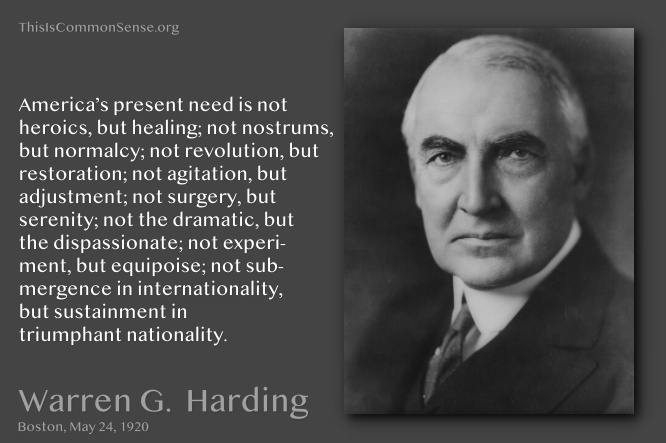
America’s present need is not heroics, but healing; not nostrums, but normalcy; not revolution, but restoration; not agitation, but adjustment; not surgery, but serenity; not the dramatic, but the dispassionate; not experiment, but equipoise; not submergence in internationality, but sustainment in triumphant nationality.
Warren Gamaliel Harding, speech in Boston, May 24, 1920.
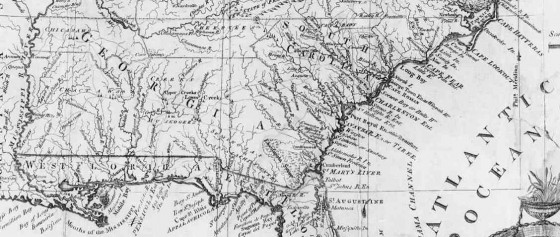
On January 2, 1788, Georgia became the fourth state to ratify the United States Constitution.
On the second day of 1819, the Panic of 1819, the first major peacetime financial crisis in the United States, began. The classic historical treatment of this crisis remains Murray Rothbard’s dissertation.

It is time for the weekend podcast, and Paul has a lot to say. And not just about a great movie: