Categories
Today

Two Washingtons

On April 5, 1792, George Washington exercised the first presidential veto of a congressional bill, a new plan for dividing seats in the House of Representatives, which would have increased the number of seats for northern states. Washington vetoed only one other bill during his two terms in office, an act that would have reduced the number of cavalry units in the army.

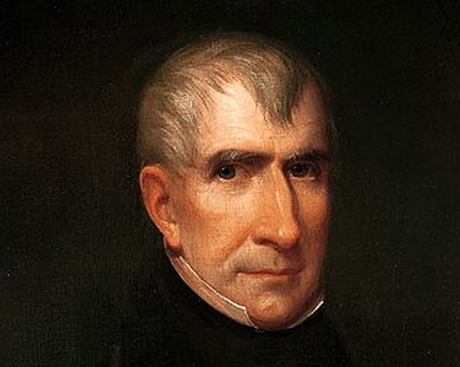
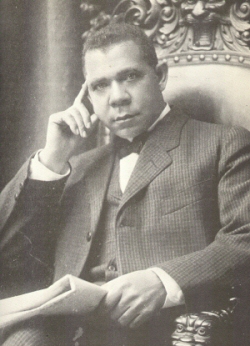
On April 5, 1856, Booker T. Washington (pictured above), American educator, first leader of the Tuskegee Institute in Alabama, author of 14 books, including his autobiography, Up From Slavery, was born a slave in southwestern Virginia. Though Washington faced criticism from leaders of the new NAACP, especially W.E.B. Du Bois, for not protesting the lack of civil rights more strongly, he secretly funded litigation for civil rights cases, such as challenges to southern constitutions and laws that disfranchised blacks.


Categories
defense & war international affairs

Priced to Purloin

We interrupt this regularly scheduled commentary to give you a tip about an opportunity you may want to exploit ASAP, especially if you live in the Ukraine area.

This offer may not last. 

But at least for the moment, the Ukraine government says it will pay cold hard cash for any functioning tanks, combat aircraft, reactive volley fire systems, ships, armored personnel carriers, etc. that you happen to have on hand.

It turns out that getting hold of these things is possible even if you are not a military procurement officer. Who knew?

For example, the Russian government lets their soldiers operate tanks and other equipment when they’re out and about invading neighboring countries. The soldiers are told not to lose the equipment. Even so, we’ve heard tell during the recent unpleasantness of Ukrainian farmers using tractors to haul away misplaced Soviet tanks to add to their personal collection and other such incidents.

The Ukrainian government figures that since tanks, ships, and helicopters are just lying around in backyards and muddy fields anyway, why not give people an extra incentive to deliver these things to the Ukraine military so that they can then be refurbished to smash Soviet invaders?

It’s $100,000 for a tank, $500,000 for a combat helicopter, $1 million for a first-rank ship, $1 million for combat aircraft. Not exactly the retail prices. But if you’ve got something like this that you lugged from battle, well, why not?

Hurry. You must act now.

This is Common Sense. I’m Paul Jacob.


PDF for printing

See all recent commentary
(simplified and organized)
See recent popular posts

Categories
Thought

What Is the Duck Test?

When I see a bird that walks like a duck and swims like a duck and quacks like a duck, I call that bird a duck.

James Whitcomb Riley, as quoted in Exploring Indiana Highways: Trip Trivia (2007), by Michael Heim.

If it looks like a duck, and quacks like a duck, we have at least to consider the possibility that we have a small aquatic bird of the family Anatidae on our hands.

Douglas Adams, Dirk Gently’s Holistic Detective Agency (1987).
Categories
Today

Tippecanoe (and, sadly, MLK, too)

On April 4, 1841, William Henry Harrison died of pneumonia, becoming the first President of the United States to die in office and the one with the shortest term served (he died on his 32nd day as president). A renowned Indian killer (having risen to fame for his part in 1811’s Battle of Tippecanoe), a proponent of the expansion of slavery into Northwest Territories, and a Whig, Harrison won the presidency in part by turning the Democrats’ “log cabin and hard cider” aspersions on his character as the basic symbols of the campaign.

Though hardly a “limited government man,” some limited government history buffs proclaim him the Greatest President, on the ostensibly droll and possibly cynical grounds that he spent so little time in office.


On a much sadder note, Martin Luther King, Jr., was assassinated on this day in 1968.

Categories
by Paul Jacob video

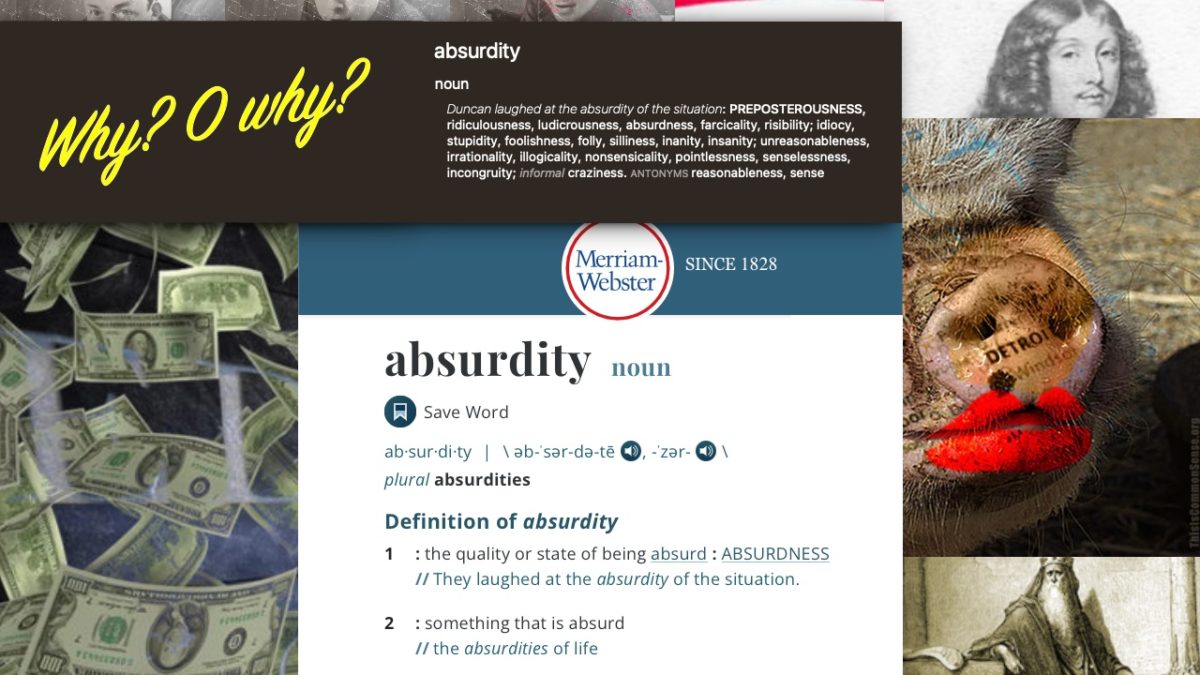
Watch: Absurdity, Reality & Theory

Paul Jacob runs through the absurdities of our time, and gets hit with a theory attempting to answer why, O why:

This Week in Common Sense, March 28 – April 1, 2022.

Also on YouTube and on SoundCloud.

Categories
Thought

Charles Upton

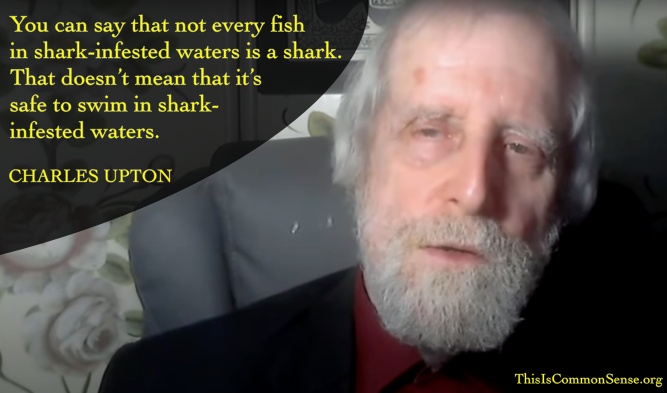
You can say that not every fish in shark-infested waters is a shark. That doesn’t mean that it’s safe to swim in shark-infested waters.

Charles Upton, in conversation with Jeffrey Mishlove (March 27, 2022).
Categories
Today

Mountaintop

On April 3, 1968, Martin Luther King, Jr., delivered his “I’ve Been to the Mountaintop” speech.

Categories
audio podcast

Listen: Taken to Absurdity

We have had to endure a lot of nonsense in recent times. Here is a theory why:

Categories
Thought

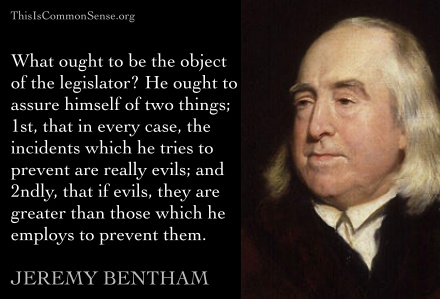
Jeremy Bentham

Every law is an evil, for every law is an infraction of liberty: And I repeat that government has but a choice of evils: In making this choice, what ought to be the object of the legislator? He ought to assure himself of two things; 1st, that in every case, the incidents which he tries to prevent are really evils; and 2ndly, that if evils, they are greater than those which he employs to prevent them. 

Jeremy Bentham, Principles of Legislation (1830), Ch. X: “Analysis of Political Good and Evil; How they are spread in society.”
Categories
Today

Déchéance

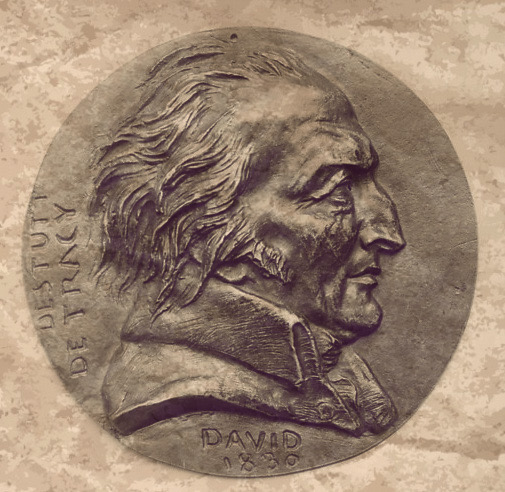
With the Acte de déchéance de l’Empereur (“Emperor’s Demise Act”) of April 2, 1814, France’s Sénat conservateur officially recognized the downfall of Napoléon I of France. The original resolution to remove the Emperor was moved on the legislative body’s floor, by Thomas Jefferson’s friend Destutt de Tracy (according to Tracy himself — official records do not name the member), and was drawn up by Charles Lambrechts. The final paragraph summarized the new reality concisely:

The Senate declares and decrees as follows: 1. Napoleon Buonaparte is cast down from the throne, and the right of succession in his family is abolished. 2. The French people and army are absolved from their oath of fidelity to him. 3. The present decree shall be transmitted to the departments and armies, and proclaimed immediately in all the quarters of the capital.

Nine days later, after attempting to put his son on the throne, Napoléon abdicated unconditionally. The Allies exiled him to Elba, which was to be the whole extent of this reign as “Emperor.”

This arrangement proved unstable, with Napoléon staging a comeback, eventually leading to more war, his defeat at Waterloo, and his exile to an island in the South Atlantic.


American author, art critic, and commentator Camille Paglia was born April 2, 1947.