Categories
Thought

F.A. Hayek

We can either have a free Parliament or a free people. Personal freedom requires that all authority is restrained by long-run principles which the opinion of the people approves.

Friedrich A. Hayek, “‘Free Enterprise’ and Competitive Order,” from a paper delivered to the Mont Pelerin Society, April 1947, in Individualism and Economic Order (1948).
Categories
Today

Founders

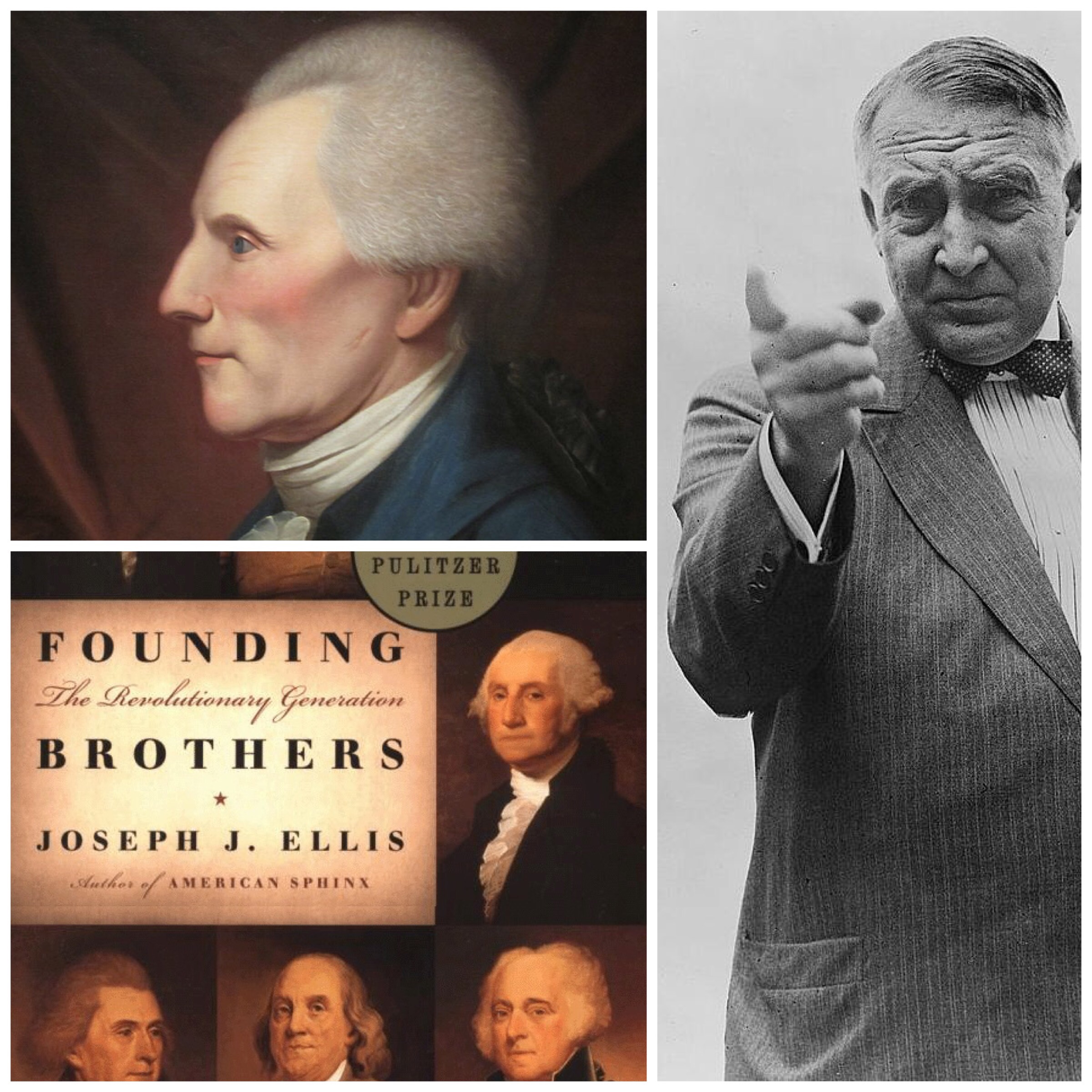
On June 7, 1776, Richard Henry Lee presented the “Lee Resolution” to the Continental Congress. The motion was seconded by John Adams, but was tabled for several weeks. The motion was finally passed on July 2, 1776.

During the 1916 Republican National Convention (June 7 – 10), Senator Warren G. Harding used the phrase “Founding Fathers” in his keynote address . . . and would go on using it in speeches thereafter. It caught on as a eulogistic way to refer to figures such as Thomas Jefferson and, yes, Richard Henry Lee, who orchestrated the American colonies’ break from England’s imperial monarchy.

Categories
Fifth Amendment rights Fourth Amendment rights

The War Against Cash Carriers

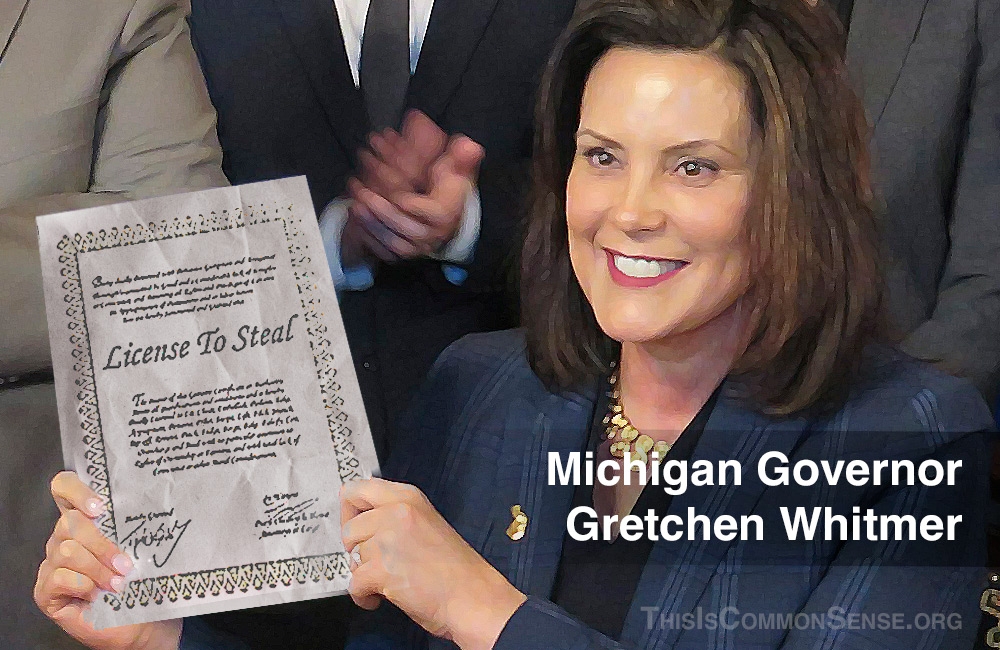
Michigan’s lawmakers and governor seem determined to remind us that history is no nonstop march into the light.

In the Great Lake State, the latest confirmation is a return to virtually unrestricted legalized cash-grabbing at the airport, reversing halfhearted reforms of several years earlier.

After those reforms were enacted, a traveler had to be toting in excess of $50,000 before officials a Michigan airport could be “justified” in confiscating his cash on a mere suspicion that it is associated with a crime.

But now, because of legislation just signed by Governor Whitmer, the threshold has been knocked down to $20,000.

Maybe you must be naïve to carry so much cash where police and other functionaries can easily get at it, but as Dan King of the Institute for Justice observes, you don’t have to be a criminal. And traveling with cash is not a crime.

Around the country, innocent persons have often run afoul of civil forfeiture laws that let authorities steal money earned by others without any showing that the money is ill-gotten.

With help from organizations like Institute for Justice, people who make the mistake of traveling with substantial cash — to buy a truck, open a bank account, whatever — just might get their money back after spending months in the courts. 

And suffering much anxiety. 

For the officials who cause the anxiety, both the thefts and any temporary judicial setbacks amount to just another day at the office.

This is open thievery by the State, turning cops into robbers.

Opposing it is Common Sense. I’m Paul Jacob.


PDF for printing

See all recent commentary
(simplified and organized)
See recent popular posts
Categories
Thought

Thomas Sowell

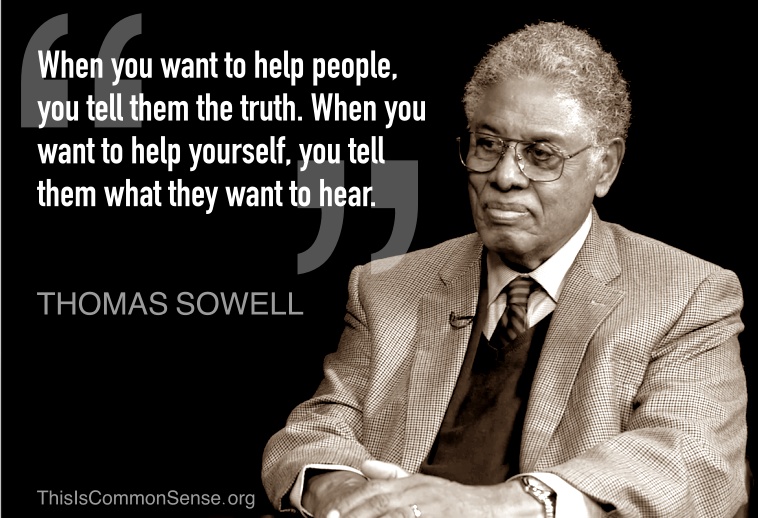
When you want to help people, you tell them the truth. When you want to help yourself, you tell them what they want to hear.

Thomas Sowell, The Thomas Sowell Reader (2011), p. 398.
Categories
Today

Two Philosophers, Many Concepts

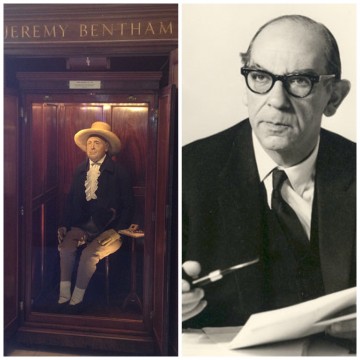
June 6 marks major life events of two eminent British philosophers, Jeremy Bentham’s death* (1832) and Isaiah Berlin’s birth (1909).

Bentham was known as a “philosophical radical” and a major influence on the British utilitarian tradition. He authored numerous books, including Defence of Usury (1787) and An Introduction to the Principles of Morals and Legislation (1789). Bentham started out advocating for laissez faire, became obsessed with his own specially designed prison design, the Panopticon, and argued for feminism and animal rights in public but kept his defense of homosexual rights private, to be published long after his death. His treatise on ethics, Deontology: Or, the Science of Morality, in Which the Harmony and Co-incidence of Duty and Self-Interest, Virtue and Felicity, Prudence and Benevolence, Are Explained and Exemplified, was published from his manuscripts two years after his death.

Berlin was best known for several dozen brilliant essays, including the famous, much-quoted “The Hedgehog and the Fox” (a study of Leo Tolstoy) and “Two Concepts of Liberty.”


* Pictured is his remains as housed in a special “closet” in the London Academy. Bentham specified this in his will, and he called this manner of posthumous presentation an “auto-icon.”

Categories
audio podcast

Listen: Hong Kong, Taiwan & the Chinazi Problem

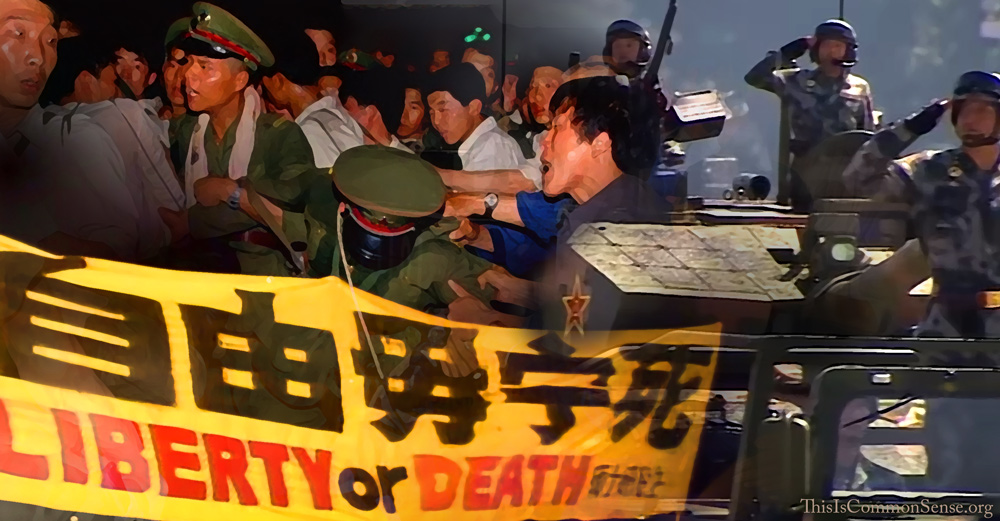
This weekend’s podcast has Paul Jacob reminiscing about his time spent in Hong Kong as the Chinazis cracked down. It’s our way of honoring the fallen at Tiananmen 33 years ago. For yes, yesterday marked the 33rd anniversary of the Tiananmen Square Massacre. Which the Chinese Government really, really, really does not want us to remember:

Categories
Thought

Nathaniel Lee

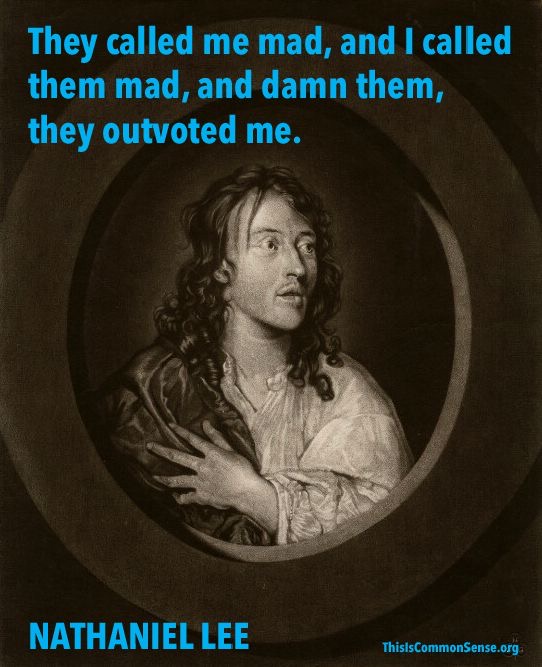
They called me mad, and I called them mad, and damn them, they outvoted me.

Nathaniel Lee (1653–1692) was a playwright known for his blank verse works such as The Rival Queens and Caesar Borgia, and for offending King Charles II in 1681 with Lucius Junius Brutus. This statement is his summary of how he got sent to Bedlam in 1683.
Categories
Today

Uncle Tom’s Cabin

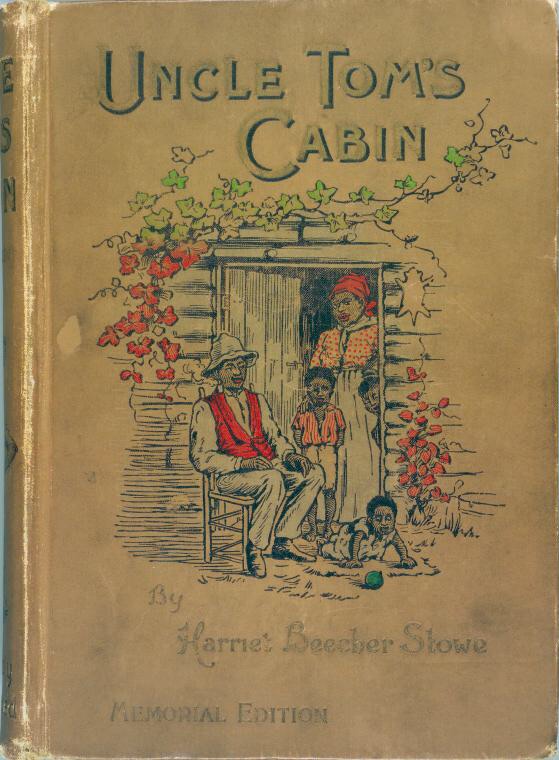
On June 5, 1851, Harriet Beecher Stowe’s anti-slavery serial, Uncle Tom’s Cabin, or Life Among the Lowly, started its ten-month run in the National Era abolitionist newspaper.

Categories
by Paul Jacob video

Watch: Freedom & the Chinazi Problem

Paul is on the road, so it is time to reminisce — about a previous trek of his, to Hong Kong and Taiwan.

Categories
Thought

Liu Xiaobo

Freedom. Freedom is at the core of universal human values. Freedom of speech, freedom of the press, freedom of assembly, freedom of association, freedom in where to live, and the freedoms to strike, to demonstrate, and to protest, among others, are the forms that freedom takes. Without freedom, China will always remain far from civilized ideals.

Liu Xiaobo, No Enemies, No Hate: Selected Essays and Poems, Chapter 8.