On February 7, 1990, the Central Committee of the Soviet Communist Party agreed to give up its monopoly on power, thus ushering the way for the dissolution of the putatively communist empire.
Soviets Give Up
On February 7, 1990, the Central Committee of the Soviet Communist Party agreed to give up its monopoly on power, thus ushering the way for the dissolution of the putatively communist empire.
AB 2098 says that it “shall constitute unprofessional conduct” for doctors to spread “false or misleading information” about the COVID-19 virus, how to prevent and treat it, and the efficacy of alleged vaccines. (By using the word “alleged,” I’ve lost my medical license right there.)
What constitutes “misinformation”?
Government-empowered medical boards would make these judgments in light of “contemporary scientific consensus.”
Why is “scientific consensus” so sacred? Does it never err? Aren’t facts and logic, which discourse helps to establish and convey, the proper arbiters, not a designated “consensus”? How does one actually arrive at a “scientific consensus” of any legitimate value? By divine revelation?
And if there are doctors, scientists and other researchers who dissent, especially in great number, doesn’t that make “consensus” entirely mythical, non-existent? The word misapplied?
Of course, despite the issuance of government-approved dogmas and revised dogmas about these matters, every aspect of the pandemic has been the subject of intensive investigation and controversy for over three years.
As Judge William Shubb notes, “COVID-19 is a quickly evolving area of science that in many aspects eludes consensus.”
It’s a shame Shubb couldn’t simply have shut down the law permanently. Do we really need a lengthy legal process while California doctors wait to learn whether they may still fully participate in professional discussions?
But it seems that the agents of repression must have their day in court too.
This is Common Sense. I’m Paul Jacob.

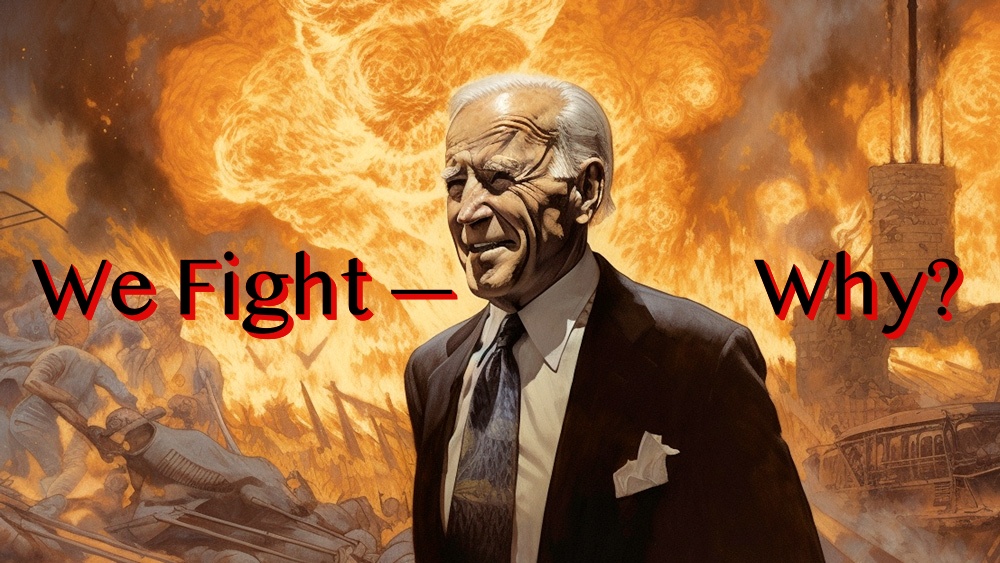
Illustration created with picfinder.ai
See all recent commentary
(simplified and organized)
See recent popular posts
Officeholders are the agents of the people, not their masters. Not only is their time and labor due to the Government, but they should scrupulously avoid in their political action, as well as in the discharge of their official duty, offending by a display of obtrusive partisanship their neighbors who have relations with them as public officials.
President Stephen Grover Cleveland’s message to the heads of departments in the service of the US Government (July 14, 1886).
On February 6, 1778, the Treaty of Alliance and the Treaty of Amity and Commerce were signed by the United States and France, signaling official recognition of the new republic. Exactly a decade later, the State of Massachusetts became the sixth in the union to ratify the new United States Constitution.
February 6 marks the birthdays of Aaron Burr (1756 – 1836), third Vice President of the United States and infamous Weehauken duelist, and Ronald Reagan (1911 – 2004), 40th President of the United States.
Paul Jacob discusses Bill Gates, Al Gore, Joe Biden, and other major figures in America’s parade of buffoonish bad guys.
I believe there is no permanent greatness to a nation except it be based upon morality. I do not care for military greatness or military renown. I care for the condition of the people among whom I live.
John Bright, from a speech in Birmingham (October 29, 1858), quoted in G. M. Trevelyan, The Life of John Bright (London: Constable, 1913), pp. 274-275.
Our evil people tend to lean to the silly side of the spectrum, as Paul Jacob explains in this weekend’s episode of This Week in Common Sense:
WHATEVER YOU DO, TELL THE TRUTH.
Presidential candidate Stephen Grover Cleveland’s telegram response to a query as to what the Democratic Party should say about reports that he fathered a child out of wedlock. The issue was scandalous, but he won office and his first term in the presidency of the United States started in 1885.
On February 4, 1789, George Washington was unanimously elected as the first President of the United States, under the new Constitution, by the U.S. Electoral College.
On the same date five years later, the French legislature abolished slavery throughout all territories of the French Republic.
I sure hope he’s found the bathrooms.
But have no fear: This rookie has already overcome that lack of experience, sponsoring a constitutional amendment, which faster than a Nebraska minute has 40 of 49 state senators enthusiastically signed on.
What has folks at the capitol so excited? His amendment, LR22CA, would dramatically weaken their current term limit by giving legislators an extra term, so they can serve 12 years, before taking a break, and not be limited to just eight.
“Dover,” the Nebraska Examiner informs, “said he quickly learned how term limits were a bad idea after talking with legislative veterans, state agency heads and lobbyists.”
“Everyone I talked to said it was a horrible thing,” he offered. “To a person, they said (term limits) took away from the consistency at the Capitol.”
By which he means, the senator elaborated — and as the Lincoln Journal Star reports — maintaining “the right relationships between senators or interest groups to strike compromise.”
Yes, indeed: the longer politicians stay in office the more they do “compromise” with special interests.
“Dover said he understands term limits ‘are very popular’ among the electorate,” the Journal Star noted. Apparently, he just doesn’t get that those are the folks he is supposed to work for.
The senator complained that Liberty Initiative Fund, my organization, is sending postcards to voters across the state to inform them about his bill, calling our effort “a waste of money.”
That tells me it is money well spent.
This is Common Sense. I’m Paul Jacob.
Note: Term limits have a long history of battling the political establishment in the Cornhusker State, which I wrote about back in 2011.
Illustration created with Midjourney and DALL-E 2
See all recent commentary
(simplified and organized)
See recent popular posts