Categories
education and schooling general freedom ideological culture

Down-Shifted Demographics

Until recently, the most obvious demographic trend has been the “squaring of the curve”: more people were hitting an apparently natural limit in their eighties and nineties, rather than dying off in their forties, fifties, and sixties.

Now, however, longevity stats are showing a new feature. A graph in a fascinating article puts it like this: “Americans die earlier than the English across the income distribution, despite typically earning significantly more,” with the article quickly clarifying the specifics: “America’s mortality problem is driven primarily by deaths among the young.”

The most vulnerable members of traditional society are newborns and the aged. But now it’s those reaching their alleged prime: “one in 25 American five-year-olds today will not make it to their 40th birthday.”

Is it COVID? No. This trend is older than 2020, and remember, in the recent pandemic it was the aged, not the young, who experienced higher rates of morality.

An article by Zach Rausch and Jon Haidt suggests that the problem may loom beyond America, for their work shows that “The Teen Mental Illness Epidemic Is International,” and I don’t think it is at all out of bounds to take higher youth rates of suicidality, desperate recreational drug use, and expressed anxiety and despair — and skyrocketing transgender rates, too — as stressors related to increased death rates. 

It is vital to study these things, for their main conclusion is startling and a general sign of deep cultural decay: “Teen mental health plummeted across the Western world in the early 2010s, particularly for girls and particularly in the most individualistic nations.”

We should ask ourselves: could this be related to the rise of a gerontocracy?

A society run by old people for old people may have nasty inter-generational side effects.

This is Common Sense. I’m Paul Jacob.


PDF for printing

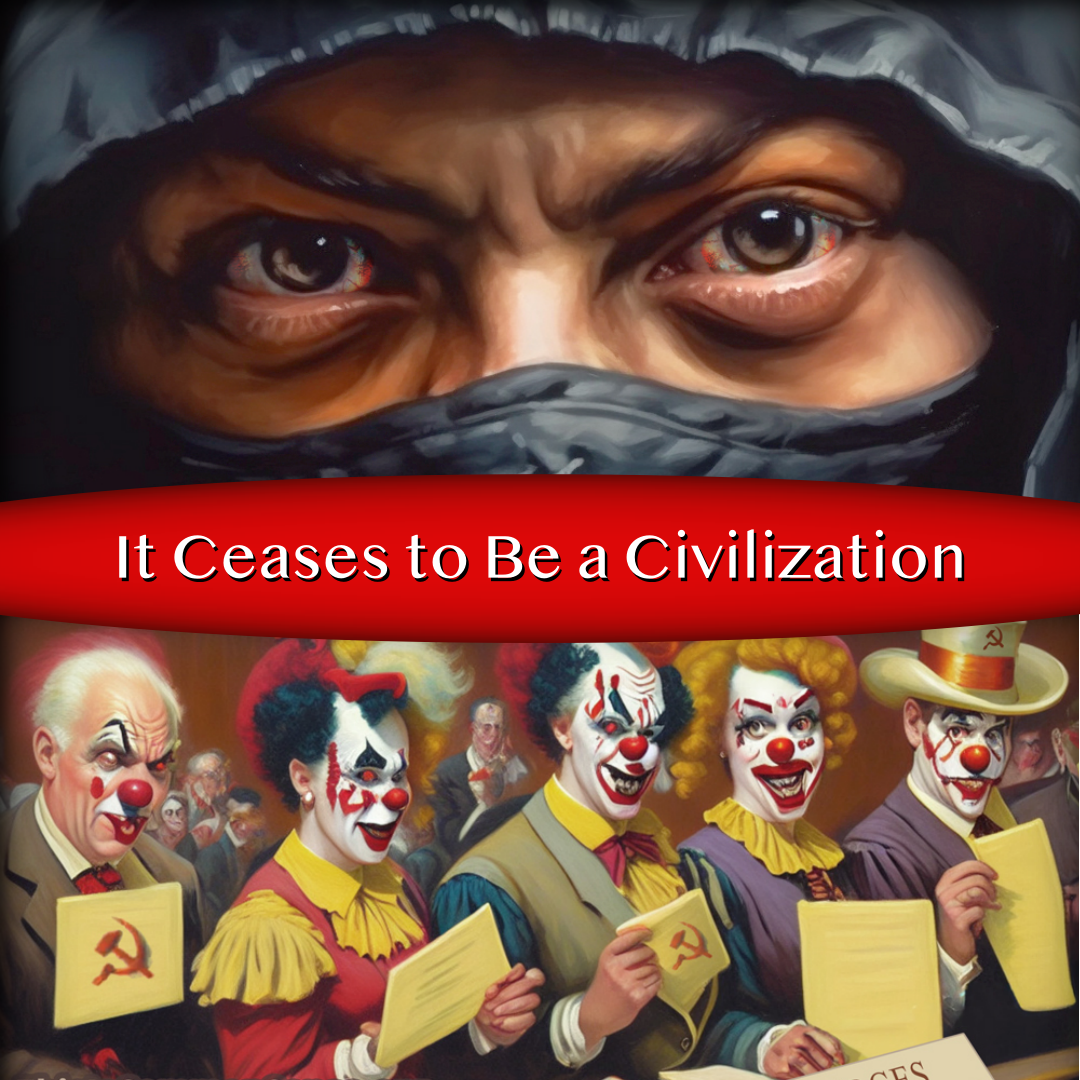
Illustration created with PicFinder.ai and DALL-E2

See all recent commentary
(simplified and organized)
See recent popular posts

Categories
Thought

W.H. Auden

Let us honour if we can  
The vertical man  
Though we value none  
But the horizontal one.

W. H. Auden, included in The Collected Shorter Poems of W. H. Auden, 1927–1957 (1964), and also retrievable from numerous websites. See also “Law Like Love.”
Categories
Today

Two Washingtons

On April 5, 1792, George Washington exercised the first presidential veto of a congressional bill, a new plan for dividing seats in the House of Representatives, which would have increased the number of seats for northern states. Washington vetoed only one other bill during his two terms in office, an act that would have reduced the number of cavalry units in the army.

On April 5, 1856, Booker T. Washington (pictured above), American educator, first leader of the Tuskegee Institute in Alabama, author of 14 books, including his autobiography, Up From Slavery, was born a slave in southwestern Virginia. Though Washington faced criticism from leaders of the new NAACP, especially W.E.B. Du Bois, for not protesting the lack of civil rights more strongly, he secretly funded litigation for civil rights cases, such as challenges to southern constitutions and laws that disfranchised blacks.

Categories
Accountability crime and punishment property rights

Half-Win for Forfeiture Victim

In August 2020, Jerry Johnson made a mistake: he carried a large sum of money while flying from Charlotte to Phoenix to buy a semi truck for his business. Police grabbed the cash when he arrived in Phoenix.

Mr. Johnson had decided to use cash to avoid certain fees and on the assumption that traveling with cash is legal.

Perhaps it is legal according to mere law. But police often grab any large amount of cash they see someone carrying. They accuse the naïve owners of drug-running and care nothing about actual evidence.

Threatened with jail when interrogated, Johnson signed a form that, he later understood, stated that the $39,500 was not his. The government kept the cash until he could wrest it back in court.

This, you may remember, is par for the course for civil asset forfeiture in America, where government agents behave like highway robbers.

But in this case — this course — the story didn’t end well for the robbers, for Jerry Johnson has gotten back his money. 

But he has not been made whole. As Land Line points out, in addition to all the time and trouble, there were the legal expenses that Johnson incurred before he obtained the help of Institute for Justice. 

And Johnson also lost business revenue: “There were a lot of business opportunities I’ve missed out on because that money was just sitting in a government account.”

Thankfully, the story is not over, yet, for there are organizations like Pacific Law Foundation and Institute for Justice to help victims of government predation at no charge. In this case, it was Institute for Justice that represented the victim in court.

IJ will continue the case to press for compensation.

This is Common Sense. I’m Paul Jacob.


PDF for printing

Illustration created with Midjourney and DALL-E2

See all recent commentary
(simplified and organized)
See recent popular posts
Categories
Thought

Sinclair Lewis

Under a tyranny, most friends are a liability. One quarter of them turn “reasonable” and become your enemies, one quarter are afraid to speak, and one quarter are killed and you die with them. But the blessed final quarter keep you alive.

Sinclair Lewis, It Can’t Happen Here (1935).
Categories
Today

Tippecanoe (and, sadly, MLK, too)

On April 4, 1841, William Henry Harrison died of pneumonia, becoming the first President of the United States to die in office and the one with the shortest term served (he died on his 32nd day as president). A renowned Indian killer (having risen to fame for his part in 1811’s Battle of Tippecanoe), a proponent of the expansion of slavery into Northwest Territories, and a Whig, Harrison won the presidency in part by turning the Democrats’ “log cabin and hard cider” aspersions on his character as the basic symbols of the campaign.

Though hardly a “limited government man,” some limited government history buffs proclaim him the Greatest President, on the ostensibly droll and possibly cynical grounds that he spent so little time in office.


On a much sadder note, Martin Luther King, Jr., was assassinated on this day in 1968.

Categories
Thought

Percy Bysshe Shelley

Power, like a desolating pestilence, 
Pollutes whate’er it touches; and obedience, 
Bane of all genius, virtue, freedom, truth, 
Makes slaves of men, and of the human frame 
A mechanized automaton.

Percy Bysshe Shelley, Queen Mab (1813), Canto III.
Categories
Today

Mountaintop

On April 3, 1968, Martin Luther King, Jr., delivered his “I’ve Been to the Mountaintop” speech.

Categories
by Paul Jacob video

Watch: We Fight — Why???

Paul focuses on his most controversial commentary of the week, and then the conversation moves back to . . . Nixon.

Categories
Thought

Søren Kierkegaard

The truth is a trap: you can not get it without it getting you; you cannot get the truth by capturing it, only by its capturing you.

The Journals of Søren Kierkegaard, 1854.

Image, above, is a caricature of Kierkegaard published in The Corsair, a satirical journal.