On November 10, 1821, the First Cry of Independence in the small, interior town of Villa de los Santos, occurred in Panama. The November 10 date has since become Panama’s “Cry of Independence Day” in the country.
Cry of Independence
On November 10, 1821, the First Cry of Independence in the small, interior town of Villa de los Santos, occurred in Panama. The November 10 date has since become Panama’s “Cry of Independence Day” in the country.
Better to ask how unpopular; a substitute Democrat to be named later is more popular.
Twelve points more popular.
“An unnamed ‘Democratic candidate’ shifts the race by 12 points on the margins,” Aaron Blake reports in The Washington Post, “turning a four-point Democratic deficit against Trump into an eight-point lead, 48 percent to 40 percent.”
Democrats are mulling all this over because their unpopular president, according to a recent New York Times-Siena College poll, trails former President Donald Trump “in five of the six most competitive battleground states”: Arizona, Georgia, Michigan, Nevada, and Pennsylvania.
“I am concerned,” offered U.S. Sen. Richard Blumenthal (D-Conn.), “by the inexplicable credibility that Donald Trump seems to have despite all of the indictments, the lies, the incredible wrongdoing.”
Or is it, instead, the lack of credibility enjoyed by establishment politicians and media?
“What many missed about the poll is that a generic Democrat isn’t the only one significantly overperforming the actual candidate likely to lead the ticket,” Blake further explains.
“The poll also tested a race without Trump,” discovering that the “GOP’s lead goes from an average of four points with Trump to an average of 16 points without him, 52–36.”
Former South Carolina Gov. Nikki Haley polls best against Biden.
Democrats, however, lack an “available alternative.” Vice-President Kamala Harris polls only a single point better than Biden, which is damning news for Biden. Would another Californian, Gov. Gavin Newsom, fare better?
Or is the only good Democrat a mythical Democrat?
This is Common Sense. I’m Paul Jacob.
Illustration created with PicFinder and Firefly
See all recent commentary
(simplified and organized)
See recent popular posts

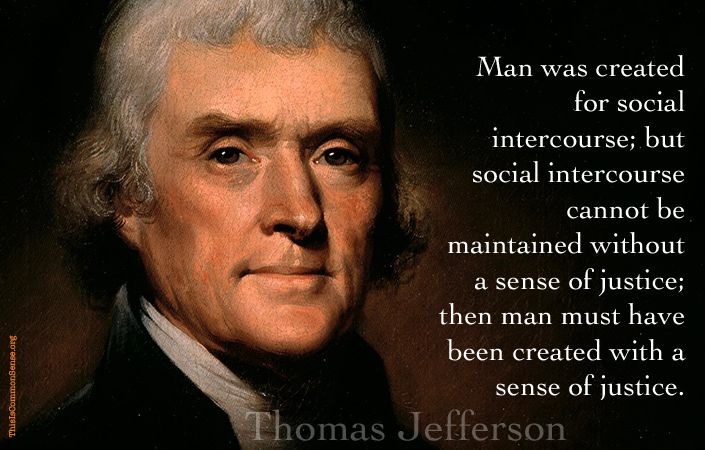
Man was created for social intercourse; but social intercourse cannot be maintained without a sense of justice; then man must have been created with a sense of justice.
Thomas Jefferson, letter to Francis W. Gilmer, June 7, 1816.
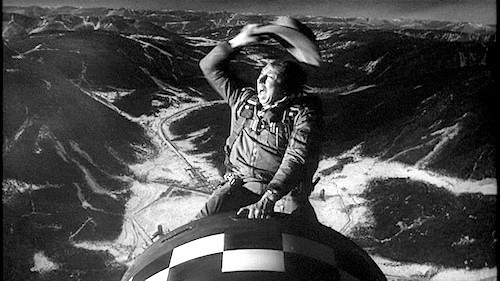
On November 9, 1979, NORAD computers and the Alternate National Military Command Center in Fort Ritchie, Maryland, detected an apparent massive Soviet nuclear strike. After reviewing the raw data from satellites and checking the early-warning radars, the alert was cancelled.
Image from the last few minutes of Stanley Kubrick’s dark comedy, Dr. Strangelove, or; How I Stopped Worrying and Learned to Love the Bomb, Slim Pickens in his most memorable onscreen moment.
Why would there be big hiccups at all?
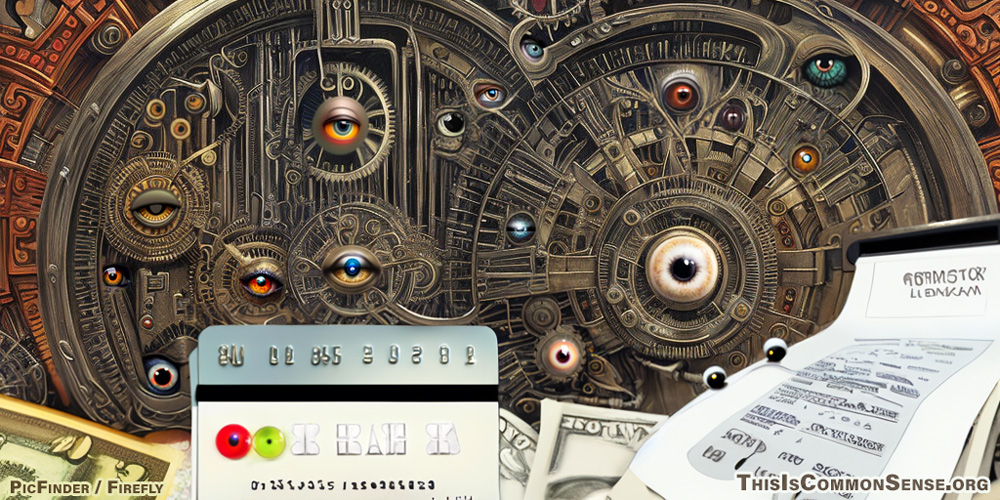
As Brian Doherty remarks at Reason, it’s not just “frustrating when those businesses make seemingly arbitrary decisions that cripple your ability to function in a modern economy,” it’s hard to understand. After all, “the incentives of businesses are to, well, do business with customers.”
Why would banks, then, increasingly treat customers badly?
I’m not talking about the allegedly transient snag in the direct deposit system last week — apparently due to human error — but something more persistent, if scattershot.
Doherty found an answer in The New York Times, in an article “giving infuriating details of innocent Americans being cut off by their banks.”
It should not shock the reader, Mr. Doherty explains, revealing: “the real cause of the banks’ seemingly arbitrary behavior is government rules designed to make sure it knows everything it can about citizens’ banking business, to discourage big cash transactions, and to ensure businesses the government disapproves of have as difficult a time as possible without being explicitly banned.”
Nearly ten years ago I wrote about it in a discussion of Operation Choke Point. Since then, in the words of the New York Times, “a vast security apparatus has kicked into gear, starting with regulators in Washington and trickling down to bank security managers and branch staff eyeballing customers.”
Who’ll be next?
This is Common Sense. I’m Paul Jacob.
Illustration created with PicFinder and Firefly
See all recent commentary
(simplified and organized)
See recent popular posts

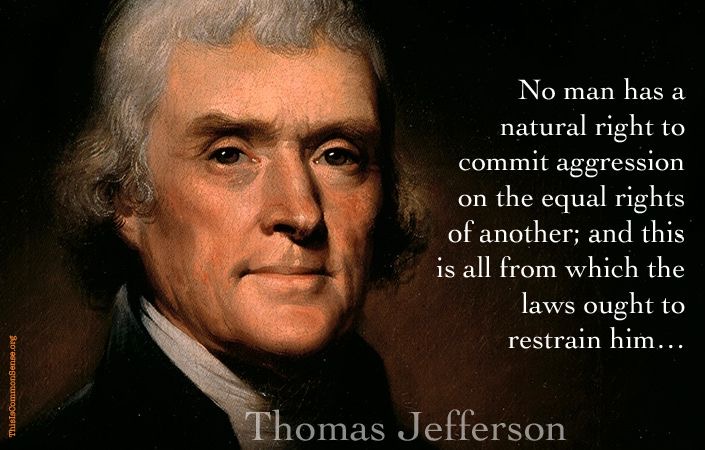
No man has a natural right to commit aggression on the equal rights of another; and this is all from which the laws ought to restrain him: every man is under the natural duty of contributing to the necessities of the society; and this is all the laws should enforce on him: and, no man having a natural right to be the judge between himself and another, it is his natural duty to submit to the umpirage of an impartial third. [W]hen the laws have declared and enforced all this, they have fulfilled their functions, and the idea is quite unfounded that on entering into society we give up any natural right.
Thomas Jefferson to Francis W. Gilmore, June 7, 1816.
Huh?
Americans for Tax Reform President Grover Norquist wrote recently in The Denver Gazette, that the proposition “would result in the largest tax hike in Colorado history.”
Yet, the ballot title begins: “SHALL THE STATE REDUCE PROPERTY TAXES FOR HOMES AND BUSINESSES, INCLUDING EXPANDING PROPERTY TAX RELIEF FOR SENIORS . . . ?”
“Democrats have advertised Prop. HH primarily as a property tax cut that will save homeowners hundreds of dollars per year,” explains Colorado Public Radio’s Andrew Kenney, “which is true.”
But Kenney goes on to plainly present the rest of the story, that HH would also “raise the state spending limits created by TABOR, allowing the government to eventually keep hundreds of millions, and then billions, of dollars more tax money each year instead of refunding it.”
TABOR stands for the Taxpayer Bill of Rights, which voters passed by citizen initiative back in 1992. Under TABOR, government spending growth is limited, with excess revenue returned to taxpayers. Prop HH is designed to offer immediately small property tax relief attached to letting the legislature grab much bigger money from not providing refunds in the future.
Norquist correctly dubs it “a bait-and-switch tax hike scheme.”
It’s the usual stock-in-trade of the political class. The difference in Colorado, however, under the Taxpayer Bill of Rights, is that politicians are required to ask voters for permission . . . to hornswoggle them in this way.
Politicians have been asking for higher taxes again and again for years. (Not to mention going to court in a failed attempt to overturn TABOR.)
But voters have the final say. Today.
This is Common Sense. I’m Paul Jacob.
Illustration created with PicFinder and Firefly
See all recent commentary
(simplified and organized)
See recent popular posts
Man is the only living species that has the power to act as his own destroyer — and that is the way he has acted through most of his history.
Ayn Rand, The Virtue of Selfishness (1964).
The U.S. Congress overrode President Richard M. Nixon’s veto of the War Powers Resolution on November 7, 1973. This resolution ostensibly limits presidential power to wage war without congressional approval, hence Nixon’s veto. Nowadays, however, it is often referred to as the expansive terms for the “Imperial President’s” license to engage in military conduct.
What is that “one job”? It is “to pass twelve appropriations bills and a budget. We aren’t doing that, which is why we are $33 trillion in debt.”
Katherine Mangu-Ward, at Reason, fleshed this out: “In theory, the president proposes a budget, Congress passes a budget resolution, and then various committees put together a dozen separate spending bills. They’re debated and voted on, and then the president signs them into law by October 1.”
The practice, however, is a bit different: “What happens instead is that the members of the House careen into each fall full tilt, screaming at each other until they throw together some kind of stopgap measure to fund the federal government for a little while longer until they can get their act together to generate a big, messy omnibus bill that no one will have time to read.”
But it’s worse: “When they can’t manage even that, we get a shutdown.”
To prevent a shutdown, but also not fall back into the usual iterations of the continuing resolutions, the new House Speaker, Rep. Mike Johnson (R.-La.) has floated the idea of a “laddered” CR. According to The Epoch Times, this plan “would spread the due dates over a period of time rather than having all the bills come due at once.” Think of it as an ultra-weak echo of the responsible budgeting process.
Will it work? Will Congress manage this merest hint of responsibility?
In ten days, it’s go time — or, no-go time — again.
This is Common Sense. I’m Paul Jacob.
Illustration created with PicFinder and Firefly
See all recent commentary
(simplified and organized)
See recent popular posts