On April Fools’ Day, 1957, the BBC offered for viewers of the current affairs program “Panorama” the infamous spaghetti harvest report hoax.
By sheer coincidence (?), one definition of “noodle” is “fool.”

On April Fools’ Day, 1957, the BBC offered for viewers of the current affairs program “Panorama” the infamous spaghetti harvest report hoax.
By sheer coincidence (?), one definition of “noodle” is “fool.”
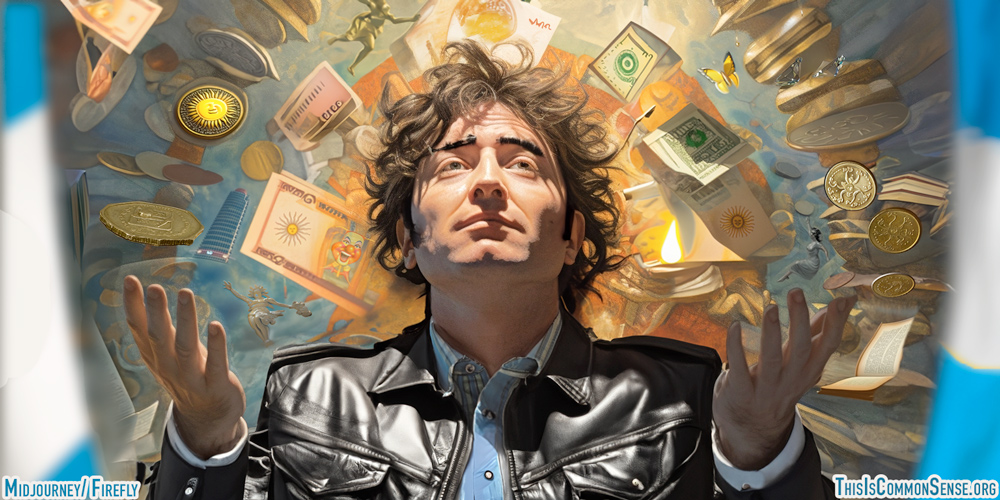
In Argentina, they aren’t getting caught up on words. Real things are happening, substantive changes. Javier Milei is actually reducing the size of government:
Argentine President Javier Milei announced his plans to slash 70,000 government jobs in an effort to shrink government expenditure and reduce the national deficit to zero. The cuts are part of his broader strategy to achieve fiscal balance at any cost.
Katarina Hall, “Milei To Slash 70,000 Government Jobs To Reform Argentina’s Economy,” Reason (March 28, 2024).
But it is worth noting that he has tremendous opposition. People with cushy government jobs do not want to lose their cushy government jobs:
Milei assured that he would move forward with reforms ‘in spite of the politics.’ He said that the Senate’s recent rejectionof his bills was an opportunity to expose corrupt politicians, those ‘who do not want to give up their jobs and seek to maintain their privileges.’ Looking ahead, the Argentine president said he plans to introduce 3,000 more reforms after the 2025 congressional elections.
Katarina Hall, “Milei To Slash 70,000 Government Jobs To Reform Argentina’s Economy,” Reason (March 28, 2024).
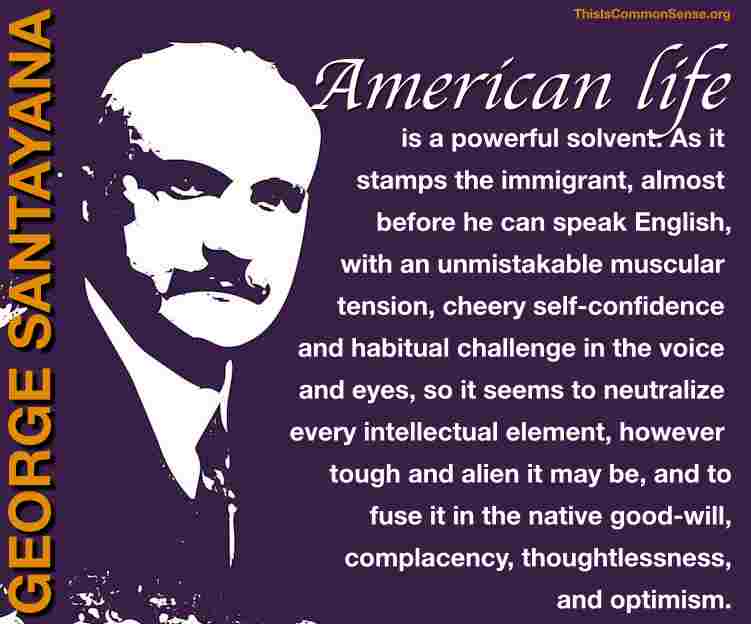
American life is a powerful solvent. As it stamps the immigrant, almost before he can speak English, with an unmistakable muscular tension, cheery self-confidence and habitual challenge in the voice and eyes, so it seems to neutralize every intellectual element, however tough and alien it may be, and to fuse it in the native good-will, complacency, thoughtlessness, and optimism.
George Santayana, Character and Opinion in the United States (1920).
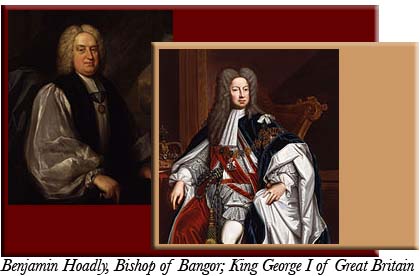
On March 31, 1717, a sermon on “The Nature of the Kingdom of Christ,” by Benjamin Hoadly, the Bishop of Bangor, provoked the Bangorian Controversy.
The sermon’s text was John 18:36, “My kingdom is not of this world,” and from that Hoadly deduced — supposedly at the request of King George I himself, who was present in the assembly — that there was no Biblical justification for any church government. Hoadly identified the church with the kingdom of Heaven, noting that Christ had not delegated His authority to any representative.
King George’s preference for the Whig Party, and for latitudinarianism in ecclesiastical policy, is widely thought to have been a strategic maneuver to degrade church power in political government.
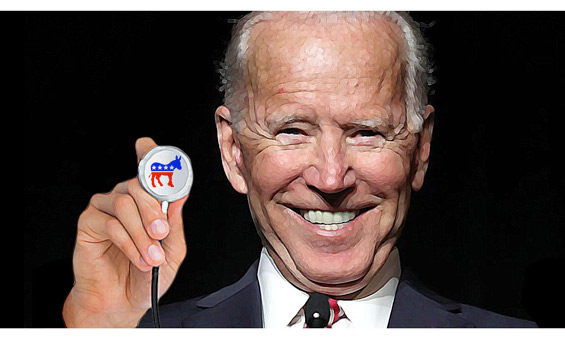
This being an election year, it is impossible to ignore the schism in America’s political culture, especially between the “two sides’” apparent presidential contenders, President Joseph Robinette Biden, Jr., and former President Donald John Trump. What do American voters really think of them?
In “Democrats Are More Fearful and Angry If Trump Is Elected Than Republicans About Biden: Poll,” in The Epoch Times, we learn that the fear and loathing in 2024 is asymmetrical: “According to a recent poll from The Associated Press-NORC Center for Public Affairs Research, the majority of Democrats are both extremely fearful (66 percent) and very angry (60 percent) if the former president wins another term in the 2024 White House race,” Aaron Pan writes. “In contrast, 49 percent of Republicans feel very fearful, and 45 percent are angry about President Biden’s victory.”
More provocative yet is that the racial divide is less extremely asymmetrical than in the recent past, with “a recent poll by The New York Times and Siena College show[ing] that President Trump is taking the lead over President Biden from Hispanic and black voters, where Democratic candidates traditionally won in the past. Among Hispanic voters, President Trump received 46 percent support; the incumbent received 40 percent. Latino voters are estimated to account for around 15 percent of the electorate. Black voters’ support for the former president is 23 percent, while 66 percent support President Biden.”
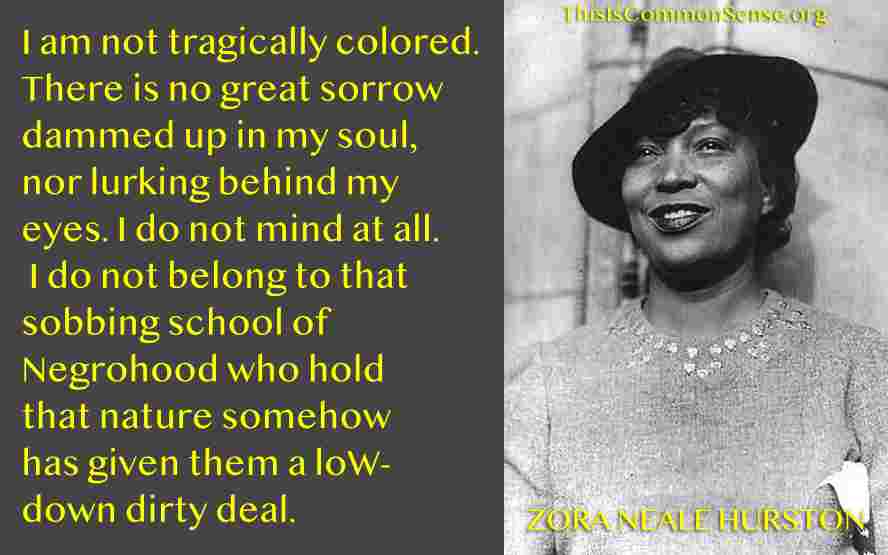
Zora Neale Hurston, “How It Feels to Be Colored Me,” in The World Tomorrow (May 1928).
I am not tragically colored. There is no great sorrow dammed up in my soul, nor lurking behind my eyes. I do not mind at all. I do not belong to that sobbing school of Negrohood who hold that nature somehow has given them a lowdown dirty deal. Even in the helter-skelter skirmish that is my life, I have seen that the world is to the strong regardless of a little pigmentation more or less. No, I do not weep at the world — I am too busy sharpening my oyster knife.
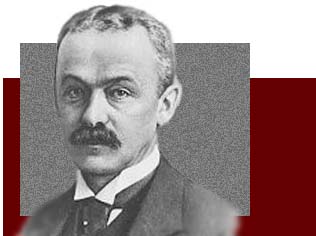
On March 30, 1864, German sociologist and economist Franz Oppenheimer was born.
This sociologist is most famous for his 1908 book The State, in which he elaborated some consequences of two means for acquiring wealth, the “economic means,” by which he meant private production or by trade, and the “political means,” by which he meant forcible extraction from one group or person by another person or group.
Oppenheimer taught in Palestine in the mid-1930s, and fled the Nazis to the United States, via Japan in 1938.
In 1941 he became a founder of The American Journal of Economics and Sociology, and died two years later.

Students attending the Wappingers district school in New York State are rebelling against a government-imposed policy that lets students use bathrooms designated for the opposite sex. The protest has provoked a counterprotest by those who want the bathrooms to be open to all.
All this controversy even though, as Spectrum News reports, the school boasts “male and female restrooms, as well as a gender-neutral single-stall restroom that any student may use.”
Meanwhile, a school official says the school will “continue to provide a safe environment for all of our students. And ‘all’ means all, each and every one of them.” But this goal is self-contradictory if a few students are willing to make most others
These administrators should at least say: “We agree 100% with students who object to this wrongheaded policy. Unfortunately, we are too worried about funding and/or legal repercussions and/or the possibility that the government will send troops to enforce the the current transgenderist orthodoxy.
“Until we can gather enough courage to rebel ourselves, we implore students eager to use the wrong bathroom to use, instead, the bathroom designated for their sex. Please respect the sensibilities of your fellow students even if you wish you were a member of the
Three cheers for the students fighting the insanity, three jeers for the dishonesty of school officials.
This is Common Sense. I’m Paul Jacob.
Illustration created with PicFinder and Firefly
See all recent commentary
(simplified and organized)
See recent popular posts
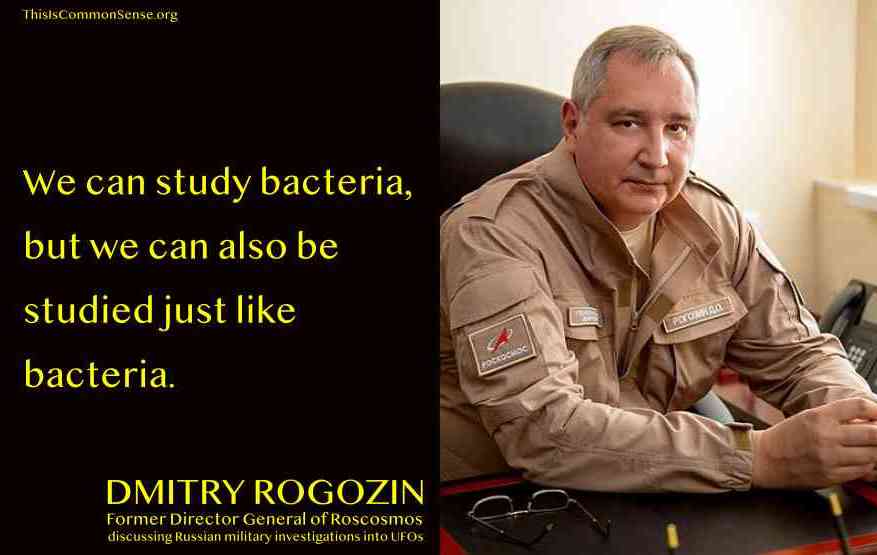
We can study bacteria, but we can also be studied just like bacteria.
Dmitry Rogozin, Director General of Roscosmos (2018-2022), as quoted in “Dmitry Rogozin: Aliens Could Have Visited Earth, Russia Investigating UFOs,” Newsweek (June 13, 2022).
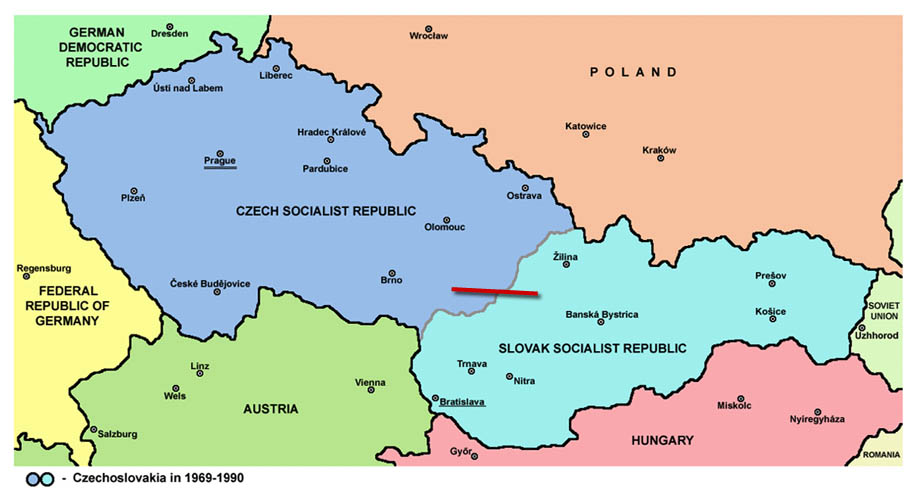
On March 29, 1990, the Czechoslovak parliament proved unable to reach an agreement on what to call the country after the “Velvet Revolution” — in which the Communist Party was booted from sole power. This sparked the “Hyphen War,” a tongue-in-cheek moniker for the dispute between Czechs and Slovaks about official recognition of the two nations’ equal status. (The Slovak representatives wanted to insert a hyphen into the name, to make the Slovak part stand out.) Eventually, the dispute was resolved with the “Velvet Divorce,” in which the two countries split up, on New Year’s Day, 1993, the two countries now being named:
Czech Republic, also known as Czechia;
Slovakia, officially the Slovak Republic (Slovak: Slovenská republika).