Like the Bolshevik system, the power politics of America now operates on a program of total obedience and conformity.
Stephen Cox, “Biden and the Bolsheviks,” Liberty (July 28, 2024).
Categories
Stephen Cox
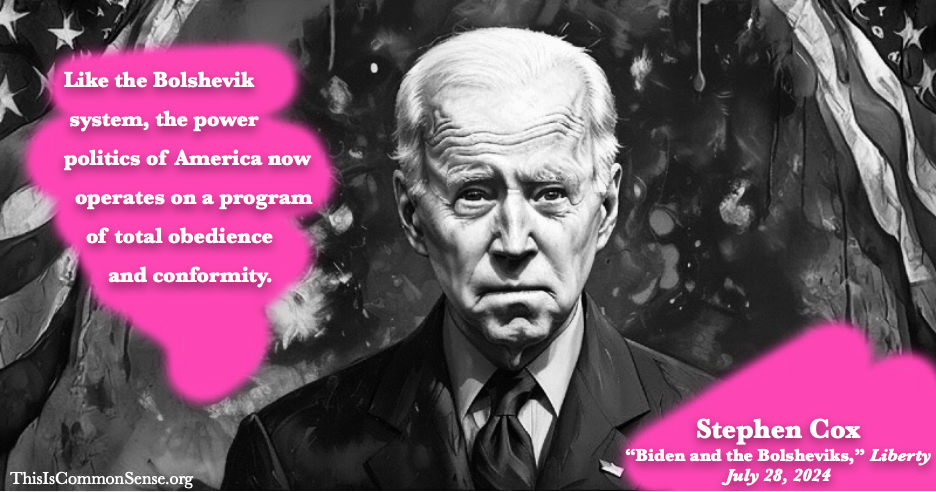
Like the Bolshevik system, the power politics of America now operates on a program of total obedience and conformity.
Stephen Cox, “Biden and the Bolsheviks,” Liberty (July 28, 2024).

On August 19, 1919, Afghanistan gained full independence from Great Britain. Earlier, British attempts to maintain an imperial presence in this region elicited an infamous essay in protest by English sociologist and anti-imperialist Herbert Spencer (pictured), “Patriotism” (Facts and Comments, 1902).
On this day in 1991, Soviet President Mikhail Gorbachev was placed under house arrest, a crucial event leading to the dissolution of the Soviet Union.
In 1999, a mass rally of Serbians demanded the resignation of Slobodon Milosevic.
The old rule of journalists and the motives of their sources: “All I care about ‘are the documents verifiable’ and ‘are they in their public interest.’”
Now, says Glenn Greenwald — that is, after the 2016 election, in which journalists repented of their reporting that sure seemed to have helped defeat Hillary Clinton, their dearly beloved candidate — the rules have changed.
“As the 2020 campaign began approaching,” Mr. Greenwald related on System Update (#315), “and all of these institutions and establishment sectors were desperate to ensure Trump didn’t win a second term and Biden won instead, they did something that is now screwing them. And they deserve it so much because what they did was so corrupt. What they did was they announced that from now on, ‘even if we got in our hands material we that we know is authentic . . . and even if they are of great public interest, even if they shed enormous light on one of the two presidential candidates . . . if they believe it comes from a foreign country and it’s designed to influence our election.” Greenwald says this is a brand new rule. Journalists “radically revised” the rules of journalism to protect their candidates.
But now there is a dump of emails from the Trump campaign. Oh, how they would love to release them, promote them, comment upon them, etc. But their new rule means they cannot.
That is, if they honor it in a non-partisan way.
Place your bets now. Will they repudiate their rule and go back to doing journalism (and also helping their party), or will they stick to their new rule which usually (but not in this case) helps their candidates?
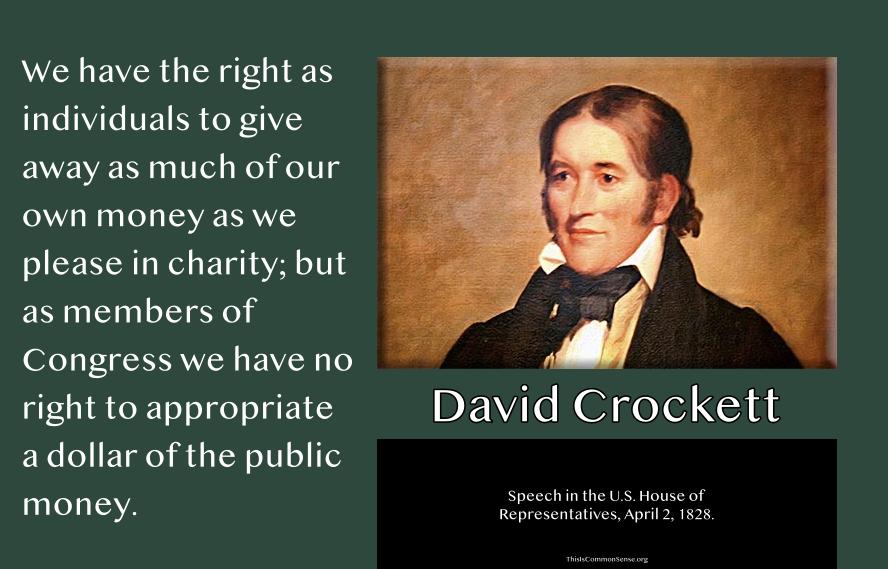
We have the right as individuals to give away as much of our own money as we please in charity; but as members of Congress we have no right to appropriate a dollar of the public money.
Davy Crockett, Speech in the US House of Representatives on April 2, 1828, as quoted in The Life of Colonel David Crockett (1884) by Edward Sylvester Ellis.
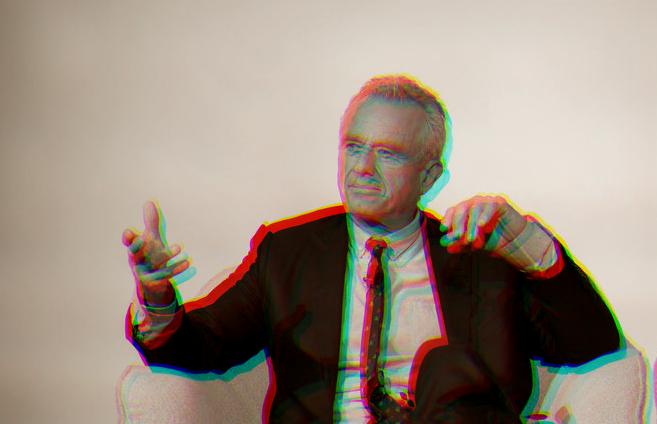
Every election year rumors fly. Some are shot down.
A recent example? Scuttlebutt had it that presidential candidate Bobby Kennedy had “made a deal” with the Democrats:
Independent presidential candidate Robert F. Kennedy Jr. refuted a Washington Post report from earlier this week that said he would drop out of the race and endorse Vice President Kamala Harris in exchange for a cabinet position if she wins in November.
During an Aug. 15 Latino Town Hall on TikTok, he told the moderators that the story is “fake news.”
“I didn’t ask for a cabinet position,” Kennedy said.
Jeff Louderback, “RFK Jr. Refutes Report That He Approached Harris for a Cabinet Position,” The Epoch Times (August 16, 2024).
This story gets interesting, actually, when we consider what Kennedy goes on to say: that everyone complains about political divisions, but then complains when rivals talk to one another! And who has Kennedy talked to?
“I want to meet with all candidates about dampening down the rhetoric and unifying our country.”
Kennedy said candidates, including former President Donald Trump and Libertarian presidential nominee Chase Oliver, have met with him.
“Kamala Harris said she doesn’t want to [meet],” he said.
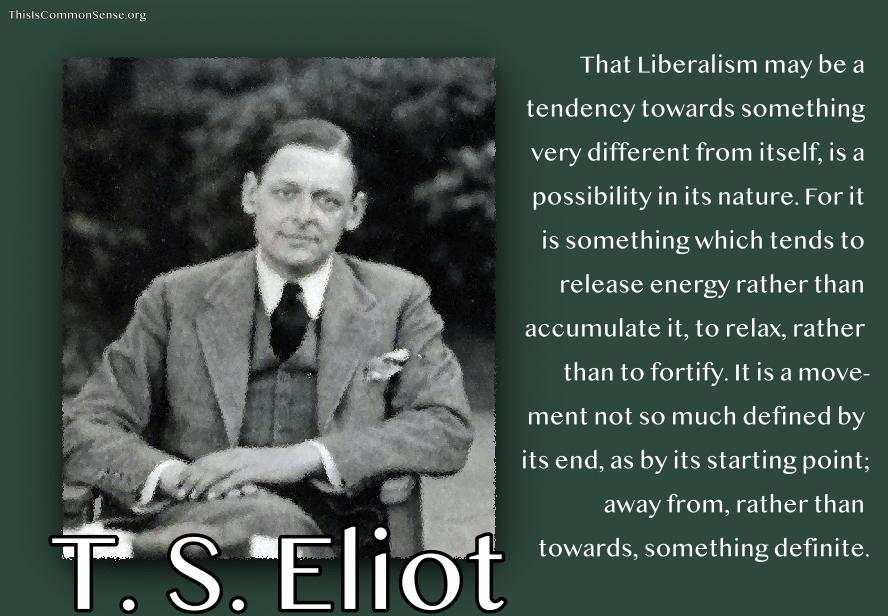
That Liberalism may be a tendency towards something very different from itself, is a possibility in its nature. For it is something which tends to release energy rather than accumulate it, to relax, rather than to fortify. It is a movement not so much defined by its end, as by its starting point; away from, rather than towards, something definite. Our point of departure is more real to us than our destination; and the destination is likely to present a very different picture when arrived at, from the vaguer image formed in imagination. By destroying traditional social habits of the people, by dissolving their natural collective consciousness into individual constituents, by licensing the opinions of the most foolish, by substituting instruction for education, by encouraging cleverness rather than wisdom, the upstart rather than the qualified, by fostering a notion of getting on to which the alternative is a hopeless apathy, Liberalism can prepare the way for that which is its own negation: the artificial, mechanised or brutalised control which is a desperate remedy for its chaos.
Thomas Stearns Eliot, The Idea of a Christian Society (1939), Ch. I, pp. 15–16.
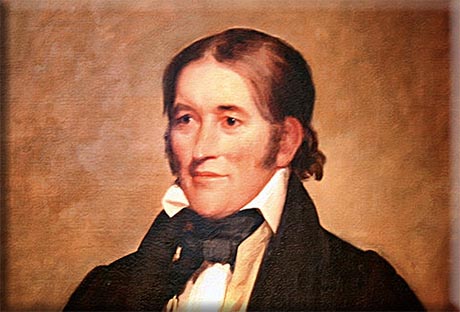
On August 17, 1786, American backwoods hero and politician, David Crockett, was born. Famous as a politician, he brought personal principle and honor and a “common sense” approach in representing Tennessee in the U.S. House of Representatives. He later played a part in the Texas Revolution, dying at the Battle of the Alamo.
Crockett grew up in East Tennessee, where he gained a reputation for hunting and storytelling, which helped make him a legend in his own time. After being made a colonel in the militia of Lawrence County, Tennessee, he was elected to the Tennessee state legislature in 1821.
In 1825, Crockett was elected to the U.S. Congress, where he vehemently opposed many of the policies of President Andrew Jackson, most notably the Indian Removal Act.
Crockett wrote a number of books, including a biography of Martin Van Buren.
These words are from a scene in Atlas Shrugged in which beleaguered industrialist Hank Rearden rejects “this court’s right to try me” and refuses to put on a defense. Thereby giving the best defense of all.
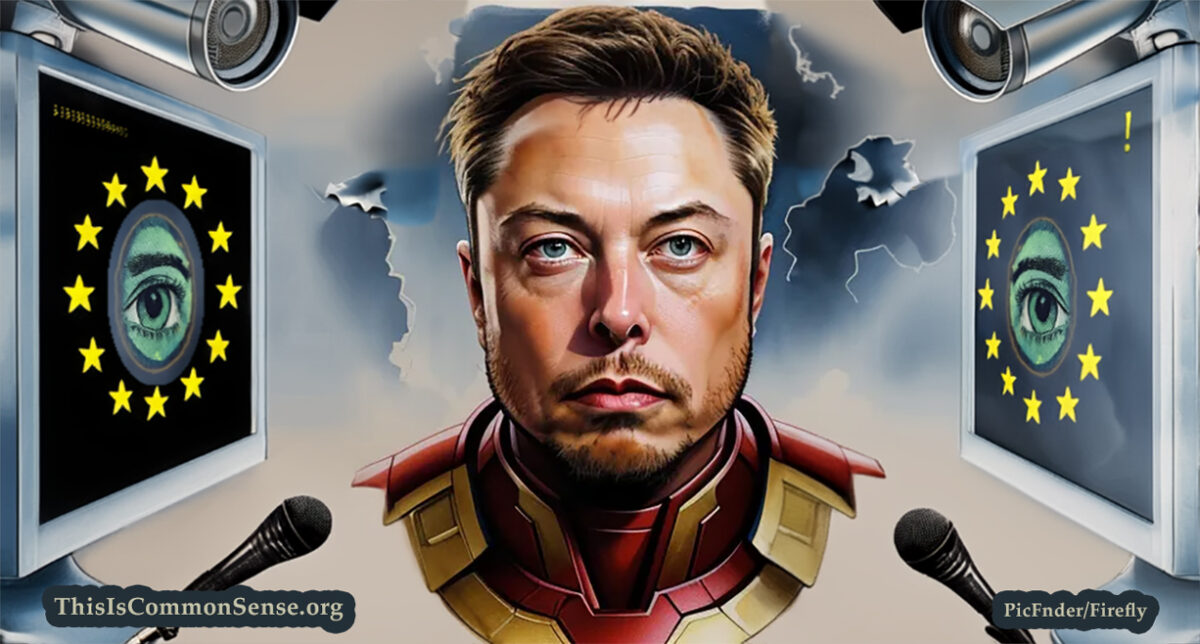
Elon Musk didn’t give a speech.
Instead, when an EU muck-a-muck, Thierry Breton, sent him a letter on the eve of Musk’s Twitter interview with presidential candidate Donald Trump, a letter babbling about dire consequences for Twitter if it were to “amplify potentially harmful content [i.e., any deviation from current government dogma] in connection with events with major audience around the world,” Musk responded with a quote and a clip from the movie Tropic Thunder.
Other EU officials are now rushing to disavow Breton’s letter, widely castigated as an attempt to interfere with the U.S. election.
I can’t repeat the line Musk quoted, because we don’t use cuss words here. If you don’t like to hear such words, don’t click into the video clip. Just don’t go there.
Mega-magnate Elon Musk is often badly wrong about China. But when he’s right, he’s right. Even super right.
And we need a million more CEOs to be thus willing to stand up to regulators foreign and domestic.
This is Common Sense. I’m Paul Jacob.
Illustration created with PicFinder and Firefly
See all recent commentary
(simplified and organized)
See recent popular posts
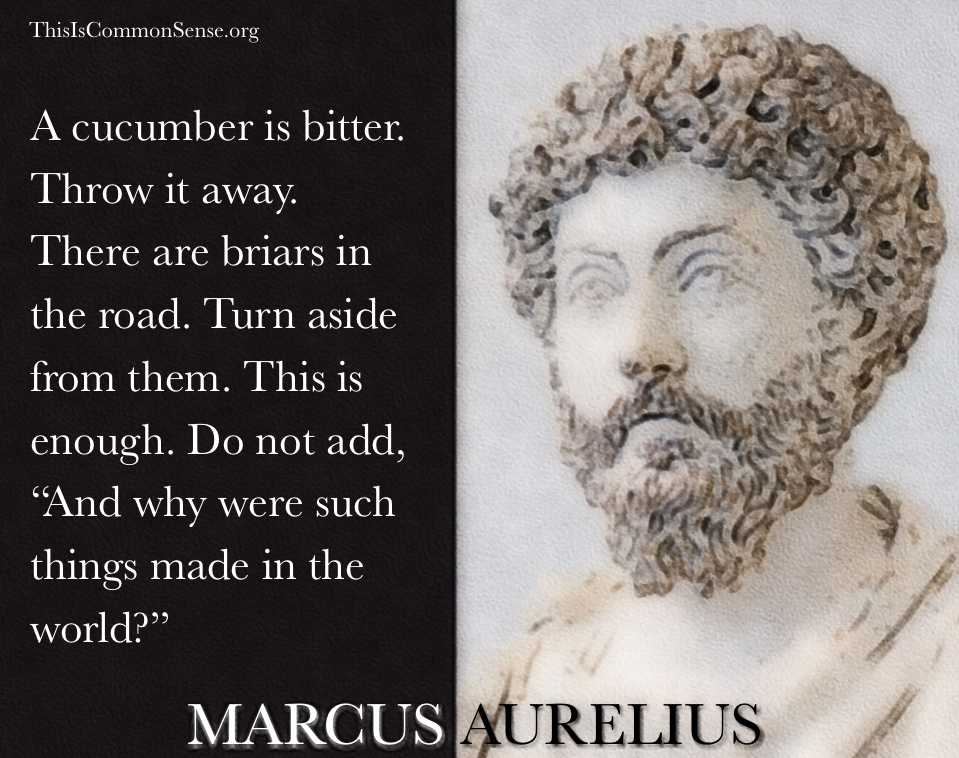
A cucumber is bitter. Throw it away. There are briars in the road. Turn aside from them. This is enough. Do not add, “And why were such things made in the world?”
Emperor and Pontifex Marcus Aurelius Antoninus, Meditations, Book XIII, § 50
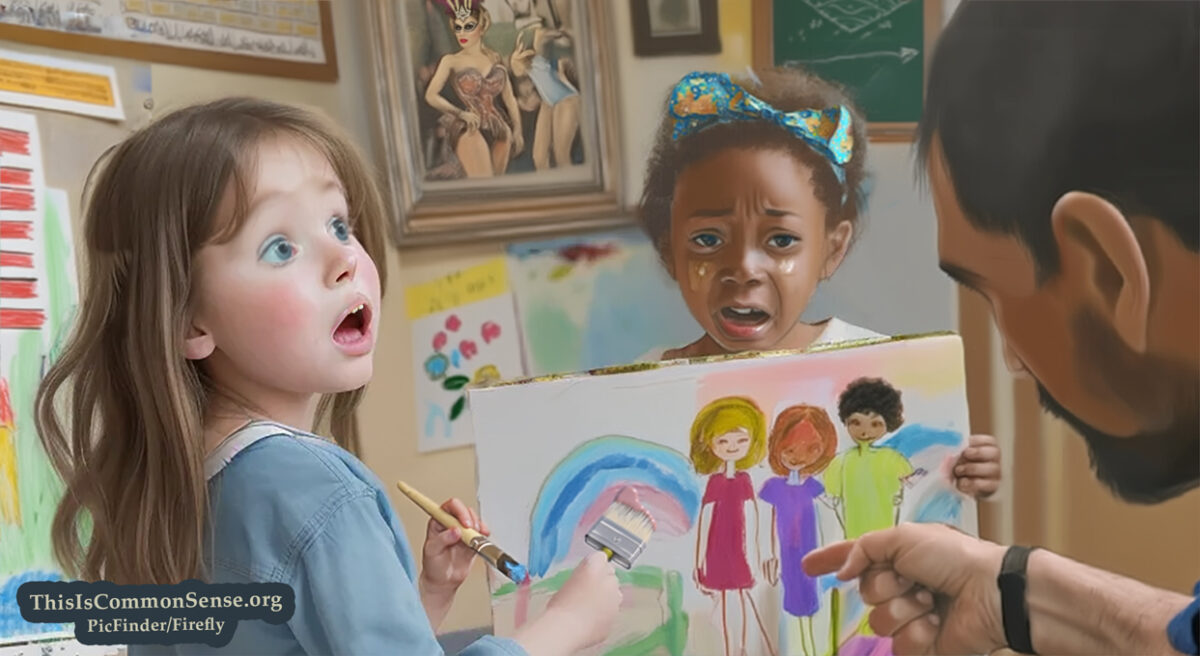
Schools must apply some discipline. Otherwise, chaos would ensue. Talking out of turn, pulling pigtails, passing notes . . . and, not least, an epidemic of expressing benign thoughts inconsistent with the poisonous race-conscious ideology that some schools seek to inculcate.
In March 2021, a little girl known as “B.B.” in court documents got into trouble for drawing a group of classmates of different races. She added the words “Black Lives Matter” and, below that, “any life.” She gave the drawing to a black classmate to try to comfort him, as she later explained.
Had B.B. been more attuned to the racial controversies of the day — does she not follow The New York Times and CNN? — she might have realized what treacherous waters she had dived into.
As it was, she was surprised when the school forced her to apologize to her classmate and forbade her from drawing any more pictures while in school and from attending recess for two weeks.
The parents sued. A district court ruled in favor of the school, but the parents, helped by Pacific Legal Foundation, are appealing.
The district judge says that whether First Amendment protections of free speech apply here depends on whether such speech, however innocent, would “significantly interfere with the discipline needed for the school to function.”
The drawing could hardly have thus interfered unless part of the school’s “function” is to impose race-conscious orthodoxy.
And suppress even the slightest peep of unwary dissent.
This is Common Sense. I’m Paul Jacob.
Illustration created with PicFinder and Firefly
See all recent commentary
(simplified and organized)
See recent popular posts