Categories
free trade & free markets general freedom national politics & policies

Junk Force

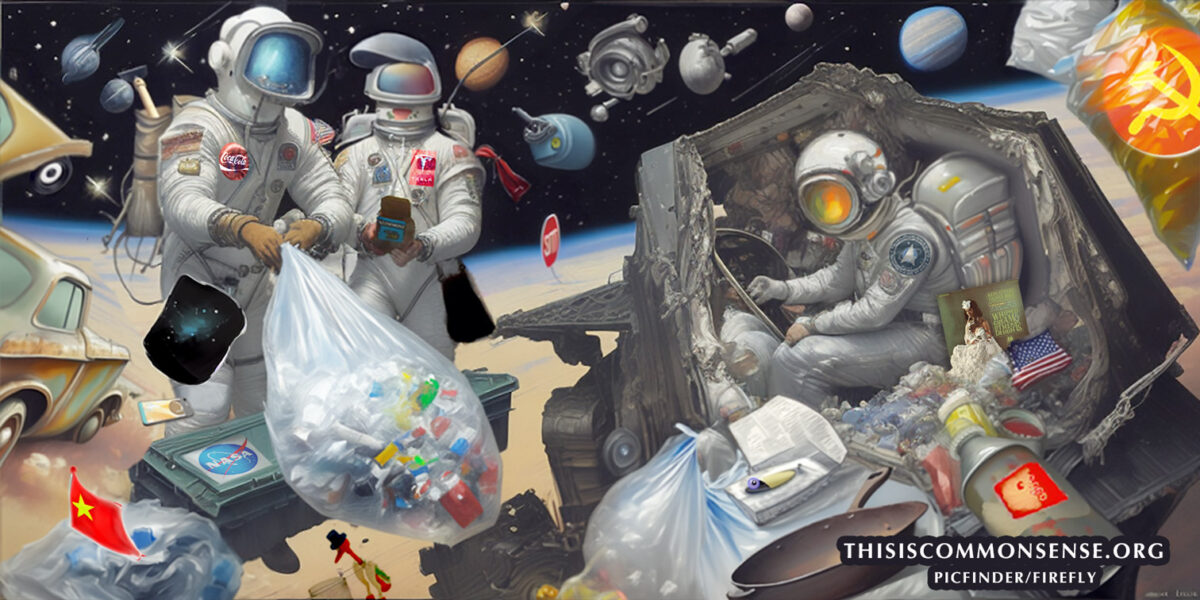
A Space.com news story indicates a big problem and a new role for government — or industry.

“The Infra-Red Calibration Balloon (S73-7) satellite started its journey into the great unknown after launching on April 10, 1974 through the United States Air Force’s Space Test Program,” writes Meredith Garofalo. “While in orbit, the original plan was for S73-7 to inflate and take on the role as a calibration target for remote sensing equipment. After this failed to be achieved during deployment, the satellite faded away into the abyss and joined the graveyard of unwanted space junk until it was rediscovered in April.”

It’s a complicated story; the satellite never really worked properly. Which raises the space junk problem.

The biggest polluter is governments. Space agencies. And the corporations contracting to put up satellites. And the military that puts stuff up we know nothing about.

“[A]s more and more satellites head into space,” explains Garofalo, “the task will become even greater to know what exactly is out there and what threats that could pose.”

When Trump boasted of creating the Space Force in 2019, a lot of people scoffed. I didn’t.*Somebody’s got to do the dirty work, and it does look like Space Force personnel see an important role to be filled, that of garbage men in orbital space. Since the more than 20,000 objects in orbit — and their associated random debris — were put there by governments, maybe governments should clean it up. 

The future of space industry could be hampered, should the problem continue to grow — though, in the end, it may be industry that will take over the task. After all, space litter’s more dangerous than most terrestrial “externalities.”

This is Common Sense. I’m Paul Jacob.


* Also, in no small part, because ceding outer space to China and Russia seems like a bad idea. 

PDF for printing

Illustration created with PicFinder and Firefly

See all recent commentary
(simplified and organized)
See recent popular posts
Categories
Thought

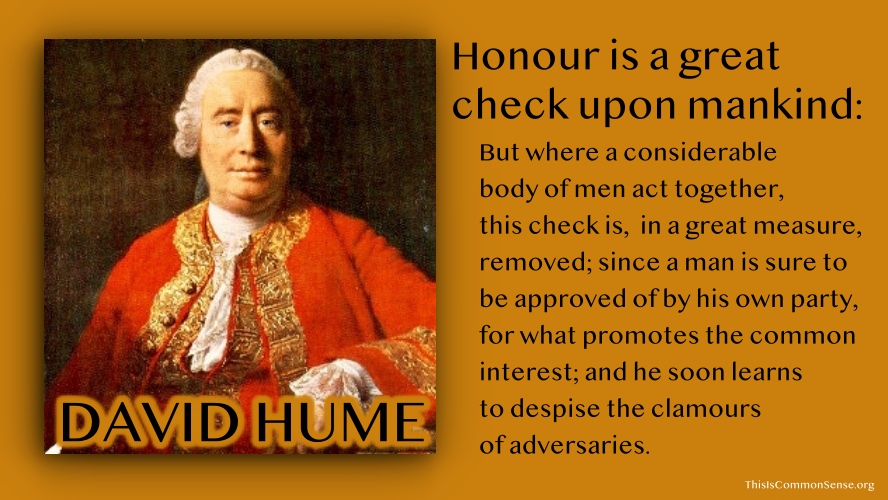
David Hume

Honour is a great check upon mankind: But where a considerable body of men act together, this check is, in a great measure, removed; since a man is sure to be approved of by his own party, for what promotes the common interest; and he soon learns to despise the clamours of adversaries.

David Hume, “Of The Independency of Parliament,” in Essays, Moral, Political, and Literary (1741-2; 1748).
Categories
Today

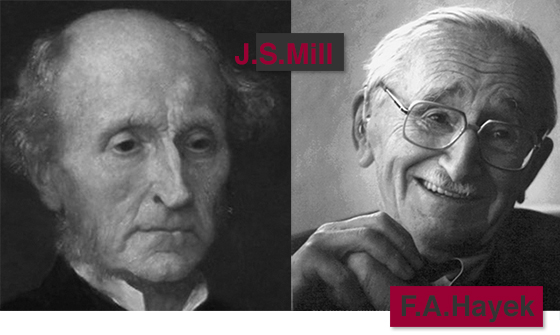
Mill & Hayek

On May 8, 1899, Austrian-English economist and philosopher Friedrich August von Hayek was born. He signed the bulk of his books written in the English language as “F.A. Hayek,” and is best known for The Road to Serfdom, The Constitution of Liberty, The Fatal Conceit, and many essays, several of them widely cited, including “Individualism, True and False” and “The Use of Knowledge in Society.”

Years earlier, on the same date in 1873, English philosopher and economist John Stuart Mill died. Now best known for On Liberty (1859) and Utilitarianism (1861), he was and is considered one of the most important economists and philosophers of the Victorian age, with other classics including A System of Logic (1843) and Principles of Political Economy (1848). Mill’s letters to his wife were edited into book form by Hayek.


On May 8, 1946, two Estonian school girls (Aili Jõgi and Ageeda Paavel) blew up the Soviet memorial which stood in front of the Bronze Soldier in Tallinn.

Categories
national politics & policies Tenth Amendment federalism

The Great Weed Fake-Out

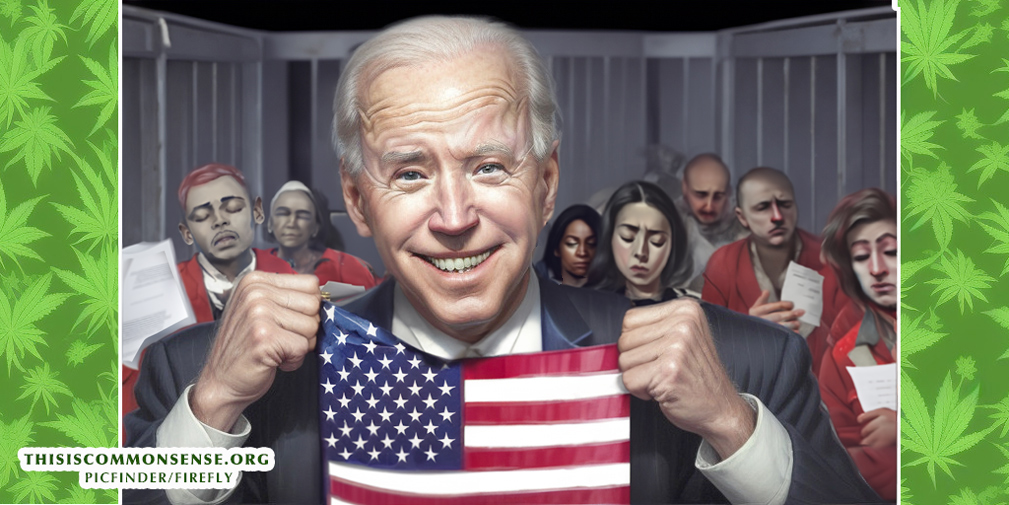
When, in the last State of the Union political rally, Stumbler-in-Chief Joe proclaimed that his administration had been “expunging thousands of convictions for the mere possession” of cannabis, did you believe him? Previously, when Second Banana Kamala set the theme, claiming to have “changed federal marijuana policy, because nobody should have to go to jail just for smoking weed,” how confident were you of her boast?

“Neither claim was accurate,” explains Jacob Sullum, in the June issue of Reason. They are exaggerations at best. For their voting bloc.

Remember Biden’s 2020 campaign promise to “decriminalize the use of cannabis” and “expunge all prior cannabis use convictions”?

They were undelivered because these moves would require new legislation.

Biden’s not a dictator. As much as he tries.

He still needs Congress.

When he announced, last October, to much ballyhoo, a mass pardon for simple marijuana possession convictions, directing a review of the drug’s classification under the Controlled Substances Act, neither move “actually ‘changed federal marijuana policy,’” Sullum insists. Not one prisoner was freed, and — more startling yet — no record was expunged . . . for while the president can pardon, he cannot legally expunge records. 

The question to ask ourselves is this: does Biden or anyone now in power really want to do anything more than yammer about drugs? 

After all, any substantive reform would require, as Sullum points out, addressing the tension in the union: a federal government claiming powers to regulate and prohibit (not found in the Constitution), and 38 states that have effectively nullified federal law.

Confronting that might lead to ceding a whole lot of power back to the states . . . on more matters than just weed.

This is Common Sense. I’m Paul Jacob. 


PDF for printing

Illustration created with PicFinder and Fireflly

See all recent commentary
(simplified and organized)
See recent popular posts

Categories
Thought

Ortega y Gasset

[T]he direction of society has been taken over by a type of man who is not interested in the principles of civilisation. Not of this or that civilisation but — from what we can judge to-day — of any civilisation.

José Ortega y Gasset, The Revolt of the Masses (1929), Chap.IX: “The Primitive and the Technical.”
Categories
Today

Belated Amendment

On May 7, 1992, the State of Michigan ratified a 203-year-old proposed amendment to the United States Constitution, thereby fulfilling the terms of amending the document, adding it as 27th Amendment.

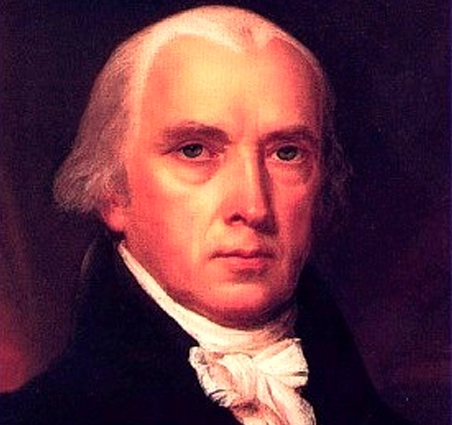
The amendment had been written by James Madison. He had presented it as part of the original twelve amendments that became the ten making up the Bill of Rights.

It bars the U.S. Congress from giving itself a pay raise until after the next election, so that voters have a chance to decide whether those voting for the raise would remain in Congress to receive it.

Categories
Accountability folly political economy

Inflation & the Infirm Incumbent

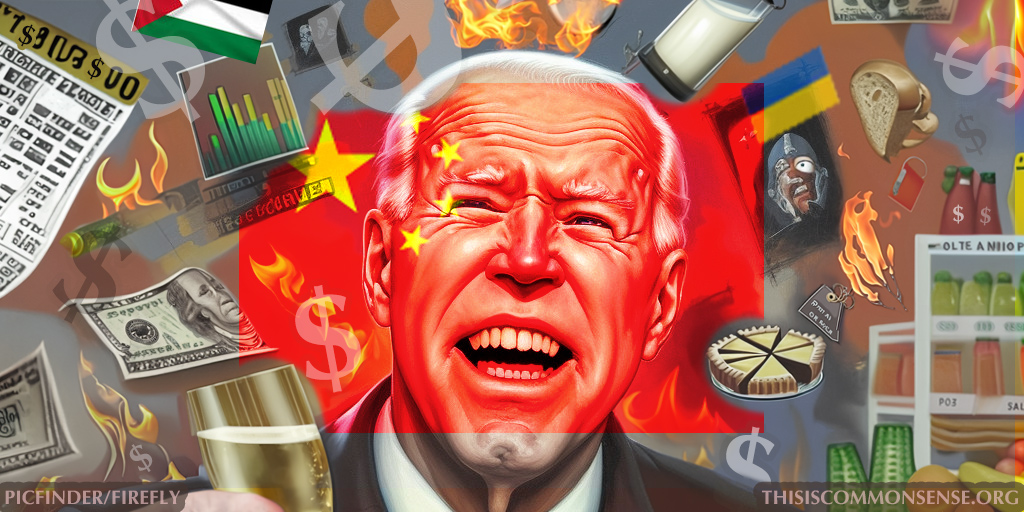
“From President Joe Biden’s point of view, Americans ought to be thrilled with the recent trends in inflation,” writes Eric Boehm at Reason, who quotes the president: “Wages keep going up and inflation keeps coming down.”

True enough, but, Mr. Boehm goes on, “pointing at the charts and regurgitating economic figures doesn’t seem to be as convincing as the president might hope.”

You’ve seen the left-of-center memes mocking Americans for thinking the economy is bad when it is, instead, g-gr-great!

But prices for food and gasoline, after the big bulge caused by all those COVID checks and subsidies, did not go back down to previous levels. And rising wages after the “Great Suppression” of the lockdowns seem at best a verypartial return to better times.

Boehm offers some context. “It makes sense that the recent run of inflation would leave a psychological scar. After all, the peak inflation rate of 9.1 percent in June 2022 was not only the highest annualized rate seen in more than four decades, it was also more than twice as high as the average inflation rate in any year since 1991. . . .” And inflation has not stopped. “In March, the annual inflation rate was 3.5 percent. Yes, that’s 60 percent lower than the peak rate in June 2022, but that’s still higher than the average annual rate in every single year between 1991 and 2021, except for 2008.”

And then there’s the higher interest rates, which, Boehm plausibly asserts, compounds our perceptions that “inflation is a major problem.”

This is a huge issue for Biden. Boehm cites the political lore: “If you’re explaining, you’re losing,” and notes that, “unfortunately for Biden, his task in the run-up to November’s presidential election is explaining to people that they shouldn’t feel like inflation is still a problem.”

Who you gonna believe: Your cash register receipts or a feeble, corrupt, multi-millionaire lifelong politician?

This is Common Sense. I’m Paul Jacob.


PDF for printing

Illustration created with PicFinder and Firefly

See all recent commentary
(simplified and organized)
See recent popular posts
Categories
Thought

Mary Wollstonecraft

It is justice, not charity, that is wanting in the world.

Mary Wollstonecraft, A Vindication of the Rights of Woman (1792), Chapter 4.

Categories
Today

Good Sailing

On May 6, 1862, American author, philosopher and abolitionist Henry David Thoreau died, after many years of tuberculosis. 

Aware he was dying, Thoreau’s last words were “Now comes good sailing,” followed by two lone words, “moose” and “Indian.” Bronson Alcott planned the service and read selections from Thoreau’s works, and Ralph Waldo Emerson wrote the eulogy spoken at his funeral. 

His remains, as well as those of members of his immediate family, were eventually moved to Sleepy Hollow Cemetery in Concord, Massachusetts.

His most famous works are An Essay on Civil Disobedience (1849) and Walden (1854).

Categories
Update

The Covidocene in Its Latter Days?

As Covid becomes normalized as a disease . . .

  1. “Moderna posted a $1.2 billion loss in the first quarter of 2024, with the drugmaker blaming crashing sales of its COVID-19 vaccine,” explains an Epoch Times article. “This decline aligns with the anticipated transition to a seasonal COVID-19 vaccine market,” Moderna said.
  2. We reminisce how we navigated the worst period: “In December 2021, visitors weren’t allowed in the hospital, so Amy Williams had to find another way to get the medicine to her father,” another Epoch Times piece tells us.
  3. “I believe that the truth about the COVID vaccines is starting to come out,” says Dr. John Campbell: