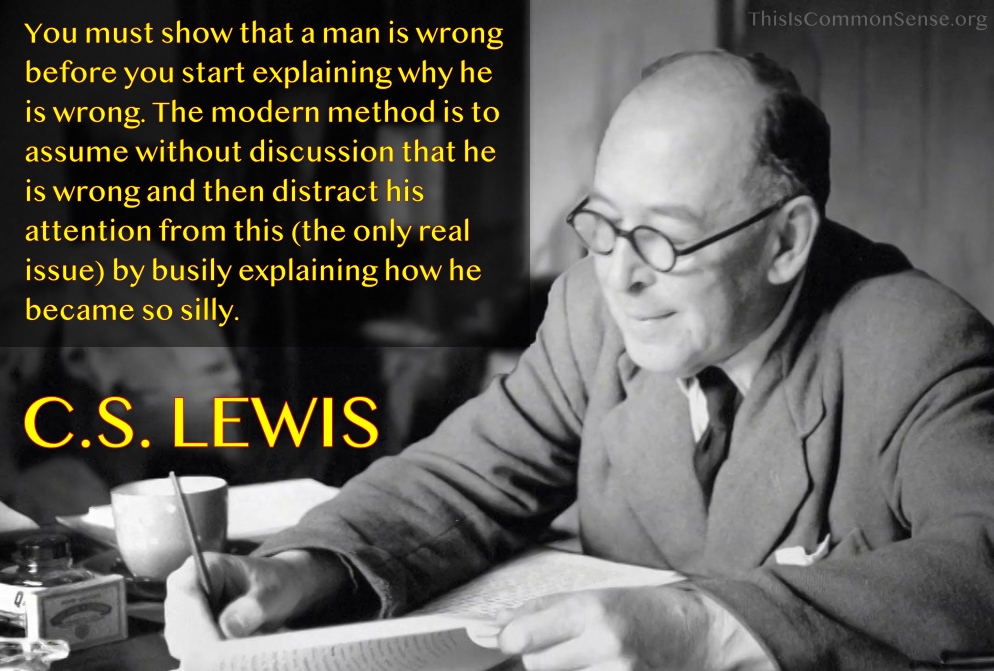
You must show that a man is wrong before you start explaining why he is wrong. The modern method is to assume without discussion that he is wrong and then distract his attention from this (the only real issue) by busily explaining how he became so silly.
C. S. Lewis, “Bulverism,” reprinted in God in the Dock (1970).
The Massachusetts Institute of Technology will no longer require applicants to make DEI statements.
MIT President Sally Kornbluth says the school can “build an inclusive environment in many ways, but compelled statements impinge on freedom of expression, and they don’t work.”
Correct on both counts, but a bit blah as indictments go. And inadequate. Forget “inclusive.” This is merely a pledge to refrain from being arbitrarily exclusionary.
But the new policy is better than the status quo.
DEI (“diversity, equity, and inclusion”) may sound innocuous, at worst pointless. But DEI guidelines have functioned as a particularly odious form of ideological litmus test. The goal has been to force instructors to toe certain leftist (or collectivist) ideological lines as if the ideas imposed were as self-evidently true as declarations that the cloudless sky is cerrulian blue.
For example, if you dare disagree that race-conscious “antiracist” policies making skin color — and maybe also “gender” — more important than quality of work or some reliable leading indicators of productivity, your views may put you on the wrong side of the DEI divide.
So MIT’s dropping of mandatory DEI-fealty statements is a big step in the right direction. By as prestigious an institution of higher learning as any in the world.
The bad news?
MIT has apparently not fired the “diversity deans” that it hired in 2021 — and hired not on the basis of excellence of qualifications: serious plagiarism complaints have been filed against two of these personnel!
If MIT retains six “diversity deans” in place, able to run around causing trouble for those faculty who reject DEI edicts, it hasn’t purged itself of the poison quite yet.
Rather early in pandemic there appeared a set of conspiracy theories to the effect that Great Britain’s National Health Service had used the coronavirus plague as an excuse to kill old people, thus pumping up the numbers of COVID deaths and fanning the flames of the pandemic panic while also thinning out the aging herd, relieving stress upon the medical system — which was said to be a paramount concern elsewhere, too.
As fuel for this theory were wild tales that the NHS had purchased vast quantities of Midazolam, a drug sometimes used in conjunction with other drugs at end-of-life situations.
What is the state of this accusation?
Well, Dr. John Campbell has been vlogging about Scotland’s COVID-19 inquiry, dealing with widespread malpractice regarding DNR (“Do Not Resuscitate”) orders in the country. Last week, Dr. Campbell provided an overview of where the Midazolam/COVID story is right now:
Note that Dr. Campbell is not taking seriously the extreme version of the Midazolam conspiracy theory, as cooked up early in the pandemic by David Icke. According to this accusation, there never was a new virus, and Midazolam was being used to kill thousands of patients to perpetrate a total fraud.
That theory seems a complete fantasy. But is the weaker version of the theory, where, for reasons not altogether clear, some COVID patients were given up on and “put out of their misery” — against the spirit and letter of the laws, as well as against the Hippocratic oath?
There does appear to be some evidence for that in Great Britain. We will see how this plays out. Though it may look like the fantasied projection of unhinged minds, the anecdotes are piling up, so perhaps we shouldn’t dismiss it at the start of inquiry.
Besides, we know that in several welfare states, Canada especially, euthanasia is all the rage — new subsidies and protocols by government to kill patients by “suicide,” designed (some say) to cut costs.
On May 19, 1897, Irish author, playwright, and poet Oscar Wilde (October 16, 1854 – November 30, 1900) was released from Reading Prison, where he had finished, in ill health, his hard labor sentence for “gross indecency.” His “Ballad of Reading Gaol,” first published pseudonymously in a periodical with wide circulation amongst criminals, quickly achieved the status of a classic.
He died less than three years later, in exile in Europe. His most famous works include the play The Importance of Being Earnest, the novel The Picture of Dorian Gray, and the fascinating essay “The Soul of Man Under Socialism.”
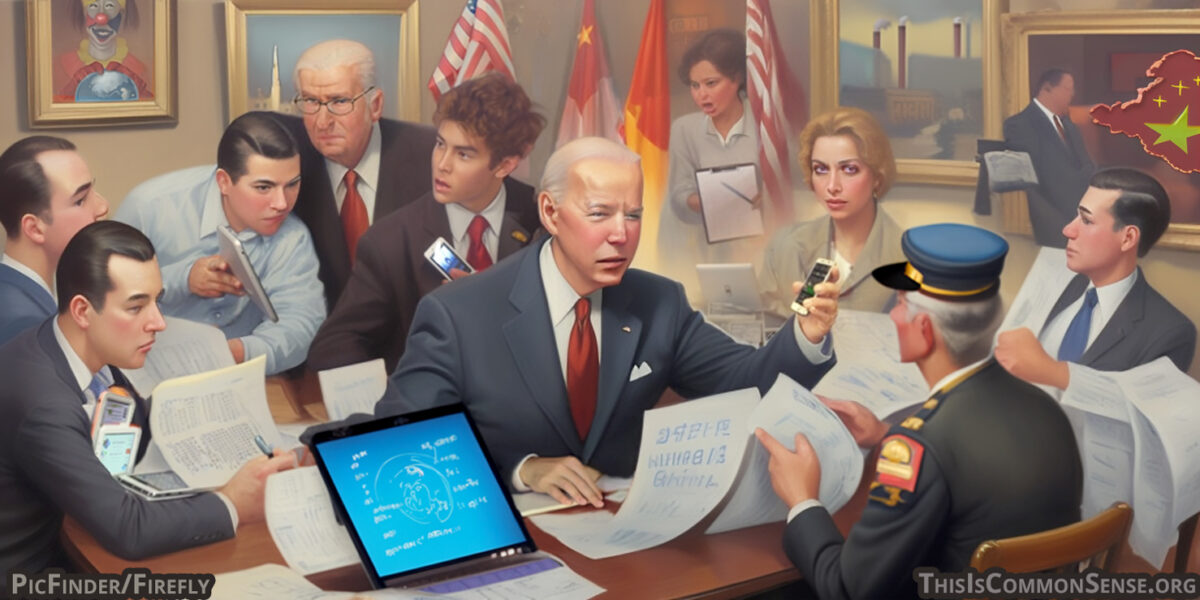
Joe Biden’s new tariffs on Chinese goods mark the decisive rejection of an economic orthodoxy that dominated American policy making for nearly half a century.
Rogé Karma, “Reaganomics Is on Its Last Legs,” The Atlantic, May 18, 2024.
The article explains the bipartisanship of the new economic policy:
On Tuesday, President Joe Biden announced plans to impose steep new tariffs on certain products made in China, including a 100 percent tariff on electric cars. With that, he escalated a policy begun during the Trump administration, and marked the decisive rejection of an economic orthodoxy that had dominated American policy making for nearly half a century. The leaders of both major parties have now turned away from unfettered free trade, a fact that would have been unimaginable less than a decade ago.
And that bipartisan nature is made exceedingly clear:
A president announcing a new policy does not mean that the political consensus has shifted. The proof that we are living in a new era comes instead from the reaction in Washington. Congressional Democrats, many of whom vocally opposed Trump’s tariffs, have been almost universally supportive of the increases, while Republicans have been largely silent about them. Rather than attacking the tariffs, Trump claimed credit for them, telling a crowd in New Jersey that “Biden finally listened to me,” and declaring that he, Trump, would raise tariffs to 200 percent. Most of the criticism from either side of the aisle has come from those arguing that Biden either took too long to raise tariffs or didn’t go far enough.
Mr. Karma explains how this trend is not insignificant, not a blip in the winds of policy change:
The shift on trade is part of a broader realignment that Biden’s national security adviser, Jake Sullivan, has aspirationally called the “new Washington consensus.” What unites Biden’s tariffs with the other core elements of his agenda, including massive investments in manufacturing and increased antitrust enforcement, is the notion that the American government should no longer passively defer to market forces; instead, it should shape markets to achieve politically and socially beneficial goals. This view has taken hold most thoroughly among Democrats, but it is making inroads among Republicans too — especially when it comes to trade.
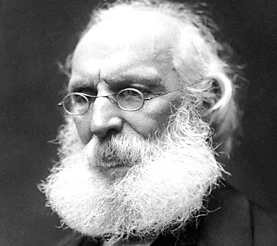
But this perspective, of how politicians “passively” “deferred” to “market forces,” suggests that active opposition to market forces makes any kind of sense. Truth is, as economist Eugen von Böhm-Bawerk explained, “there is one . . . thing that not even the most imposing dictate of power will accomplish: It can never effect anything in contradiction to the economic laws of value, price, and distribution; it must always be in conformity with these; it cannot invalidate them; it can merely confirm and fulfill them.” The consequences of policies that seek to use State regulatory powers to guide market outcomes tend not to conform to politicians’ and regulators’ expectations, for at no point do they magically alter the laws of supply and demand.