Categories
Today

Supernovae

July Fourth events include:

1054 – A supernova was spotted by Chinese, Arab, and possibly Amerindian observers. The celestial event occurred near the star Zeta Tauri, remaining, for several months, bright enough to be seen during the day. Its remnants form the Crab Nebula.

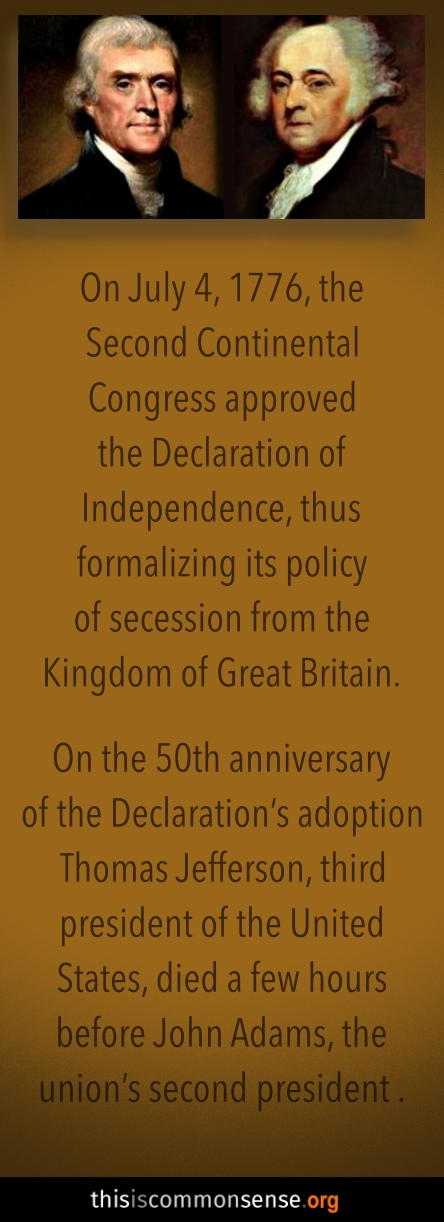
1776 — The Second Continental Congress approved the Declaration of Independence, thus formalizing its policy of secession from the empire of the Kingdom of Great Britain.

1803 — The Louisiana Purchase was announced to the American people.

1804 – Nathaniel Hawthorne, American author of The Scarlet Letter, House of Seven Gables, The Blithesdale Romance, and other classics, was born. Hawthorne became part of the Young America literary movement spawned by Loco-Foco political activism in New England.

1826 – Thomas Jefferson, third president of the United States, died a few hours before John Adams, second president of the United States, on the fiftieth anniversary of the adoption of the United States’ Declaration of Independence.

1826 – Stephen Foster, composer of “Old Black Joe,” “Beautiful Dreamer,” and many other classic American songs, was born.

1827 – Slavery was abolished in New York State.

1831 – Samuel Francis Smith wrote “My Country, ’Tis of Thee” for Boston’s July 4th festivities, set to the tune of Great Britain’s national anthem, “God Save the King/Queen.”

2009 – The Statue of Liberty’s crown re-opened to the public after eight years of closure that resulted from security concerns following the September 11, 2001, attacks.

Categories
inflation and inflationism international affairs too much government

Is Milei Making It?

After libertarian economist Javier Milei surprised the rest of the world by winning the presidency of Argentina in 2023, the question became whether — or how quickly — he could slash government programs, privatize nationalized firms, and set free a flatlining government-controlled economy.

A president can do some things on his own. But Milei requires the cooperation of the legislature to institute many substantial reforms. And for months his legislative agenda has stalled.

Now some of it is being enacted. On June 28, the Chamber of Deputies passed a sweeping package of bills that Reuters dubbed Milei’s “first big legislative win” and Bloomberg’s Manuela Tobias characterized as “deregulat[ing] vast swaths of the economy and boost government revenues. . . .”

The enacted reforms include provisions to make it easier for employers to fire workers and to deregulate the oil and gas industry. Milei was able to privatize only a few of the dozens of state firms that he wanted the government to unload.

Tobias notes that the passage of Milei’s reform package, “albeit significantly watered down,” is impressive considering that members of Milei’s own party constitute less than 15 percent of the lower chamber.

Milei’s most obvious success has been fighting inflation, which according to Deutsche Welle is “down from around 25 percent per month last December to 4.2 percent this May.” This is a major achievement for a figure outside the mainstream of globalist standard opinion, who has called himself an “anarcho-capitalist” (of all things) and was labeled by the German paper “right-wing populist and economically liberal.”

Terms mean different things in different countries: it’s pretty obvious that Milei’s program has nothing to do with that of American “liberals” such as President Biden and his partisans.

This is Common Sense. I’m Paul Jacob.


PDF for printing

Illustration created with Midjourney and Firefly

See all recent commentary
(simplified and organized)
See recent popular posts

Categories
Thought

Marcus Valerius Martialis

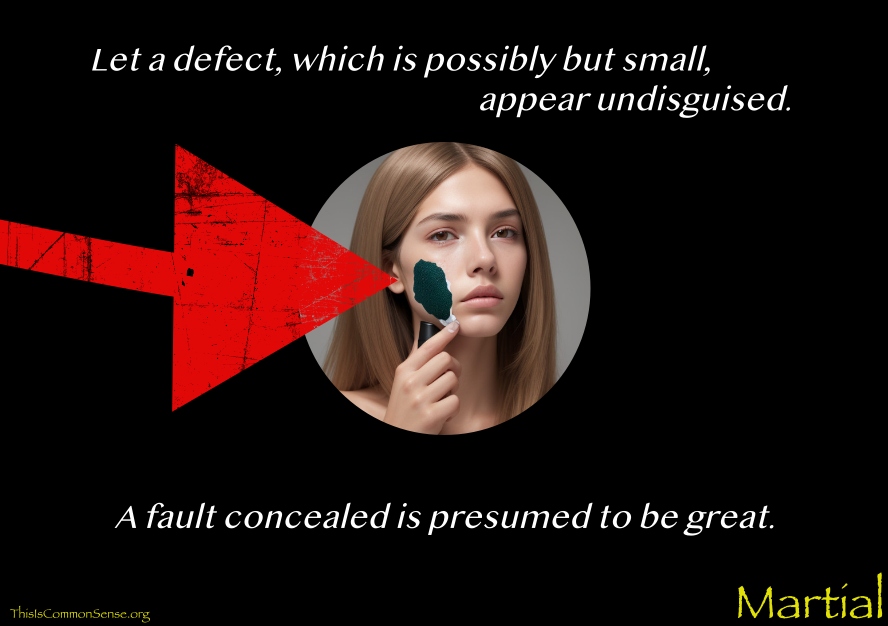
Let a defect, which is possibly but small, appear undisguised.
A fault concealed is presumed to be great.

Martial, see variant translation. Image courtesy of Picfinder.ai.
Categories
Today

July 3

On July 3, 1775, George Washington took command of the Continental Army at Cambridge, Massachusetts.

In 1952 on July 3, Puerto Rico’s Constitution was approved by the Congress of the United States.

Categories
crime and punishment judiciary regulation

The Court v. the Power Grabbers

The U.S. Supreme Court giveth and the U.S. Supreme Court taketh away.

A slew of Supreme Court decisions is keeping us off balance. While we were still reeling from the blow delivered by Murthy v. Missouri’s go-ahead for federal suppression of social-media speech, the court also acted to rein in runaway bureaucrats.

The decision, which some call a “major blow to big government”  — let’s see how it plays out before echoing this — is Loper Bright Enterprises v. Raimondo. In this 6-3 ruling to limit the administrative state’s power to expand its power, the court reversed its own 1984 ruling, Chevron USA v. NRDC.

According to Stanford Law professor Michael McConnell, Chevron meant that when the actions of a federal agency — to stop you from cleaning up a pond (“wetland”) on your own property or whatever — end up being litigated, courts must “defer to the agency’s own construction of its operating statute” unless that construction is too wildly unreasonable.

Agencies consequently enjoyed “considerable leeway in determining the scope” of what they can do to us. 

Guess what. They typically prefer more power to less, less constitutional restraint to more.

“Chevron is overruled,” the new ruling states. Courts must “exercise their independent judgment in deciding whether an agency has acted within its statutory authority, and courts may not defer to an agency interpretation of the law simply because a statute is ambiguous.”

Maybe more courts will now more often stop runaway bureaucrats in their tracks.

This is Common Sense. I’m Paul Jacob.


PDF for printing

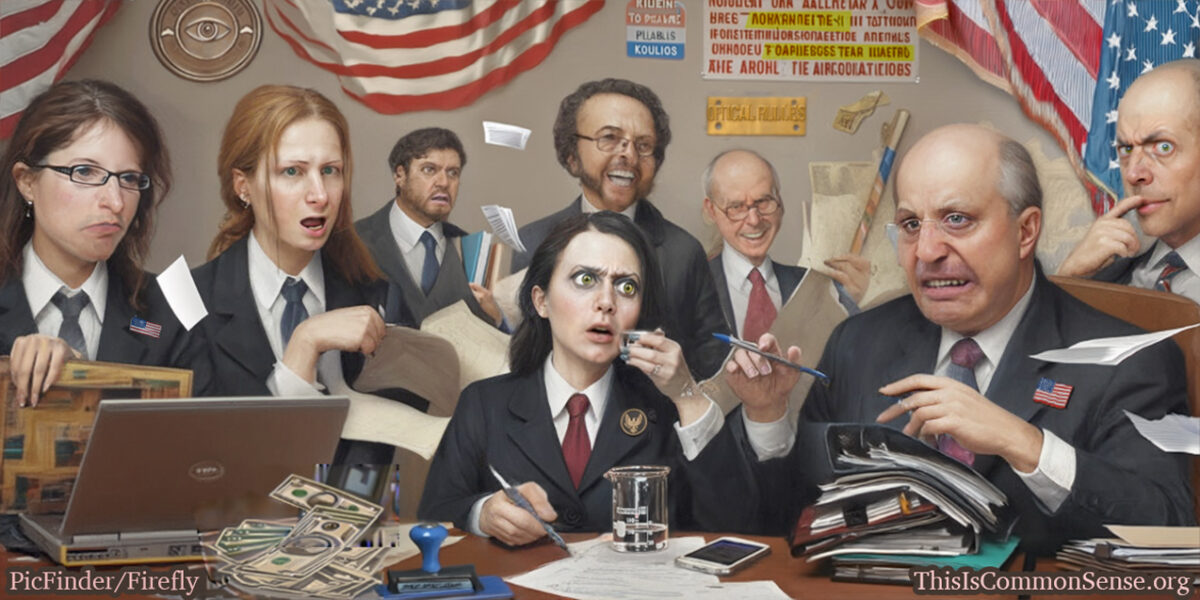
Illustration created with PicFinder and Firefly

See all recent commentary
(simplified and organized)
See recent popular posts

Categories
Thought

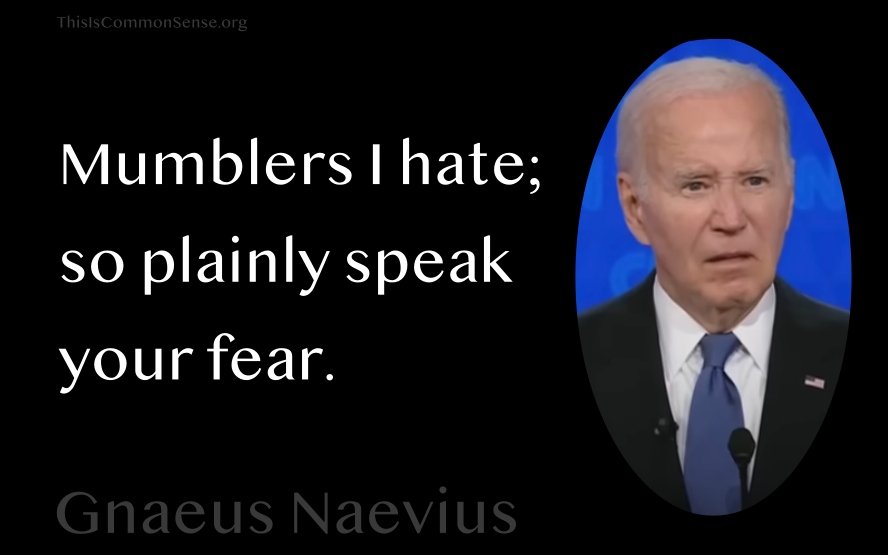
Gnaeus Naevius

Mumblers I hate; so plainly speak your fear.

Gnaeus Naevius (c. 270 – c. 201 BC), quoted by Festus, 424, 27.
Categories
Today

Secession & Abolition

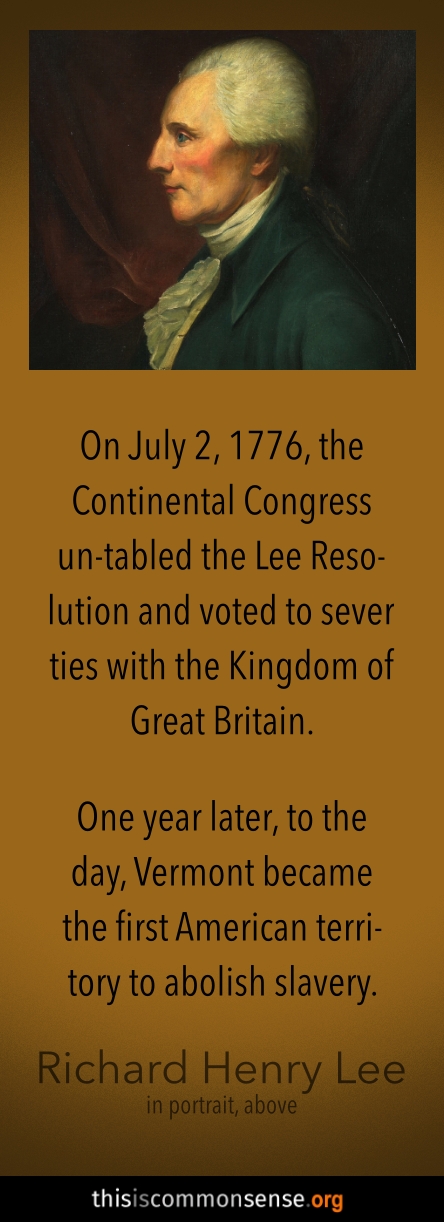
On July 2, 1776, the Continental Congress un-tabled the Lee Resolution and voted to sever ties with the Kingdom of Great Britain.

One year later, to the day, Vermont became the first American territory to abolish slavery.

Categories
Accountability media and media people national politics & policies

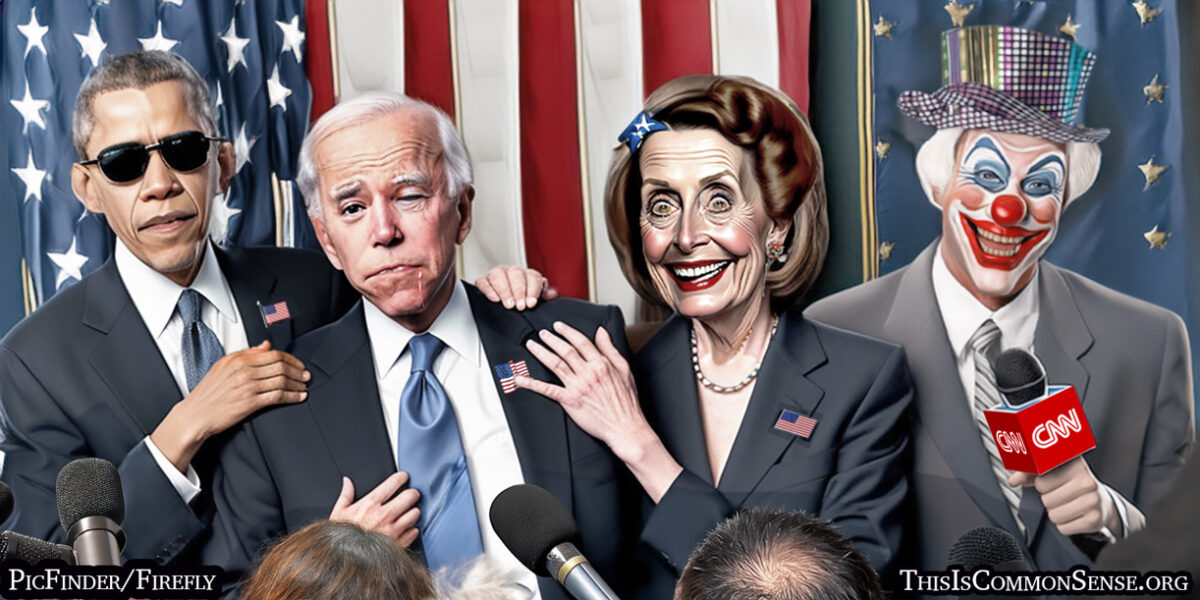
Weekend at Biden’s

“I really don’t know what he said at the end of that sentence,” former President Trump told CNN’s debate moderator Jake Tapper. “I don’t think he knows what he said either.”

Mr. Trump was referring to the incoherent ramblings of our current president at last week’s notorious debate — bizarrely held five months before the election. (Well, now, I guess that timing might make a little more sense.)

President Biden, as journalist Glenn Greenwald put it, “unsteadily shuffled onto a debate stage in Atlanta and then preceded to fulfill every fear and nightmare that Democratic Party operatives and American voters have been harboring about him.”

Beyond what Biden’s debate performance says about who should be the next president is what it screams at maximum volume: Who is really running the country?

It’s scary to think that it isn’t the man we elected to do the job. But perhaps scarier still, after last Thursday’s performance, would be if it actually is that man.

On his System Update program, Greenwald also pointed out that, “Just two weeks ago the media was insisting that the only reason Joe Biden looked in any way to be impaired is because right-wing liars were clipping videos in a deceitful way . . .”

No one clipped or cheap-faked the 90-minute debate, though.

In a country being torn apart and a world on fire, we have a commander-in-chief who is simply, obviously, not in command. And arguably even worse, we have a news media that has largely gaslighted the public on the matter.

If President Biden stays in the race, watch for the media to go back to its cover-up mentality, telling us only what they want us to know about him . . . so we will vote the way they want.

This is Common Sense. I’m Paul Jacob.


PDF for printing

Illustration created with PicFinder and Firefly

See all recent commentary
(simplified and organized)
See recent popular posts

Categories
Thought

Marcus Valerius Martialis

Diaulus, lately a doctor,
Is now an undertaker:
What he does as an undertaker,
He used to do also as a doctor.

Martial, Epigrams, XLVII. ON DIAULUS.
Categories
Today

What Would Voltaire Say?

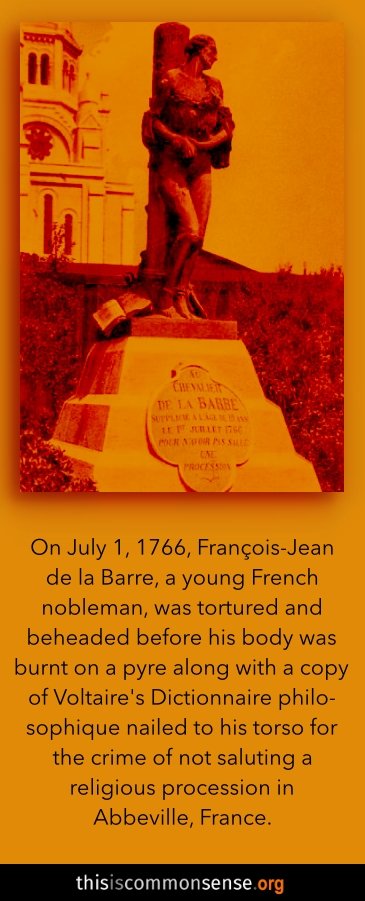
On July 1, 1766, François-Jean de la Barre, a young French nobleman, was tortured and beheaded before his body was burnt on a pyre along with a copy of Voltaire’s Dictionnaire philosophique nailed to his torso for the crime of not saluting a Roman Catholic religious procession in Abbeville, France.

In June 1770, Johan Lexell discovered a comet that, on July 1, came closer to the Earth than any other comet in recorded history. It is now registered as a “lost comet,” not having returned since that first year.

Emancipation Day (Keti Koti) in Suriname is celebrated on July 1, marking the abolition of slavery by the Netherlands in 1863.