Time, the devourer of all things.
Publius Ovidius Naso, Metamorphoses, Book XV, 234.
Time, the devourer of all things.
Publius Ovidius Naso, Metamorphoses, Book XV, 234.

On July 9, 1776, General George Washington had the Declaration of Independence read out to members of the Continental Army in Manhattan. Meanwhile, thousands of British troops on Staten Island prepared for the Battle of Long Island.
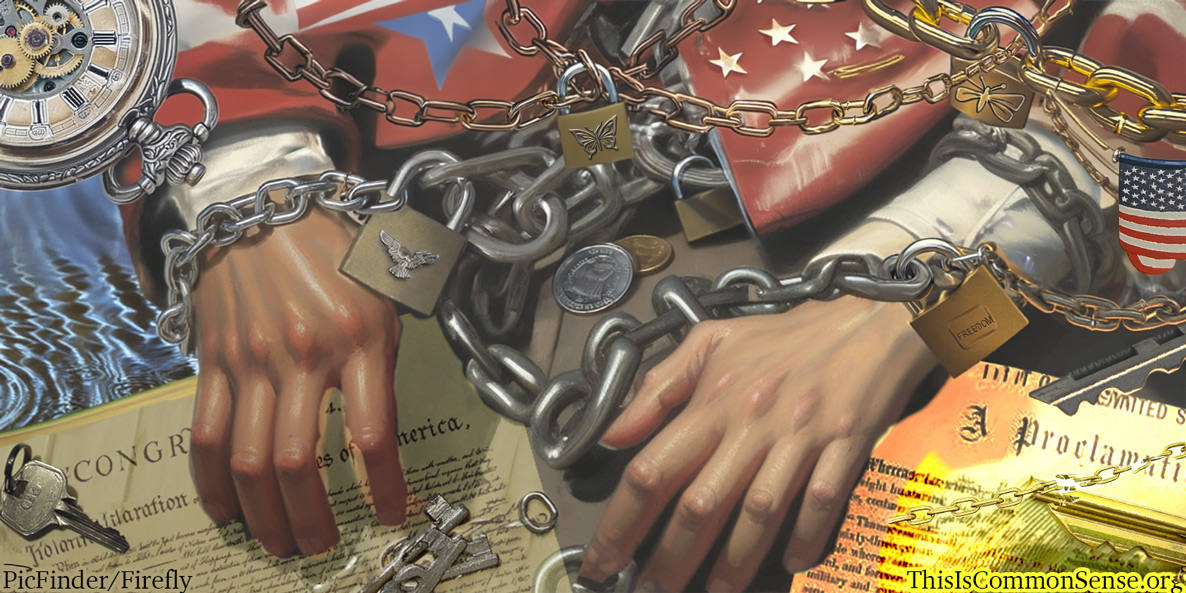
The June 19th date hasn’t quite kicked in as a holiday for many Americans, despite a bipartisan House and unanimous Senate effort — along with President Biden’s signature — making it the “Juneteenth National Independence Day” and giving federal workers the day off.
It marks the day in 1865 when federal troops landed in Galveston, Texas, a rebel state, to announce that slavery had ended and the enslaved must be freed.
The day is about freedom. Other days could have been chosen, but for years it has served as an apt enough marker for the end of chattel slavery in America.
And slavery’s cessation is worth celebrating!
Americans are used to big July 4th celebrations, having reveled for nearly 250 years in our wonderful Declaration, announcing our separationfrom the British Empire on that day!
Actually, it was two days earlier that the Continental Congress voted to secede — and August 2, 1776, that the Declaration was finally signed. There was no sure separateness until Cornwallis surrendered on October 19, 1781, and it took nearly two years for the official peace treaty to be signed.
There are many dates we could have chosen to honor. We settled on July 4.
We liked the words of the document.
Similarly with Juneteenth. We need a holiday commemorating the end of slavery and I like the play on words in the very name.
Arguably, the 15 days from the 19th of June to the Fourth of July should be a celebratory period for liberty more generally, starting with slavery’s abolition and ending with the creation of an independent America dedicated to equal liberty. (Backwards, of course.)
Maybe somewhere in the middle we can find a date to push the necessary third step, the cessation of “demoktesis,” the institutional philosophy of our time where “everyone owns everyone else.”*
Until personal freedom is generally respected — where nobody, not even the government, owns pieces of others — the American experiment in independence is incomplete.
This is Common Sense. I’m Paul Jacob.
* The term was coined by Robert Nozick (1974, p. 290), who defined it as “ownership of the people, by the people, and for the people.”
Illustration created with PicFinder and Firefly
See all recent commentary
(simplified and organized)
See recent popular posts
A prosperous fool is a grievous burden.
Aeschylus, Fragment 383, reported in Bartlett’s Familiar Quotations, 10th ed. (1919).
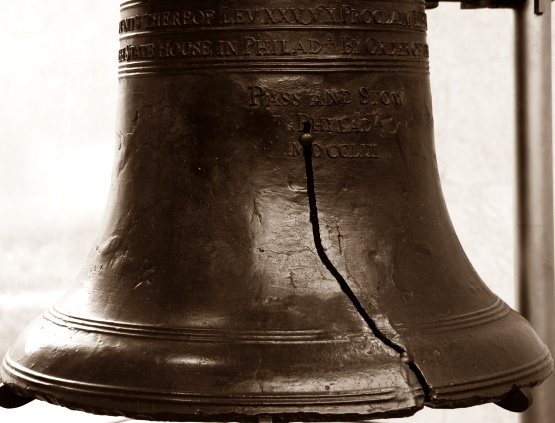
July 8, 1776 – Church bells (possibly including the Liberty Bell, pictured) were rung after John Nixon delivered the first public reading of the Declaration of Independence of the United States.
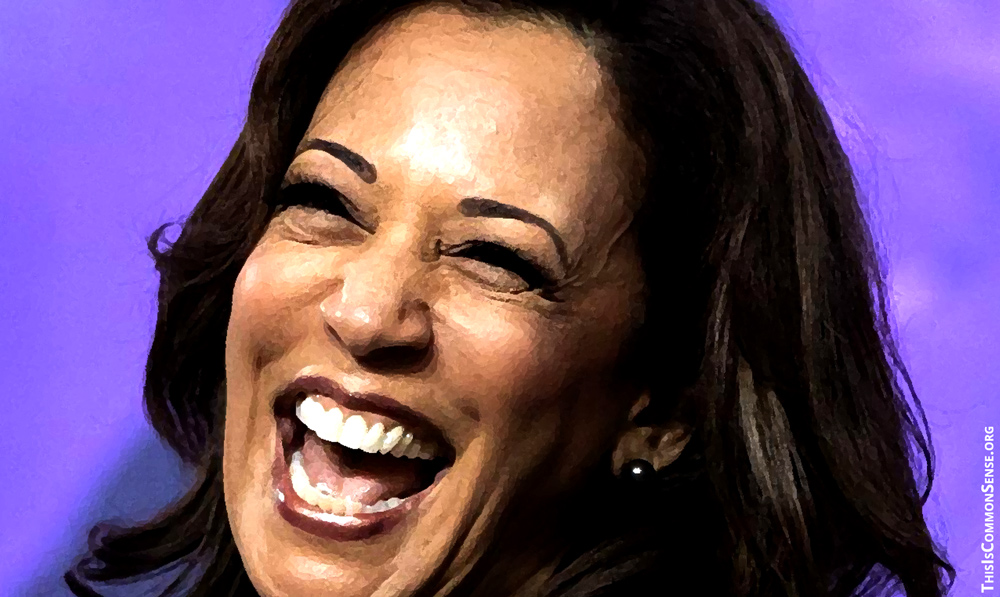
How to get Kamala Harris out of the #1 spot, should Joe Biden halt his bid for re-election — which many, many insiders are calling for?
Instead of a shot at the presidency, offer her a historical first: become the first three-term vice president!
She has served one term under Biden. Accept two terms under, say, Newsom!
This would be ideal. It would allow Democratic insiders to promote a white man (which they itch to do) and keep Kamala as a token Person of Color. It would quell the demands of both the intersectionalist-obsessed and African-American voters (though Kamala is not African-American — that does not appear to matter).
This is not much of an offer. True. But it is something. Kamala Harris is not presidential timber. But she is lumber fit enough for a perennial VP slot.
And to the objection that this would run afoul of term limits, the response is easy: the two-term limit, affixed against the Presidency by the 22nd Amendment, does not apply to the VP, only to the P!
Just FYI.
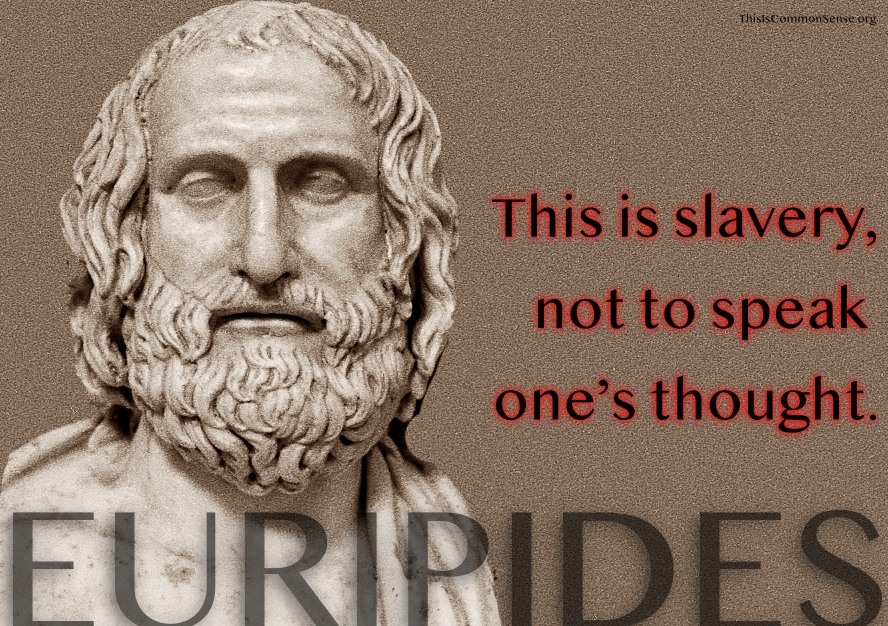
[T]his is slavery, not to speak one’s thought.
Euripides, The Phoenician Women, Line 392 (Jocasta); translated by Elizabeth Wyckoff.

In 1456, a retrial verdict acquitted Joan of Arc of heresy 25 years after her execution.
In 1928 on July 7, sliced bread was sold for the first time by the Chillicothe Baking Company of Chillicothe, Missouri.
On this date in 1958, U.S. President Dwight D. Eisenhower signed the Alaska Statehood Act into law.
“Justice Sotomayor’s dissent was one of the most impressive pieces of progressive quackery ever produced by SCOTUS,” tweeted historian Brion McClanahan.
Jonah Goldberg, on the other hand, wrote that “I think that while Sotomayor’s dissent is a bit over the top, her concerns are more well-founded than I would have thought.” But a day later he took it back: “Having read more, and having talked to a half dozen legal beagles I trust, I’m less dismayed than I was yesterday. I do think the ‘Absolute Immunity’ stuff is unnecessary. I also think ACB’s concurrence is better than Roberts’ opinion.”
They were discussing the Supreme Court’s ruling in Trump v. the United States.
“The chief justice insisted that the president ‘is not above the law,’” explains the Associated Press. “‘But in a fiery dissent for the court’s three liberals,’ Justice Sonia Sotomayor wrote, ‘In every use of official power, the President is now a king above the law.’
Reading from her opinion in the courtroom, Sotomayor said, “Because our Constitution does not shield a former president from answering for criminal and treasonous acts, I dissent.” Sotomayor said the decision “makes a mockery of the principle, foundational to our Constitution and system of government, that no man is above the law.”
The protection afforded presidents by the court, she said, “is just as bad as it sounds, and it is baseless.”
Sotomayor’s case against an imperial, unaccountable president seems quite reasonable at first blush, but Glenn Greenwald devoted a huge chunk of an episode of his System Update (Rumble) to mocking it.
“The narrative that we were fed” about the Trump v; U.S. ruling and the doctrine of presidential immunity generally, Greenwald said, “was an absolute fairy tale about American history and political life. To listen to Democrats and their media allies tell it, you would think that presidents have a long history in the United States of being criminally accountable for the illegal acts they undertook in office; that it has always been the case that presidents enjoy no immunity that any other citizen of the United States doesn’t enjoy; and that all of a sudden, out of the blue, a conservative, fanatical court driven by ideological and political considerations to protect Donald Trump, invented out of whole cloth some kind of new immunity that never previously existed.”
Greenwald, who has been fighting the notions of executive immunity for decades now, in his journalistic work, expressed his incredulity over the Sotomayor reaction, and reaction of most media Democrats. They seem to be burying their past commitments to a notion they now say they find abhorrent.
But Greenwald does not call Sotomayor’s dissent “progressive quackery,” though.
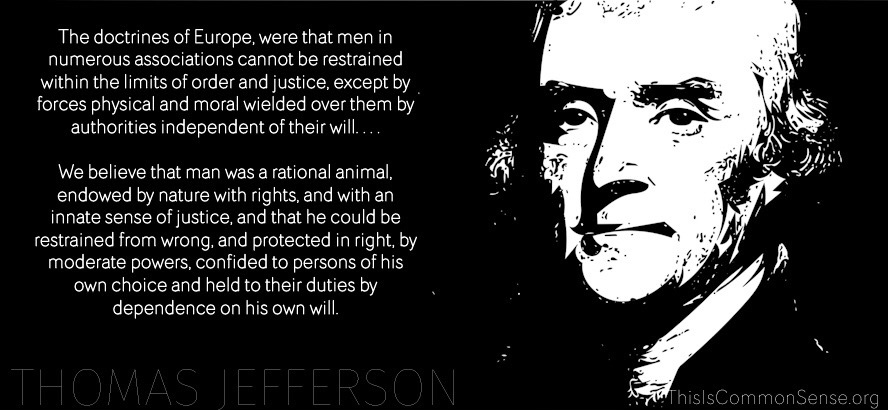
The doctrines of Europe were, that men in numerous associations cannot be restrained within the limits of order and justice, but by forces physical and moral, wielded over them by authorities independent of their will. Hence their organization of kings, hereditary nobles, and priests. Still further to constrain the brute force of the people, they deem it necessary to keep them down by hard labor, poverty and ignorance, and to take from them, as from bees, so much of their earnings, as that unremitting labor shall be necessary to obtain a sufficient surplus barely to sustain a scanty and miserable life. And these earnings they apply to maintain their privileged orders in splendor and idleness, to fascinate the eyes of the people, and excite in them an humble adoration and submission, as to an order of superior beings. Although few among us had gone all these lengths of opinion, yet many had advanced, some more, some less, on the way. And in the convention which formed our government, they endeavored to draw the cords of power as tight as they could obtain them, to lessen the dependence of the general functionaries on their constituents, to subject to them those of the States, and to weaken their means of maintaining the steady equilibrium which the majority of the convention had deemed salutary for both branches, general and local. To recover, therefore, in practice the powers which the nation had refused, and to warp to their own wishes those actually given, was the steady object of the federal party. Ours, on the contrary, was to maintain the will of the majority of the convention, and of the people themselves. We believed, with them, that man was a rational animal, endowed by nature with rights, and with an innate sense of justice; and that he could be restrained from wrong and protected in right by moderate powers, confided to persons of his own choice, and held to their duties by dependence on his own will. We believed that the complicated organization of kings, nobles, and priests, was not the wisest nor best to effect the happiness of associated man; that wisdom and virtue were not hereditary, that the trappings of such a machinery, consumed by their expense, those earnings of industry, they were meant to protect, and, by the inequalities they produced, exposed liberty to sufferance. We believed that men, enjoying in ease and security the full fruits of their own industry, enlisted by all their interests on the side of law and order, habituated to think for themselves, and to follow their reason as their guide, would be more easily and safely governed, than with minds nourished in error, and vitiated and debased, as in Europe, by ignorance, indigence and oppression. The cherishment of the people then was our principle, the fear and distrust of them, that of the other party.
Thomas Jefferson, Letter to William Johnson (1823).