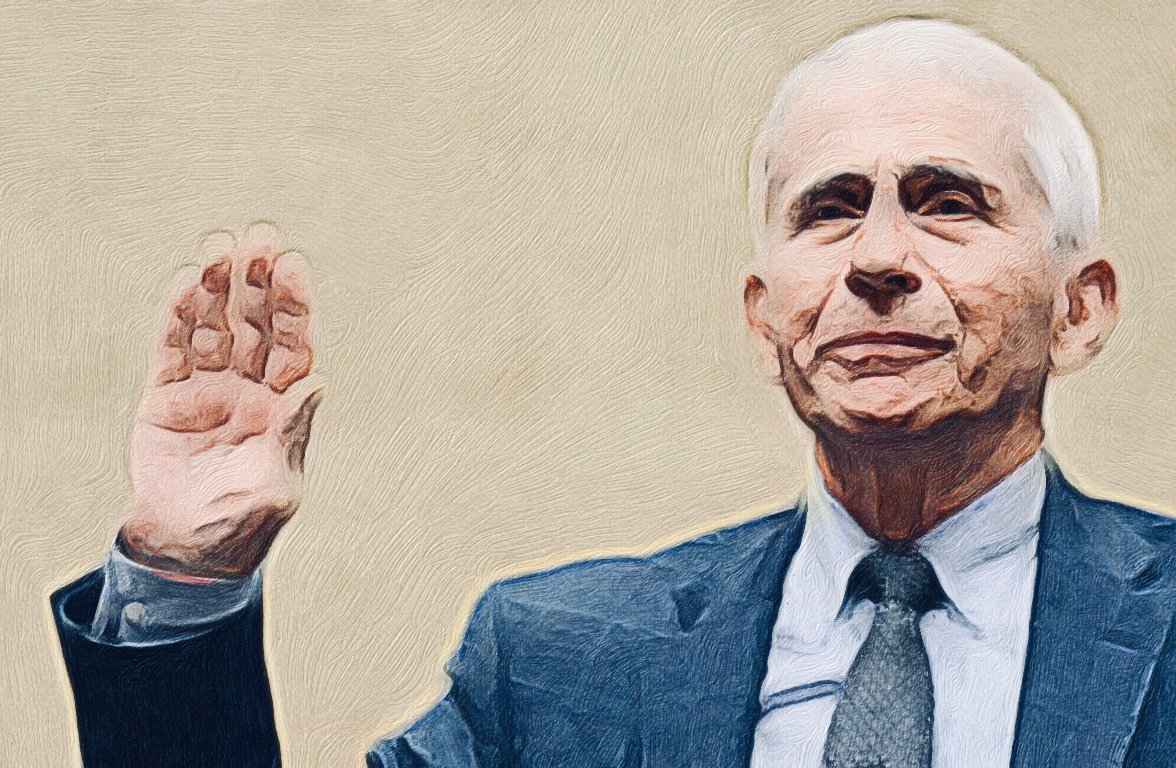
“Dr. Anthony Fauci, former head of the National Institute of Allergy and Infectious Disease, was the face and voice of the COVID pandemic response from 2020 to 2022 until his retirement from his position as the highest-paid federal official.” A good summation of the broad facts of the case by Jeffrey Tucker, to start out his recent op-ed in The Epoch Times.
“He was valorized as the science itself.” A good reminder . . . of Fauci’s cringiest claim.
Not the worst lie of Dr. Evil, but the most embarrassing.
You might be surprised to learn that he was never appointed the official spokesman or even the head of the COVID pandemic response. He was one of many members of the Coronavirus Task Force but it was he who nonetheless took the lead on public messaging for those critical two and a half years.
Though he had never been formally accused, much less convicted, of any crime, Fauci received a preemptive full and unconditional pardon from President Joe Biden on Jan. 19, 2025. It was one of Biden’s final acts before leaving office. The pardon covers “any offenses against the United States which he may have committed or taken part in during the period from Jan. 1, 2014, through the date of this pardon.”
This pardon sets Fauci free from the long arm of the law. But there’s a hitch in this arm-shortening move by lame duck Biden: perjury. Senator Rand Paul interrogated Fauci in congressional hearings, and one of those interrogations occurred after Biden’s pardon date. The Kentucky senator believes he has the goods on Fauci.
Fauci lied. To Congress. And Rand Paul thinks he can prove it.
Will he succeed?
Well, the title of Jeff Tucker’s op-ed is “What to Expect at the Anthony Fauci Senate Hearing,” so it is well worth a careful read. Tucker explains the key biological feature of the virus, and its mysterious (or not-so-mysterious) “furin cleavage site,” a functionality that allowed a virus transfered among bats to go big-time in human populations.
Among the many revelations in Paul’s files are that Fauci’s aide David Morens used personal email for “damage control” with Daszak. We now have evidence that Fauci directed Andersen to report [furin cleavage site] concerns to FBI/MI5 while shaping public messaging. We have records of Fauci’s long ties to intelligence (back to 2003), including briefings, which Paul says influenced origins assessments.
Paul Jacob covered the Lab Leak Hypothesis in general, and Peter Daszak and Anthony Fauci in particular, in these pages in multiple columns, and discussed the key gain-of-function feature of the virus in March and October of 2022.
Discovering and publicly proving who inserted a “furin cleavage site” into a bat coronavirus to cause the late pandemic is a worthy endeavor. Fauci appears to be the main suspect; evidence shows him above the body with a smoking gun — or at least with receipts for buying the gun and hiring the gunman. Can Rand Paul convince the public, though?