On December 29, 1911, Mongolia gained independence from the Qing Dynasty.
Categories
Mongolia, 1911
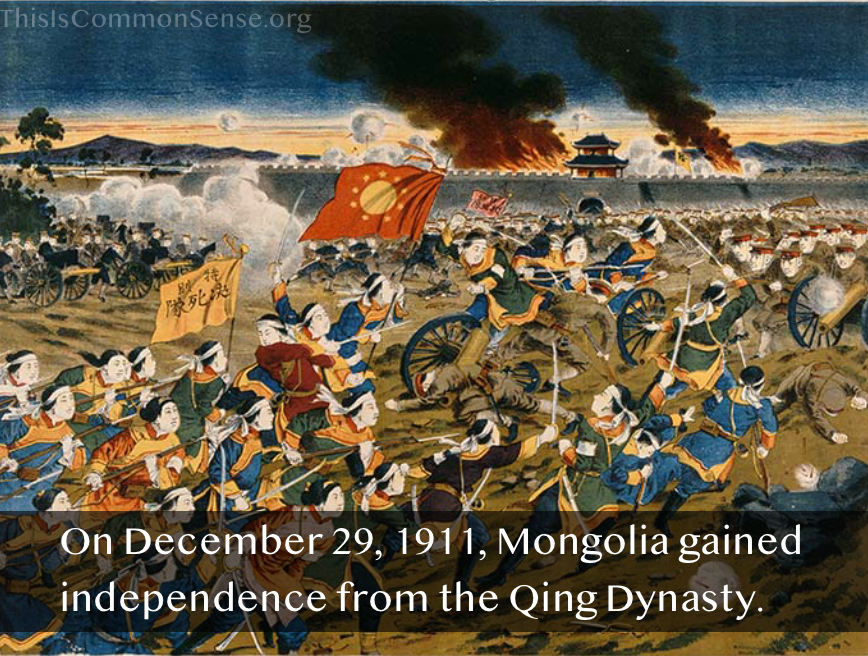
On December 29, 1911, Mongolia gained independence from the Qing Dynasty.

The United States federal government has been charged with protecting us from foreign enemies. But have those butcher’s-and-baker’s dozen of intel agencies and the Pentagon and Homeland Security really done the job?
WASHINGTON (AP) — A top White House official on Wednesday said at least eight U.S. telecom firms and dozens of nations have been impacted by a Chinese hacking campaign.
Deputy national security adviser Anne Neuberger offered new details about the breadth of the sprawling Chinese hacking campaign that gave officials in Beijing access to private texts and phone conversations of an unknown number of Americans.
Neuberger divulged the scope of the hack a day after the FBI and the Cybersecurity and Infrastructure Security Agency issued guidance intended to help root out the hackers and prevent similar cyberespionage in the future. White House officials cautioned that the number of telecommunication firms and countries impacted could still grow.
The U.S. believes that the hackers were able to gain access to communications of senior U.S. government officials and prominent political figures through the hack, Neuberger said.
Aamer Madhani, “White House says at least 8 US telecom firms, dozens of nations impacted by China hacking campaign,” Associated Press, December 4, 2024.
The report has not been all that widely discussed, oddly enough. How extensive were the cyber-incursions? “The number of countries impacted by the hack is currently believed to be in the ‘low, couple dozen,’ according to a senior administration official.”
For more information on Chinese communist aggression, see StoptheChinazis.org.

If with the literate I am
Dorothy Parker, in Life, (June 2, 1927) p. 13.
Impelled to try an epigram,
I never seek to take the credit;
We all assume that Oscar said it.
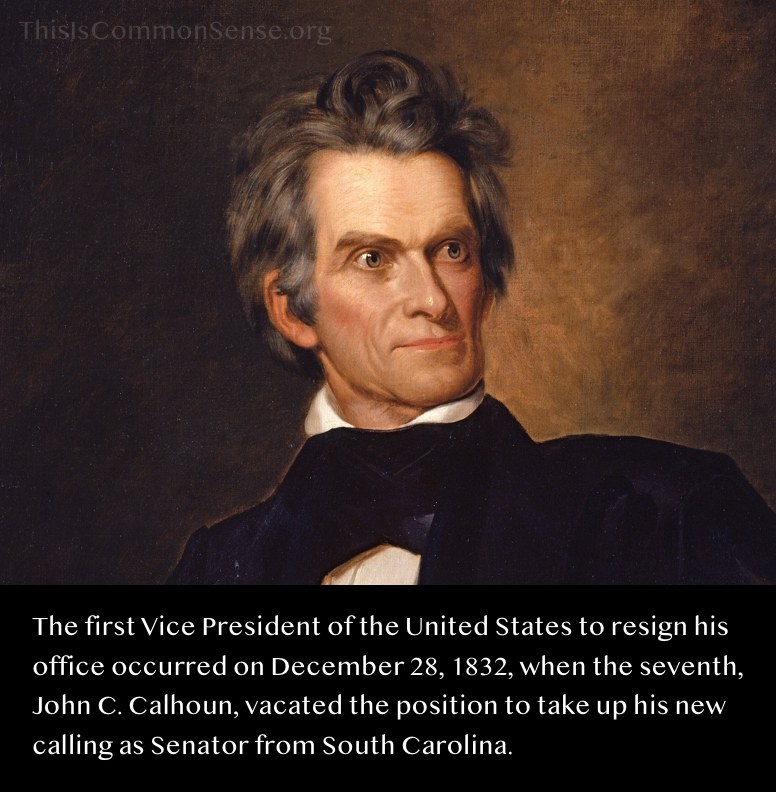
The first Vice President of the United States to resign his office occurred on December 28, 1832, when the seventh, John C. Calhoun — serving at the job since March 4, 1825, under two presidents, John Quincy Adams and Andrew Jackson — vacated the position to take up his new calling as Senator from South Carolina (December 29, 1832 – March 3, 1843). After an unsuccessful bid for the presidency and a short stint as Secretary of State, Calhoun returned to the Senate on November 26, 1845, dying in office on March 31, 1850.
On the same date three years later, the great leader Osceola led his Seminole warriors into the Second Seminole War against the United States Army. Eleven years after that, Iowa joined the union as the 29th state.
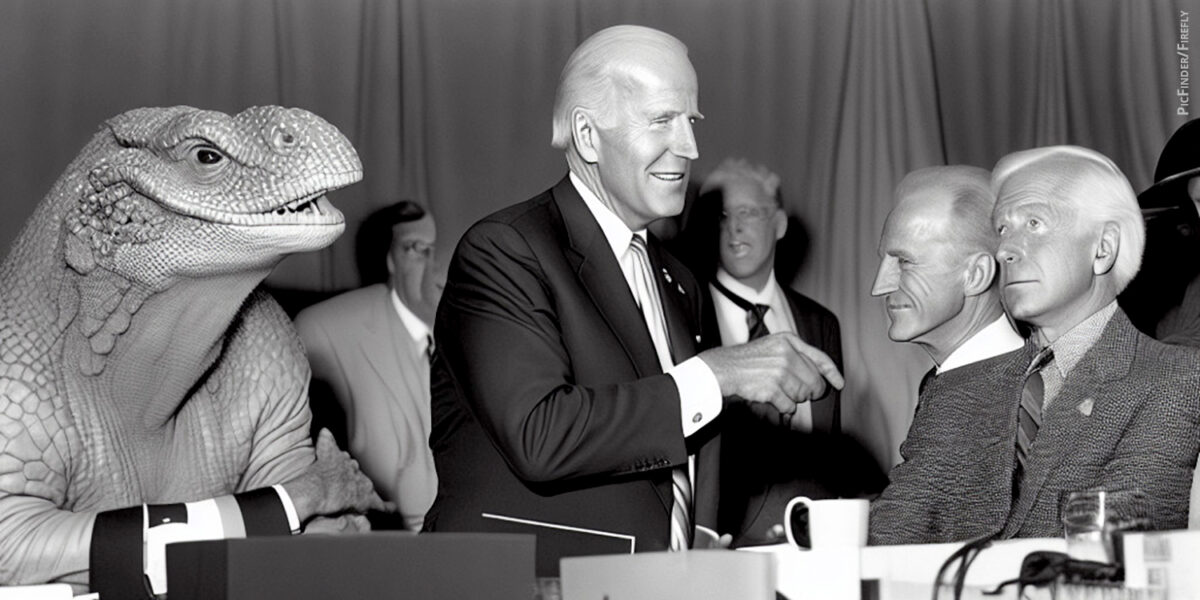
So, today, let’s discuss the donkey in the room: the president of these United States, one Joseph Robinette Biden, Jr.
“Throughout his presidency, a small group of aides stuck close to Biden to assist him, especially when traveling or speaking to the public,” explains a major exposé in the Wall Street Journal.
How “throughout”? Almost from day one: “a sign that the bruising presidential schedule needed to be adjusted for Biden’s advanced age had arisen early on,” notes The Journal, “in just the first few months of his term.”
The reportage confirms what we suspected. “The protective culture inside the White House was intensified because Biden started his presidency at the height of the Covid pandemic. His staff took great care to prevent him from catching the virus by limiting in-person interactions with him. But the shell constructed for the pandemic was never fully taken down, and his advanced age hardened it.”
This structure also served to cover for Biden’s most characteristic failing, “foot-in-mouth”: his hand-holders sought “to prevent Biden, an undisciplined public speaker throughout his half-century political career, from making gaffes or missteps that could damage his image, create political headaches or upset the world order.”
Not a morning person, the staff concocted an elaborate schedule of afternoon meetings which they tried to keep very short. “If the president was having an off day, meetings could be scrapped altogether.”
Perhaps most importantly, “[t]he strategies to protect Biden largely worked,” the report reminds, “until June 27, when Biden stood on an Atlanta debate stage with Trump.”
Luckily, the Washington cabal has not quite figured out a way to have a president as figure-head only and keep the deception from the American electorate.
But too close for comfort.
This is Common Sense. I’m Paul Jacob.
Illustration created with PicFinder and Firefly
See all recent commentary
(simplified and organized)
See recent popular posts
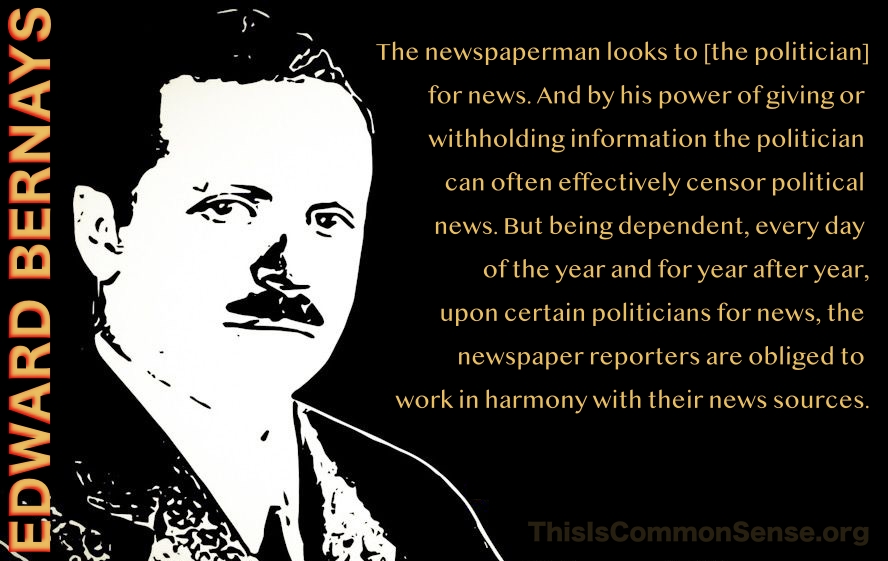
One reason, perhaps, why the politician today is slow to take up methods which are a commonplace in business life is that he has such ready entry to the media of communication on which his power depends.
Edward Bernays, Propaganda (1928).
The newspaperman looks to him for news. And by his power of giving or withholding information the politician can often effectively censor political news. But being dependent, every day of the year and for year after year, upon certain politicians for news, the newspaper reporters are obliged to work in harmony with their news sources.

On December 27, 1657, a group of English citizens in Flushing, New York, who were not themselves Quakers, signed a petition protesting the persecution of Quakers. This “Flushing Remonstrance” is an eloquent statement of the principle of religious liberty, and is widely regarded as a forerunner to the U.S. Constitution’s First Amendment.
The petition was delivered to Director-General of New Netherlands, Peter Stuyvesant.

“Some Tarrant County residents,” The Dallas Express further reports, “have begun to speculate.”
“I’m hearing she’s in a memory care unit,” one posted on X.
Express reporter Carlos Turcios explains that “the Congresswoman has been residing at a local memory care and assisted living home for some time after having been found wandering, lost, and confused in her former Cultural District/West 7th neighborhood.”
Granger, 81, did not seek re-election last November after 28 years in Congress. Thankfully. She has not voted in Congress since July 24 of this year. Which, given the circumstances, is also a good thing.
Her son told the media she was suffering from dementia and had declined rapidly, but that could be a
Don’t condemn the congresswoman, argues former Texas legislator Jonathan Strickland. “Six years ago (as an elected official who worked regularly with/around her) it was obvious she had serious memory issues. She has had no idea what was going on for a while,” he explained, blaming “her friends, family, and staff” who “left her in office for their own benefit.”
The last six years in Congress . . . without . . . cognition. (Is that about par?)
Utah Senator Mike Lee, a fellow Republican, says Granger makes a “compelling case for term limits.” Yes. Sure. Of course.
Even if these over-the-top instances of incumbency running amok overtime weren’t spilling out so often, however, we would still need term limits.
The fact that things have gotten this bad is a sign we’ve needed term limits for a very long time.
This is Common Sense. I’m Paul Jacob.
Illustration created with Flux and Firefly
See all recent commentary
(simplified and organized)
See recent popular posts
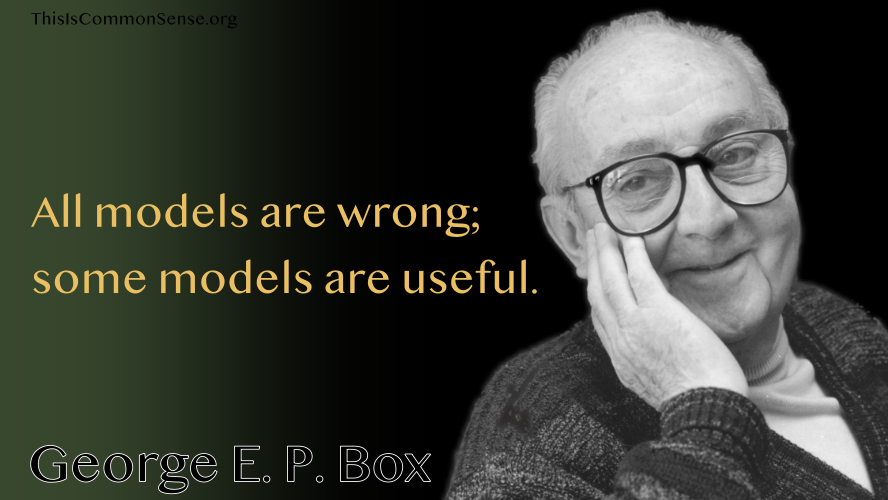
All models are wrong; some models are useful.
Variants of this statement can be found throughout the writings of George Edward Pelham Box (1919–2013), including writings with co-authors.

Henry Lee III’s eulogy to George Washington in Congress declared the former general and president to be “first in war, first in peace and first in the hearts of his countrymen.” Washington had died on December 14th, 1799, and Lee’s eulogy took place twelve days later.