The Environmental Protection Agency is one of the country’s most dangerous polluters, striving to blanket our economic life in a suffocating ideological miasma.
The EPA’s poisonous ruling that carbon dioxide — “a colorless, odorless, non-toxic gas” — constitutes a “threat” to public health and the environment has been endorsed by the Obama administration and now the U.S. Court of Appeals in DC. If it is never rescinded, economic growth will suffer. Representative democracy will also suffer, given how Congress has been bypassed here.
Just FYI, we’d be dead ducks without carbon dioxide. The notion that carbon dioxide is a pollutant must flabbergast all plants, which blithely use carbon dioxide as a critical component in photosynthesis, thereby making all carbon-based animal and human life possible. (Damn you, plants!)
Unproven assumptions regarding the extent to which industrial activity adds to greenhouse gases like carbon dioxide — even the extent to which the planet has warmed and will warm further, or to what extent any variation in average global temperature is even a special problem, let alone a catastrophic one — lie at the hemorrhaging heart of EPA’s hubris.
EPA officials suppose that they can smartly operate a globe-wide climate machine by increasing the expense or reducing the supplies of the fossil fuels that we use to warm our homes, drive our cars, operate our assembly lines. No, bureaucrats can’t centrally plan the earth’s atmosphere. But they sure can make it harder for people to survive and prosper.
This is Common Sense. I’m Paul Jacob.
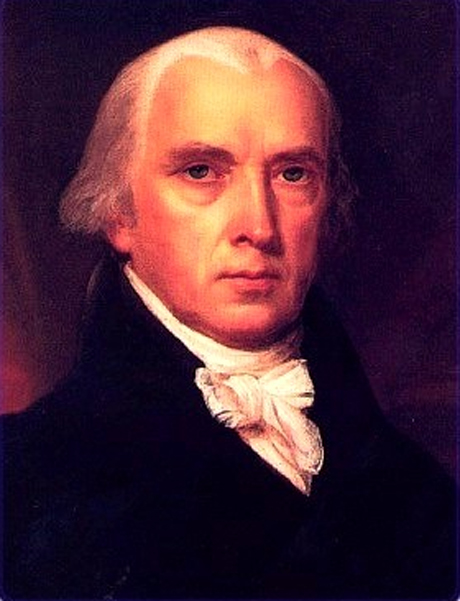 Religion & Govt. will both exist in greater purity, the less they are mixed together.

 Follow the money.
 The law will never make men free; it is men who have got to make the law free.
 On July 12, 1817, Henry David Thoreau was born. He would go on to become one of the leading figures in America’s Transcendentalist movement, most famously writing Walden: or, Life in the Woods [cabin pictured]. His defense of John Brown deeply affected later interpretations of the raid on Harper’s Ferry, and his “Essay on Civil Disobedience,” protesting the Mexican-American War, has become a classic not only of protest but of political theory.