An old joke runs something like this:
“We lose a dollar on every widget sold.”
“So how do you stay in business?”
“We make up for it in volume.”
The lesson? Mere numerical productivity is not key to the success of any human enterprise. Adding value is key. Quality counts. And profit.
Tell that to Ezra Klein. He measures Congress by how many laws it makes. The current Congress has made very few laws compared to previous ones — Klein has a very nifty graph of this, see at right — so Klein blasts Congress: “there’s no session of Congress with such a poor record of productivity.”
But it’s not gross-weight productivity that counts. As economist David Henderson perceptively noted, what matters is whether the laws are good or not.
The more laws we’re encumbered with, the less their quality. Or as Cicero once put it: “The more laws, the less justice.”
Laws carry the weight of force, and force is the opposite of freedom, so the more the laws, the less the freedom. Further, it’s almost impossible to manage the huge bulk of the legal code, leading to bureaucratic drudgery both in and out of government, and mismanagement of resources everywhere. At best, we wind up with only piecemeal enforcement, which is itself a temptation for a common sort of tyranny, the prosecution of folks someone in power doesn’t like.
Note that graph. Each session adds to existing law. And unlike spending feeding debt, which is at least somewhat offset by revenues, these laws tend not to be the repeal of old laws. Graph the accumulation of laws, and it goes only one direction.
The wrong direction.
This is Common Sense. I’m Paul Jacob.
 The main thing that every political campaign in the United States demonstrates is that the politicians of all parties, despite their superficial enmities, are really members of one great brotherhood. Their principal, and indeed their sole, object is to collar public office, with all the privileges and profits that go therewith. They achieve this collaring by buying votes with other people’s money. No professional politician is ever actually in favor of public economy. It is his implacable enemy, and he knows it. All professional politicians are dedicated wholeheartedly to waste and corruption. They are the enemies of every decent man.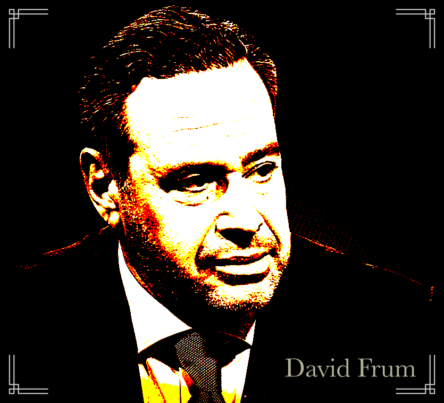

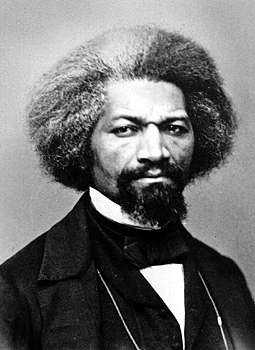 Slavery does away with fathers, as it does away with families. Slavery has no use for either fathers or families, and its laws do not recognize their existence in the social arrangements of the plantation.
 In the department of economy, an act, a habit, an institution, a law, gives birth not only to an effect, but to a series of effects. Of these effects, the first only is immediate; it manifests itself simultaneously with its cause – it is seen. The others unfold in succession – they are not seen: it is well for us, if they are foreseen. Between a good and a bad economist this constitutes the whole difference: the one takes account only of the visible effect; the other takes account of both the effects which are seen and those which it is necessary to foresee. Now this difference is enormous, for it almost always happens that when the immediate consequence is favourable, the ultimate consequences are fatal, and the converse. Hence it follows that the bad economist pursues a small present good, which will be followed by a great evil to come, while the true economist pursues a great good to come, at the risk of a small present evil.