The First Amendment isn’t enough.
Because its provisions have stronger teeth than most other amendments in the Bill of Rights, it gets put into service quite a lot, to bolster other freedoms. It’s a pity there’s no general “right to freedom” — or even “freedom of contract” — amendment.
A Western Pennsylvania Christian higher education outfit, Geneva College, joined by Seneca Hardware Lumber Co. in Cranberry, has sued the federal government over the new “Obamacare” requirement to provide morning-after “contraception” to employees, saying that the provision violates their religious freedom. The Justice Department argues that the case should be thrown out, on grounds that public entities like the college and the lumber company do not possess the legal right to “impose” their religious values on others.
As noted at reason.com, this is a weird misreading of the crucial negative right/positive right distinction: Under the “negative right” to freedom, an employer not providing a benefit to employees imposes nothing. Quite literally. The imposition lies entirely with the government forcing its way into contracts between businesses and employees.
One could construe a positive right to contraception, I guess, but that positive right would also be an imposition. “Imposition” belongs to the language of positive rights.
The government’s lawyers also object to the hardware company seeking sanctuary (so to speak) in the First Amendment to oppose the contraception mandate. If just anyone can appeal to the First Amendment’s freedom of religious exercise clause, then the government could hardly enforce conformity.
Well, yes.
That’s the idea of limited government. The problem, today, is that we citizens don’t have enough legal oomph to protect ourselves (either as employers or employees) from the federal government’s vast overreach.
This is Common Sense. I’m Paul Jacob.
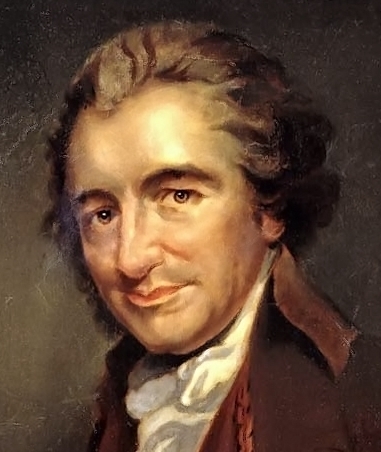 The true and only true basis of representative government is equality of rights.
 Of all tyrannies, a tyranny sincerely exercised for the good of its victims may be the most oppressive. It would be better to live under robber barons than under omnipotent moral busybodies. The robber baron’s cruelty may sometimes sleep, his cupidity may at some point be satiated; but those who torment us for our own good will torment us without end for they do so with the approval of their own conscience.

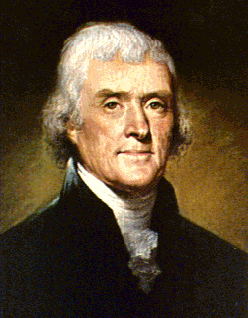 Truth will do well enough if left to shift for herself. She seldom has received much aid from the power of great men to whom she is rarely known & seldom welcome. She has no need of force to procure entrance into the minds of men. Error indeed has often prevailed by the assistance of power or force. Truth is the proper & sufficient antagonist to error.
 Democracy and socialism are not interdependent concepts. They are not only different, but opposing philosophies. Is it consistent with democracy to institute the most meddlesome, all-encompassing and restrictive government, provided that it be publicly chosen and that it act in the name of the people? Would the result not be tyranny, under the guise of legitimate government and, by appropriating this legitimacy assuring to itself the power and omnipotence which it would otherwise assuredly lack? Democracy extends the sphere of personal independence; socialism confines it. Democracy values each man at his highest; socialism makes of each man an agent, an instrument, a number. Democracy and socialism have but one thing in common—equality. But note well the difference. Democracy aims at equality in liberty. Socialism desires equality in constraint and in servitude.