Categories
ballot access initiative, referendum, and recall

Railroading Vancouver

Vancouver, Washington, Mayor Tim Leavitt enthusiastically supports a bridge project that would carry light rail trains from Portland, Oregon, into his town. “There is no more important opportunity for our city and our region than completion of the Columbia River Crossing,” he intones.

Transportation activist Margaret Tweet is more cautious. “Precious little discussion is held on the true transportation needs of our region by the government agencies that propose costly solutions,” she writes.

Back in 1995, Clark County — which includes the city of Vancouver — held a vote on a measure to fund the extension of Portland’s light rail to Vancouver. It was defeated. As if fearing repetition of this, today’s city “leaders” chose not to risk a similar negative vote. According to them, they alone should decide this expensive, controversial public works project.

So a group of citizens led by Larry Patella filed an initiative petition to gain a vote to forbid the city from spending any money to facilitate the Columbia River Crossing project. But their petition fell 32 signatures short of qualifying.

Then it was discovered that 606 people had signed the petition more than once. By state law, the county threw all the duplicates out.

So, seventy-five plaintiffs, including 44 folks who mistakenly signed the petition twice, sued to have their signatures count . . . just once. And last week a judge overturned the rule on duplicate signatures.

Is the initiative a go? Maybe not. Vancouver City Attorney Ted Gathe has issued a legal opinion saying the citizen-initiated ordinance is outside the power and scope of the initiative process. The city council seems poised to use the attorney’s opinion as an excuse to again block a vote of the people they serve.

Allegedly serve.

This is Common Sense. I’m Paul Jacob.
Categories
links

Townhall: When in doubt, try a little democracy

Over at Townhall.com, the weekend Common Sense column goes west. You go there, and then come back here to be steered in the right direction:

Categories
Thought

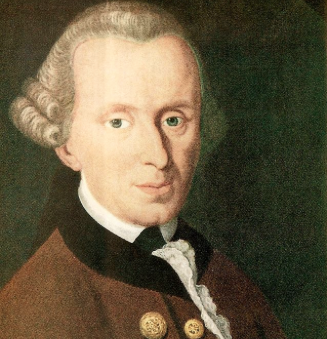
Immanuel Kant

Reason does not work instinctively, but requires trial, practice, and instruction in order to gradually progress from one level of insight to another.

Categories
video

Video: A Tad Too Costly

The minimum wage hurts people. Maybe not smart people like yourself, but real people with real hopes, dreams, and human feelings. Jeff Tucker tells the tale:

Categories
Thought

Immanuel Kant

Out of the crooked timber of humanity, no straight thing was ever made.

Categories
free trade & free markets national politics & policies too much government

Slow Times for a Fast Car

How economical are electric cars? It’s hard to know. We don’t have a free market setting in which to judge the question.

Their obvious advantage? They don’t pollute.

But, skeptics remind us, their electricity does have to be first produced, and the most likely additional source? Coal. Dirty coal.

In any case, electric tech’s progress (or lack thereof) remains fascinating. When I wrote about the Tesla Motors electric sports car back in 2006, I was enthusiastic. But since then the car has not exactly “taken off,” and the company has received a huge, huge hunk of money in the form of loans from the Department of Energy in 2009, so it looks like just another Solyndra-like boondoggle.

But wait: It turns out that the company has faced an uphill battle: government.

The states heavily regulate auto dealerships. You know, “for the consumer” (read: for a few privileged dealers). Indeed, this regulation at the state level has plagued America’s auto industry for years. And dealers, privileged by these protectionist laws, really, really hate Tesla Motors’ marketing model: direct-to-customer.

In Colorado, car dealers got the law changed to prohibit direct-to-customer auto sales.

I hope Tesla sues to overturn the state dealership laws as illegal under the Constitution — after all, they do precisely what the interstate commerce clause was designed to prevent.

More likely, though, Tesla will seek and get an exemption from the Energy Department. And American mercantilism will continue.

This is Common Sense. I’m Paul Jacob.


Note: Image is anachronistic, and later appeared no this site to illustrate a very different Tesla story.

Categories
Thought

David Ricardo

The demand for money is regulated entirely by its value, and its value by its quantity.

Categories
Thought

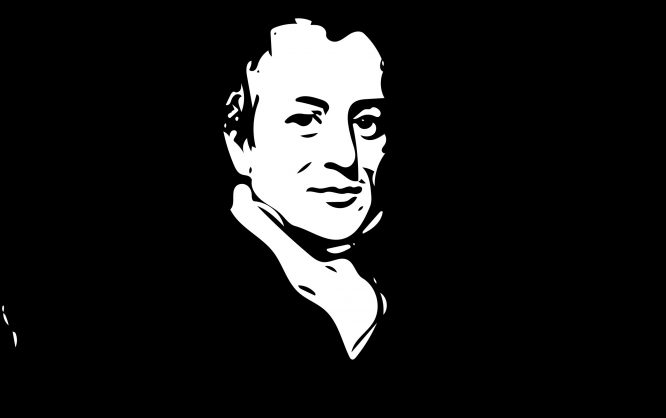
David Ricardo

Under a system of perfectly free commerce, each country naturally devotes its capital and labour to such employments as are most beneficial to each. This pursuit of individual advantage is admirably connected with the with the universal good of the whole. By stimulating industry, by rewarding ingenuity, and by using most efficaciously the peculiar powers bestowed by nature, it distributes labour most effectively and most economically: while, by increasing the general mass of productions, it diffuses general benefit, and binds together, by one common tie of interest and intercourse, the universal society of nations throughout the civilized world.

Categories
national politics & policies Second Amendment rights

Guns Grabbed in New York

Many folks are scared of “mentally unstable folks” with guns. Me too.

However, being scared doesn’t mean that we get to take the rights away from people we’re uncomfortable around – or whose demographic group might be found to be statistically more “dangerous” than another.

“Mental illness” is itself an unstable concept — Asperger’s Syndrome has been listed as a separate disorder in the e Diagnostic and Statistical Manual of Mental Disorders (DSM), but it looks like it will be collapsed into the spectrum of autism-related disorders in the DSM-5. Indeed, the more you learn about the history of the DSM, the less it looks like a scientific document and more the product of a congress, with “diseases” voted in and out because of ideological pressure and fashion and whim. Homosexuality? Used to be a disease. Now it isn’t. Progress, I think, but the actual process was no more scientific than changing the recipe for hot dogs, the manufacture of which we are warned not to inquire about.

Ask David Lewis, a 35-year-old gentleman from Amherst, New York. His guns were confiscated by the state. Why? He was once prescribed an anti-anxiety medicine, and that flagged him as unstable under New York’s new gun law.

A judge just ruled that the state has to give him his guns back.

Talk about slippery slopes. Were it not for one commonsense judge, New Yorkers who’ve experienced some social anxiety would have been lumped in with utter crazies, and had their rights simply stripped.

Indeed, they already have. Lewis is almost certainly not the only perfectly sensible citizen to have had his guns grabbed.

Thus it begins.

This is Common Sense. I’m Paul Jacob.
Categories
general freedom

Against Terrorism

It’s the business of reporters to report on events like the Boston bombings, and the business of commentators to explain them. But since we don’t have enough evidence, yet, about who did what, all commentators can do is speculate . . .

And that’s not very illuminating. Anyone can speculate.

Instead, let’s take a step back.

“Terrorism” is old. Anarchists at the end of the 19th century began their “propaganda by the deed” campaigns, eliciting from the U.S. government a vast repressive effort against anarchists (even peaceful, non-terrorist anarchists) and syndicalist unionism.

Striking out and terrifying a populace tends to unite that populace, making people more supportive of their government and its policies, not less. This has been observed from time immemorial. So anarchist terrorism was probably the dumbest terrorism in history.

An earlier bout of terrorism was the mob of “democrats” in France, during the late French Revolution. The furor to kill and dispossess got so out of hand that the French were prepared for a tyrant, Napoleon.

Not very effective there, either.

The most common form of terrorism in the last century was state terrorism, where governments brutalized their citizens, the better to solidify power. These regimes seem to succeed, sometimes for long periods. But people eventually turn on such tormenters, preferring peaceful life under a rule of law.

As Bostonians reel from the bizarre bombing, we should remember: the rule of law is better than terrorism. It’s plodding, yes. It is never ideally just, since it is run by human beings. But refusing to resort to indiscriminate violence to “obtain justice” or “make a point” or “get/maintain power” is the basic idea of civilization.

This is Common Sense. I’m Paul Jacob.