Take a moment from your regularly scheduled dose of daily optimism, and look on the dark side.
The recent political events in Greece, in which a stable government was not formed, requiring whole new rounds of voting, have received some attention on the nightly news. But there’s still a feeling of “it can’t happen here.”
That’s a great disservice. Because it can happen here.
And this is not just “political instability.” We’re not talking about a political hot potato going nuclear. We’re talking about complete financial implosion. That’s what happens when government is involved in everything.
“Conservatives” and “progressives” have set up for us a house of cards. So what is now happening in one of the great cradles of Western civilization is likely to happen to the whole of today’s big-government-based civilization.
How bad can things get? Well, for chilling reminders of what a true collapse is like, consult the Economic Collapse Blog. A recent article gave us a top ten list of “things that we can learn about shortages and preparation from the collapse in Greece.” The top five are frightening enough:
- Food shortages can actually happen (indeed, have already begun in Greece, starting with the prisons — and remember, America has more prisons than anybody)
- Medicine is one of the first things to become scarce (which is bad, if you require meds to live)
- The power grid goes down (which means almost everything goes down)
- You can’t even take water for granted (and you can’t live without water)
- Your credit and debit cards will probably stop working
So, congrats to Michelle Bachmann, Newt Gingrich, Rick Santorum, et al. — they won’t have to preside over the next great crisis. Nor we endure them.
Hey, look on the bright side.
This is Common Sense. I’m Paul Jacob.



 In this character of the Americans, a love of freedom is the predominating feature which marks and distinguishes the whole: and as an ardent is always a jealous affection, your colonies become suspicious, restive, and untractable, whenever they see the least attempt to wrest from them by force, or shuffle from them by chicane, what they think the only advantage worth living for. This fierce spirit of liberty is stronger in the English colonies probably than in any other people of the earth. . . .
 The first official move towards secession from the British Empire occurs on June 7, 1776, when Richard Henry Lee presents a resolution to the Continental Congress, which is seconded by John Adams.
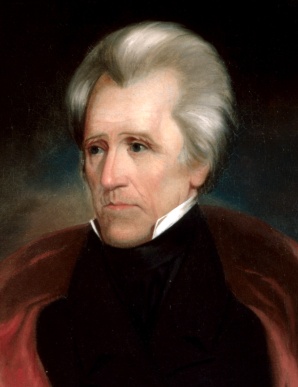 In 1883, Andy Jackson becomes the first U.S. president to ride on a train.
  [E]very individual spontaneously tries to find the place and the trade in which he can best increase National gain, if laws do not prevent him from doing so.
 The problem with socialism is that you eventually run out of other people’s money.