Categories
initiative, referendum, and recall tax policy

Fighting Taxpayers

Some opponents of citizen initiative and referendum argue that voters will always opt for tax cuts. I only wish.

Yesterday, North Dakotans decided not to eliminate their state’s property tax. Measure 2 wouldn’t have lowered property taxes, it would have abolished them. Even in a land booming with new-found oil and gas, and a state government surfing in surpluses, a whopping 78 percent of voters weren’t willing to go that far.

Chalk it up to fear — unfounded fear. North Dakota State government is running a surplus bigger than the state’s property tax take.Fighting Sioux

As is too often the case, voters saw a one-sided campaign, with spending by the forces of big government — public employee unions and those extracting financial gain from the political status quo — completely outmatching the resources taxpayers had to get their message out. On Measure 2, the No side outspent the Yes side by more than 26 to 1.

Empower the Taxpayer, led by Bob Hale and Charlene Nelson, made the argument that property taxes are particularly malicious because people can lose their homes and farms if they can’t afford the taxes. That argument did not win the day.

But there will be other days. I often tell the story of a 2002 Arkansas initiative campaign to “ax the food tax.” The measure to end the sales tax on food and medicine was slaughtered at the ballot box. Still, now a decade later, the tax has been reduced from 6 percent to 1.5 percent.

North Dakotans voted to keep the state university’s Fighting Sioux mascot. The Fighting Taxpayers may be around even longer.

This is Common Sense. I’m Paul Jacob.
Categories
Thought

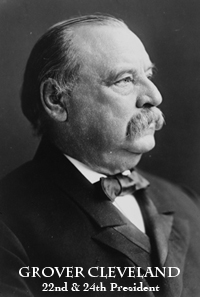
Grover Cleveland, 1886

When more of the people’s sustenance is exacted through the form of taxation than is necessary to meet the just obligations of government and expenses of its economical administration, such exaction becomes ruthless extortion and a violation of the fundamental principles of free government.

Categories
national politics & policies political challengers too much government

The Monkey on Their Backs

The “war on drugs” is not a mere metaphorical war, like the “war on poverty.”

The biggest problem with the term is not the subject, but the object: Our forces don’t shoot at pills and pipes and chemicals and syringes.

They shoot at people.

Sometimes dealers. Often just users. Too often innocents . . . “collateral damage” in a war that seems never to end, because impossible to win.

But if the war seems bad in America — now a land with the world’s largest gulag — it’s far, far worse in Mexico, especially since President Felipe Calderón turned the military on his own people, in the vain hope of subduing the drug traffickers.

What did he get for his efforts? Blood, death and terror.

The body count is over 50,000.

I’ve long advocated drug legalization. I don’t need to elaborate the reasons, not after 50,000 deaths have been weighed in on the pro-drug war side, but I probably should mention a few notions that the drug-war mentality suppresses: individual responsibility, a rule of law, and peace.

In America, our politicians slowly awake to the truth that killing people to prevent them from ruining their lives with drugs is a fool’s mission. But few yet commit to actual change.

In Mexico, on the other hand, the top three candidates to replace Calderón — whose service is limited, by law, to just the one term — go a step further: All agree that the drug war has to be scaled down.

Little talk, so far, of legalization, but hey: The addiction to war is a tough monkey to shrug off.

This is Common Sense. I’m Paul Jacob.

Categories
Thought

Gore Vidal

TV-watchers have no doubt noted so often that they are no longer aware of how often the interchangeable TV hosts handle anyone who tries to explain why something happened. “Are you suggesting that there was a conspiracy?” A twinkle starts in a pair of bright contact lenses. No matter what the answer, there is a wriggling of the body, followed by a tiny snort and a significant glance into the camera to show that the guest has just been delivered to the studio by flying saucer. This is one way for the public never to understand what actual conspirators — whether in the F.B.I. or on the Supreme Court or toiling for Big Tobacco — are up to.

Categories
free trade & free markets national politics & policies too much government

How Not to Help the Poor

Q. When’s the best time to kick out the bottom rungs of a ladder?

A. After everybody’s climbed it.

So, when’s the best time to raise the minimum wage?

After everybody is being paid at a higher rate.

Contrary to innocent expectations, minimum wage laws don’t guarantee that people will be hired to work at or above the minimum. Instead, they prohibit businesses from hiring (or workers from accepting jobs) below the minimum rate. That is, rates are guaranteed, but the jobs are discouraged.

A recent push by House Democrats to raise the national minimum wage to ten bucks per hour was stalled by leadership. Left-leaning representatives cried foul. But a report in The Hill explains the reluctance: “Concerns about the economy have increased since last Friday, when a jobs report showed an anemic May during which only 69,000 jobs were added. A higher minimum wage could discourage employers from creating more jobs and that, in turn, could hurt President Obama in the election.”

It turns out that the more clever Democrats are considering, instead, a plan to slowly, gradually raise the rates.

This would mean fewer unemployed right away. The fewer people hurt, all the less likely that voters would put two and two together and blame them, and their minimum wage rate hike.

This is how politicians hurt Americans, most of the time: In increments small enough not to cause an uproar.

In this case, it’s the poorest who are hurt most, those who haven’t yet climbed the proverbial ladder. Democrats, ideologically blind to the results of their regulations, feel nothing.

Besides, they know that, in America, most poor folks don’t vote.

This is Common Sense. I’m Paul Jacob.

Categories
Thought

Angelina Weld Grimké

If a law commands me to sin I will break it; if it calls me to suffer, I will let it take its course unresistingly.

Categories
Today

June 10

Apple ships the first Apple II computer on June 10, 1977.

Born on this day: historian, jazz critic and civil libertarian Nat Hentoff (1925); children’s writer Maurice Sendak (1929); scientist and pioneer of “sociobiology” E. O. Wilson (1929).

June 10 deaths include Alexander the Great (323 BC), Angelina Weld Grimké (1958); and Louis L’Amour (1988).

Categories
links nannyism

Townhall: Nannies with badges and guns

The enemies of freedom usually pretend to be engaging in their outrageous and over-bearing coercion “for the people’s sake.” Don’t believe them. See Sunday’s column at Townhall — and then come back here for links and hints on further reading.

One thing not made clear in the column (and it can’t go on forever, eh?) is that the big soda ban only applies to sugary drinks (not juices or diet drinks), and only applies to restaurants, targeting fast food joints, really. So Bloomberg’s ban is, in essence, a stab at the lower classes. Fancy restaurants don’t serve the big drinks, as I point out in the column, and you can still buy big non-fountain drinks at the store, and binge . . . sans the convenience of a fast food establishment, where dumb, stupid people are too easily swayed.

Do you ever wonder if much of the welfare state is just an excuse for well-off folks to rag on poorer folks, for being so, well, icky? “You obviously can’t run your lives — if you could, you’d be like us!”

Categories
ideological culture insider corruption

Video: Greece Fire

When politicians fight on camera — literally slap each other around — you know something is pretty wrong in your country:

http://www.youtube.com/watch?v=yVffMcFWj8Y

Categories
Thought

Arthur Goldberg

Law not served by power is an illusion; but power not ruled by law is a menace which our nuclear age cannot afford.