Our most dangerous tendency is to expect too much of government, and at the same time do for it too little.
Categories
Warren G. Harding
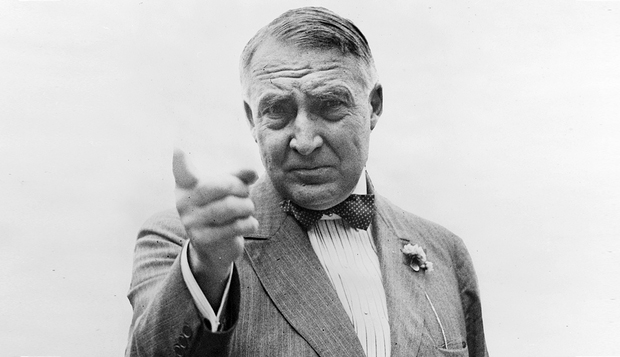
Our most dangerous tendency is to expect too much of government, and at the same time do for it too little.
“Corporations and some of the wealthiest Americans have spent more than $1 billion in the past 18 months on ballot initiatives in just 11 states,” Reid Wilson informed Washington Post readers following last week’s election. He dubbed it “an unprecedented explosion of money used to pass new laws and influence the public debate.”
He’s implying that bad ol’ corporations and “the rich” can change our laws merely by petitioning issues onto the ballot. Is that right?
Thankfully, no: we get to vote.
“Money is most effective on ballot measures when you’re trying to get a ‘no’ . . . the devil you know is better than the devil you don’t,” explained Rob Richie, the executive director of FairVote, appearing yesterday on C-Span’s Washington Journal. “It’s a lot harder, actually, to spend a lot of money and get a ‘yes.’”
He’s exactly right. Big corporations and big labor have had success in defeating measures, but not much at all in passing “new laws.”
Last Tuesday’s election bears this out. While there were 31 issues on state ballots, only three were initiatives petitioned onto the ballot by citizens, and all three were defeated.
In Washington, Initiative 517, a pro-initiative measure, and Initiative 522, a measure requiring genetically modified foods to be labeled, were both badly outspent and defeated. However, in Colorado, those supporting Amendment 66, a tax increase for education, spent over $10 million to promote the measure compared to less than $50,000 spent against it. Still, the tax hike was defeated 2-to-1.
Money helps in campaigning, no doubt. But the facts show that wealthy interests can’t buy our votes or brainwash us to gain new laws. We decide.
This is Common Sense. I’m Paul Jacob.
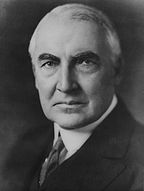 America’s present need is not heroics, but healing; not nostrums, but normalcy; not revolution, but restoration; not agitation, but adjustment; not surgery, but serenity; not the dramatic, but the dispassionate; not experiment, but equipoise; not submergence in internationality, but sustainment in triumphant nationality.
Obamacare’s failures are not exactly bolts out of the blue, big surprises that should shock us all. Click on over to Townhall, and then back here, for some indication of the principal principles behind the ailing failure.
A number of ideas and phrases appear in the column that might seem familiar to you. Here are a few of them:
The problem comes down to gerrymandered districts and how the votes are cast and counted:
The satirical dystopian film Brazil does not — in case you haven’t seen it — have much of anything to do with Brazil, the country. But it does have something to do with Deming, New Mexico.
This week’s War on Drugs horror story takes place in Deming, and echoes the “comic,” gallows-humor motif of Terry Gilliam’s 1985 classic. In the movie, armed minions of the futuristic superstate raid your house, kill you, bag you, tag you, and then bill your family for the “service.”
In Deming, an officer stopped a motorist for rolling through a Stop sign. For some reason (so far not explained) the motorist was asked to exit his car, and, the officer claims, exhibited “clenched buttocks” — as if hiding drugs in his rectum.
So, the story goes (and it’s a frighteningly long story), a warrant to search the motorist was obtained, and he was taken to a hospital where multiple anal probes, an x-ray, two enemas in front of multiple witnesses, and a colonoscopy yielded no evidence of drugs.
And then the suspect — “patient,” in medical terms, though the man consented to no services — was billed. You know, for the x-ray, the colonoscopy, the enemas, and the anal probes.
Of course the victim is suing, and if the reportage is correct, that all this really happened, I hope he wins millions. The behavior of the police, the judge, and some medical personnel is inexcusable.
But it fits right in with the dystopian future America has made for itself. The War on Drugs is bringing us — has brought us? — tyranny we’d expect only from the darkest of black comedies.
Yes, it can happen here.
This is Common Sense. I’m Paul Jacob.
When you find yourself in a hole, stop digging.
Newspapermen used to keep files on major figures, for that inevitable day when the newsworthies shuffle off that final coil. Timely obituaries don’t just “happen.”
Heedless of the danger of a premature obit, today’s journalists seem always ready with an autopsy, even before the corpse cools.
Every few years we endure talk of the death of a major political party. Journalists love this sort of speculation. And apparently it’s so forgettable that it never really sticks to the journalists who trotted out the last false prophecy. In the real world, sociologists study what happens to cults “When Prophecies Fail”; in journalism, the eternal cranking out of copy goes on as if nothing happened.
The Last Democrat, a book produced at the height of the Bill Clinton scandals, argued that Americans would never again elect a Democratic president — Americans, you see, had finally wised up, given up on the old redistributionist racket. Wishful thinking.
The book should be prominently placed on every would-be prophet’s desk. A cautionary title.
Today, the old political rackets have ratcheted up, and Democrats are riding high. Sort of.
So now, after Tuesday’s elections, we hear talk of the death of the Tea Party.
A possibility? Yes. But remember: it was never a real party, and it was never about tea. It was (as near as I could make out) about responsibility. In government.
I can’t see how that idea will ever go out of style.
Though how it will win, that’s harder to envision.
And whether the name will stick with the idea, that’s another matter, too. Tea and revolutions, like obituaries, must be prepared in advance.
This is Common Sense. I’m Paul Jacob.
 We don’t have to worry about anything. No nation in the history of the world was ever sitting as pretty. If we want anything, all we have to do is go and buy it on credit.
Washington State’s I-517 failed yesterday. Did demonization help assure its defeat?
In the state’s Voters’ Pamphlet, the second item against the measure was “I-517 benefits Tim Eyman” because, it was alleged, the measure would allow Eyman to “double his output and increase his profits.”
Eyman is a great guy, but to insiders in the Evergreen State he’s the Devil Incarnate. He keeps on promoting initiatives that would limit the state’s seemingly unlimited taxing and spending propensities.
So, of course, he’s demonized, though the idea that I-517 would’ve benefited his professional operation more than everyday citizens just entering the process is absurd.
But speaking of absurd, and of demonization, you can’t get more of either than Harry Belafonte. The august old singer spoke in a New York church in favor of Democrat mayoral candidate Bill de Blasio. Identifying David and Charles Koch as “the Koch brothers,” he went off on a tear, objecting to their spending money on causes Belafonte doesn’t approve of:
Already we have lost 14 states in this union to the most corrupt group of citizens I’ve ever known. They make up the heart and the thinking in the minds of those who would belong to the Ku Klux Klan. They are white supremacists. They are men of evil.
What possible warrant there could be for the “white supremacist” charge? None was offered. Chalk it up to partisan hysteria, hyperbole. But, truth is, the Kochs aren’t devils, nor are other wealthy individuals who fund causes, whether we like their politics or not.
The ad hominem — ad diabolos? — fixation in politics continues to plague debate, making otherwise intelligent people seem like fools.
Unfortunately, it too often works.
This is Common Sense. I’m Paul Jacob.