 July 3 marks the 1947 birthday of Dave Barry, American columnist and author.
Five years later on the same date, Puerto Rico’s Constitution was approved by the Congress of the United States.
July 3 marks the 1947 birthday of Dave Barry, American columnist and author.
Five years later on the same date, Puerto Rico’s Constitution was approved by the Congress of the United States.
The United States of America is exceptional in at least one way: it was founded by folks who made very clear that the reasons for breaking with past allegiance and alliance — indeed, subjugation — rested, finally, on an idea: liberty.
No doubt that was just an excuse for some founders. And no doubt Americans never kept liberty foremost in their minds for long. But the emphasis at the beginning on the moral principles altered not merely the American consciousness, but the conscience of the world.
The principles led a list of complaints, and were preceded by an explanation for their necessity: “a decent respect to the opinions of mankind” required the public statement.
The meat of the argument is this:
We hold these truths to be self-evident, that all men are created equal, that they are endowed by their Creator with certain unalienable Rights, that among these are Life, Liberty, and the pursuit of Happiness. That to secure these rights, Governments are instituted among Men, deriving their just powers from the consent of the governed, That whenever any Form of Government becomes destructive of these ends, it is the Right of the People to alter or to abolish it, and to institute new Government, laying its foundation on such principles and organizing its powers in such form, as to them shall seem most likely to effect their Safety and Happiness.
You may write it a bit differently. (Too many, today, wouldn’t write it at all.) But whether you make minor edits for modernized style, or substantive edits for some paradigm shifts, the basic idea, that somehow government must rest on consent — not on mere accommodation to terrorizing force — remains one of the most potent ideas ever promoted.
A moral, informed consent binds government, or at least limits it: this is the notion that changed the world.
For the better.
Remember, though: the break with Great Britain was deemed, by King George III, treasonous.
But it was very reasonable.
We have a lot of reasons, today, to resist a lot of homegrown tyranny. As in 1776, the future hangs in the balance. Fortunately, our founders did a good enough job that what we do now requires less than their “treason.” Still, just like them, our lives, our liberties, and our sacred honor are on the line.
We’ve got some work to do.
This is Common Sense. I’m Paul Jacob.
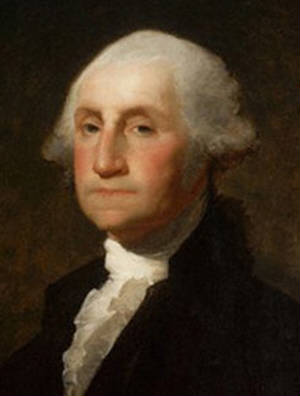 All see, and most admire, the glare which hovers round the external trappings of elevated office. To me there is nothing in it, beyond the lustre which may be reflected from its connection with a power of promoting human felicity.
Could any two men be more different than John Adams and Thomas Jefferson? And yet, I doubt if the United States would exist were it not for both. Somehow, they worked together when it counted. And worked against each other, when it seemed necessary.
Yet they respected each other (in their different ways), and before the end, after a long estrangement, became close friends.
The story is well known: on his deathbed on July 4, 1826, Adams whispered, “Thomas Jefferson survives!” He was wrong. Jefferson had died earlier that day, on the 50th anniversary of the Declaration of Independence.
Adams was also wrong about Independence Day. On July 2, 1776, after the Lee Resolution for independence passed the Continental Congress, he wrote that “the second day of July” would become the day of “a great anniversary festival.” But “by 1777,” Steve Tally noted in Bland Ambition, his jovial history of the vice presidency, “people were already celebrating the Fourth of July.”
 But give him his due: it was Adams who insisted that Jefferson write the Declaration, and it was indeed its words — especially that of its “mission statement” preamble — that resonate almost universally to this day. And gave birth to the annual festivities.
Adams, Tally tells us, was “short, round, peevish, a loudmouth, and frequently a bore.” Jefferson, on the other hand, was tall, handsome, polite, and much more popular. And a much better writer. Which is why he was given his great job, to produce the Declaration.
Great writer or no, it’s not as if the tall redhead’s initial draft was acceptable as it flowed from the pen. Adams, Franklin, and the whole congress got in on the editing job. “Jefferson liked to recall that his document survived further [extensive] editing,” Tally explains, “because of the meeting hall’s proximity to a livery stable.” Still, it’s obvious that Jefferson wasn’t the only genius in the room, and that without Adams’s tireless work, independence might not have gotten off the ground.
The later history of both men, in service to the country they helped found, is riddled with ambiguities and even horrible moral and political lapses. Adams was the kind of politician who not only opposed term limits, but opposed terms: he thought men raised to office should be kept there forever. Jefferson leaned not merely the other direction, but flirted with the notion of a revolution every generation.
I adhere to the anti-federalist slogan of their day, “that where annual elections end, tyranny begins.”
Between the two extremes of these two great men, somehow, the republic survived. And thrived. Their correspondence is a mine of great wisdom, their biographies well worth reading.
Most of all, their legacy — of July 2 and July 4, 1776, and the universal rights of man — remains worth fighting for.
This is Common Sense. I’m Paul Jacob.
Democratical States must always feel before they can see: it is this that makes their Governments slow, but the people will be right at last.
Have a yen to cling indefinitely to political power? You probably oppose term limits . . . as well as the citizen initiative rights enabling voters to term-limit you.
And when voters possess both initiative rights and a willingness to exercise them, it wouldn’t surprise me if you pray that any judge assessing a duly petitioned-for term limits question deems it unconstitutional. Even if it’s garnered 596,140 signatures, 300,000 more than the minimum valid signatures required.
You guessed it: Not a hypothetical scenario. And not, of course, about you.
GOP gubernatorial candidate Bruce Rauner is leading to impose eight-year term limits on all legislative service in Illinois. The petition has more than enough valid signatures to reach the ballot. But incumbents sued, citing an early 1990s decision by the Illinois Supreme Court that declared a different term limits question unconstitutional.
Cook County Judge Mary Mikva agrees; “precedent dictates a very narrow provision for allowing the voters to directly enact term amendments to the Illinois Constitution.” Her June 27 ruling is being appealed.
The state’s notoriously corrupt political class may wish upon a constellation, but wishing won’t make the cited precedent relevant.
As Jacob Huebert, senior attorney at the Liberty Justice Center, argued in a recent op-ed, “term limits are exactly the type of provision the Constitution’s framers thought citizens should be allowed to propose and vote on.” He added, “This isn’t just a common-sense reading of what the Illinois Constitution says; it’s also what its framers said explicitly when they included this provision.”
The stated aim of republican constitutions in America has never been to protect incumbents from effective citizen oversight and control.
This is Common Sense. I’m Paul Jacob.
If the freedom of speech is taken away then dumb and silent we may be led, like sheep to the slaughter.
Ah yes, “criminal schemes.”
The Weekly Standard reminds us that when partisan Democrats declare Wisconsin Governor Scott Walker to be “at the center of a ‘criminal scheme’ in which Walker’s campaign illegally coordinated political activity with outside organizations,” they neglect the fact that two judges have already determined that the “case” against Walker is worse than bogus.
“Political coordination” seems to be an infinitely elastic category of pseudo-crime applicable to anyone a political apparatchik chooses to target. You “politically coordinate” if you’re a) political active, b) share political values with any other activists, and c) read the newspapers, talk on television. If “political coordination” is criminal, so is freedom of speech and freedom of association. It’s all the same species of delinquency.
Wisconsin district attorneys abused power to harass reformers like Governor Walker, my colleague Eric O’Keefe, and others into (what they hoped would be) silence and ineffectuality. Despite a gag order intended to shut up the victims, though, Eric has spoken out; and he’s sued Milwaukee County DA John Chisholm.
In May, federal Judge Rudolph Randa observed, for one thing, that the “theory of ‘coordination’ forming the basis of the investigation, including the basis of probable cause for home raids, is not supported under Wisconsin law and, if it were, would violate the United States Constitution.” Randa granted a preliminary injunction (pdf) to stop the probe.
I’m hopeful that the bad guys won’t win here. We still have the First Amendment.*
This is Common Sense. I’m Paul Jacob.
* Though, 44 U.S. Senators are proposing to repeal it.
Harmony, liberal intercourse with all nations, are recommended by policy, humanity, and interest.
No one likes shackles. Especially certain members of Congress (all Democrats) who yearn to be free . . . of constitutional constraints.
Click on over to Townhall.com, for the latest attempt to increase the power of insiders at the expense of America’s democratic-republican heritage.
Then come back here for more reading, if you like.