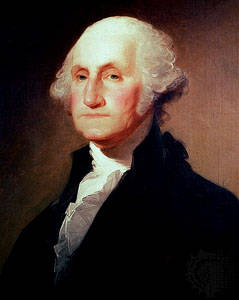
In comparison to the French Revolution, the American Revolution has come to seem a parochial and rather dull event. This, despite the fact that the American Revolution was successful–realizing the purposes of the revolutionaries and establishing a durable political regime–while the French Revolution was a resounding failure, devouring its own children and leading to an imperial despotism, followed by an eventual restoration of the monarchy.
Author: Redactor
Too Fine a Point
Whatever one makes of the direction Egypt is headed, the most ominous headline I’ve seen, recently, is the one that is ostensibly optimistic: “Egypt: 98.1% of voters approve constitution.”
That was in USA Today.
It is not, of course, believable.
What do more than 98 percent of America’s voters agree on?
Transplant that radical supermajority to Egypt, where politics is often deadly, a coup recently took out the biggest faction — and with it, the previous working constitution — and where the major faction is associated with terrorism and street violence, and we are to expect a consensus like this?
The title defeats itself, undermines itself.
It might as well have said, “This Title Is a Lie,” except without the paradox.
Then again, with only 38.6 percent of voters going to the polls, that 98.1 figure takes on a new meaning. Could it be that, of 38.6 percent of eligible voters actually voting, the ones who did show up were nearly unanimous in their support of the new regime?
More likely, but still not likely at all.
Revolutionary politics is an ugly business. And what we are to make of what’s really happening in Egypt is beyond my ken. I just know that 98.1 percent of Egyptian voters do not approve of the constitution.
But if this kind of nonsense gets reported with a straight face in America, it should make us more circumspect about the other information we receive about conflicts overseas.
I’m 98.1 percent confident of that opinion. At least.
This is Common Sense. I’m Paul Jacob.
A magazine profile of President Barack Obama has set the commentariat a-talking.
On racism, the president says that “some” folks hate him because he’s black; and others support him because he’s black.
Wow. What was obvious in 2008 seems . . . painfully obvious now.
Similarly, the prez ’fessed up (again) to his past marijuana use — and his long-term tobacco habit. He uttered the word “vice.” He noted that marijuana doesn’t seem any more harmful than alcohol . . . which implies that the prohibition of marijuana makes less sense than the once-prohibited but now-legal hootch.
A reasonable opinion. Held, before President O’s pronouncement, by a clear majority of the public . . . not as radical, but as obvious.
So why make such a big deal about these statements? Because of previous taboos? It’s not as if Obama took leadership on any of these ideas, moving them from “horrors!-false” to “blah-true.”
Years ago, the movie Bulworth featured Warren Beatty as a senator who, all the sudden, started blurting out things he believed to be true, but which were not usually said in public. It was a comedy. (Your tastes and appraisals may vary.) The prez comes off as nowhere near as outrageous (or straightforward) as the Beatty character, though he, too, has rapped in public.
But perhaps we grade on a curve. A president speaking obvious truths is memorable not because the truths are daring, but because of the novelty: a politician has deigned to acknowledge truth.
File the brouhaha under O, not for Obama but for Obvious.
This is Common Sense. I’m Paul Jacob.
Irving Kristol
On January 22, 1920, American pundit and author Irving Kristol was born.
Tyler Cowen
Food is a product of supply and demand, so try to figure out where the supplies are fresh, the suppliers are creative, and the demanders are informed.
Some things about government are eternal.
The latest New Jersey scandal a-brewing has it that Hoboken’s mayor was informed her city was to be denied federal aid following Hurricane Sandy unless she went along with a real estate project favored by Governor Chris Christie.
Shocking, but hardly . . . unheard of. Back in the 1930s, Franklin Delano Roosevelt distributed disproportionate “stimulus” funds to swing states for one reason: re-election.
Corruption is ancient.
Christie’s staff seems, well, merely a bit more honest than usual. For modern America. Take the “Bridgegate” scandal: Trying to “hurt” a mayor by shutting down bridge lanes to his city, thus severely inconveniencing the mayor’s constituents? This sort of pettiness in policitics is common, with one difference: Most players disguise the pettiness.
So how does the continuing scandal of misgovernment usually get hidden? Dishonesty? Evasion?
Or, just ideology?
In several cities throughout the United States — Portland, Oregon, in particular — top metropolitan bureaucrats have deliberately developed policies that make automobile traffic more congested. Why? To encourage ridership in public transportation, which is considered (for ideological reasons) somehow better. Thus billions are spent on infrastructure supporting light rail, which take lanes away from car drivers, and move fewer people at greater inconvenience.
So why is that policy not itself a scandal?
The intent of Chris Christie’s aides was, obviously, base and petty and wrong. And actionable.
The ideology driving today’s anti-automobile agenda, on the other hand, is said to be noble and altruistic. Even though the harms to the public in terms of hours lost in frustrating commutes far exceeds the recent New Jersey scandal.
This is Common Sense. I’m Paul Jacob.
Alger Hiss
On January 21, 1950, Alger Hiss was convicted of perjury, with Whittaker Chambers being the main witness in Hiss’s prosecution. Chambers confessed to having been a Soviet spy, and accused Hiss as an accomplice, which Hiss denied to his dying day. Chambers wrote a fascinating memoir about all this in Witness.
Today is economist Tyler Cowen’s birthday. Happy Birthday, Tyler.
Tyler Cowen
The right wing will be identified with the monied class, even when the left often has more money. And the left wing will be identified as the whiners, even though the right at times whines as much or more. You might say that both sides are monied, high human capital whiners, on the whole.
ACLU, Jan 20
On January 20, 1920, the American Civil Liberties Union was founded.
Too Sneaky by Half
A funny thing happened on the way to reform.
The freshly minted Republican-dominated Arksansas State Assumbly put up three constitutional amendments for next November’s ballot. Secretly, they are likely proudest of one of them, “The Arkansas Elected Officials Ethics, Transparency, and Financial Reform Act.” For, snuck into the amendment, is a gutting of term limits.
The voters long ago enacted six-year House limits, not the 16 years proposed now by legislators. The voters limit state senators to two four-year terms, while legislators are trying to double their ride on the gravy train.
A number of legislators now claim even they didn’t know the term limits provision was in the legislation. Others explain that their “aye” vote was cast mistakenly on their behalf after they had left the building.
But all that’s nothing compared to this wrinkle, which I wrote about on Townhall this weekend. Hidden in a separate piece of legislation passed last year was a strange provision dealing with setting ballot language for measures referred by the legislature. Legislators took the power to write a ballot measure’s “Popular Name” — the so-called short title — away from the Attorney General, who previously enjoyed that statutory role, and gave it to themselves.
However, after legally stripping any other elected official of that same power, the plotters neglected to do one teensy-weensy thing: provide that language for their new term extension.
The upshot? The sneaky, dishonest anti-term limits amendment may not appear on the ballot.
Hoisted on their own petard, the whole elaborate scheme threatens to blow up in their own dear faces.
Couldn’t have happened to a more deserving bunch.
This is Common Sense. I’m Paul Jacob.
Illustration by ocularinvasion used under a Creative Commons license.