November 26, 1792, saw the birth of Sarah Grimké, American abolitionist and feminist.
Categories
November 26, 1792, saw the birth of Sarah Grimké, American abolitionist and feminist.
November 25, 1975, Suriname gained independence from the Netherlands. On the same month and date 17 years later, the Federal Assembly of Czechoslovakia voted to split the country into the Czech Republic and Slovakia (officially disjoined as of January 1, 1993).
Utah is the happiest state in the country — we’re told. Though the state does have high suicide rates, those might be explainable in biochemical terms, neatly enough. So what are we to make of the Beehive State’s disturbing pattern in other-person homicide?
Police shootings dominate the stats:
A Salt Lake Tribune review of nearly 300 homicides, using media reports, state crime statistics, medical-examiner records and court records, shows that use of force by police is the second-most common circumstance under which Utahns kill each other, surpassed only by intimate partner violence.
And, as the Tribune explains: “so far this year, deadly force by police has claimed more lives — 13, including a Saturday shooting in South Jordan — than has violence between spouses and dating partners.”
 The article goes on to talk about police training and other important issues surrounding police use of deadly force, but the long-term trends and are not clear.
We know that violent crime is going down in the country. Are police shootings going up, or have they merely remained stable against the rest of the violence?
Such issues were not addressed in the article. And over at Reason, Anthony L. Fisher brings up the fundamental problem: “This article serves as a useful reminder that there is no national database of shootings by police, and save for a few journalists, academics and sports websites, no efforts to create one.”
The issue is vital, for we give a lot of power to police personnel. And power can corrupt them as much as anyone else. But until we have better information, the big picture remains far too fuzzy.
This is Common Sense. I’m Paul Jacob.
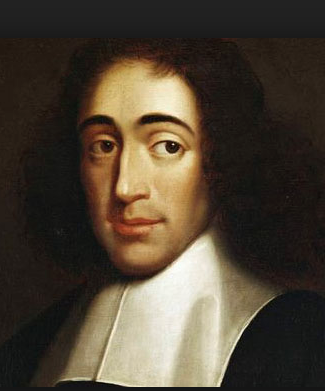 None are more taken in by flattery than the proud, who wish to be the first and are not.
November 24th marks the birthdays of philosopher Baruch Spinoza (1632) and three influential Americans: ragtime composer Scott Joplin (1868), self-help writer Dale Carnegie (1888), and conservative editor, writer, and television personality William F. Buckley Jr. (1925).
Revealing to all the world the contempt for the American people that Washington insiders possess might garner for Prof. Gruber a future Medal of Freedom.
Perhaps by a president elected by the Irony Party.
What Gruber is unlikely to get, however, is a Nobel Prize for Economics.
Benjamin Zycher, writing at The Hill, questions Gruber’s astuteness as an economist. The MIT professor surely has the wit to sucker those representing American taxpayers out of six million bucks for his consulting, but, otherwise, reveals some blind spots about where incentives should be figured in.
“Economists may disagree about many things,” writes Zycher, “but absent among them is the central role of incentives as determinants of behavior,” a principle that “applies fully to government.”
To reward one constituency at the expense of others, health care bureaucrats will quickly come to regard limits to spending as a kind of “savings.”
From this type of rationing, Zycher suggests, there will be “a reduction in the flow of research and development investments in new and improved medical technologies, yielding fewer new medicines, devices and equipment.”
This means that the most negative effects will be seen down the road. While the easier-to-publicize positive effects of more people covered by insurance can be pointed to right now, as a “benefit.”
However, even that upfront goody isn’t what we might pretend it is. “Gruber seems actually to believe that an expansion of insurance ‘coverage’ is the same as an expansion of actual healthcare,” Zycher notes, with apt incredulity.
By ignoring negative effects of his convoluted program, and concentrating on a few dubious upfront benefits, Gruber proves himself more con artist than economist.
This is Common Sense. I’m Paul Jacob.
Peace is not an absence of war, it is a virtue, a state of mind, a disposition for benevolence, confidence, justice.
At least one senator of the new majority party has a plan. And, if put into action, it would shake up the political culture. It may even spare the GOP from its usual fate, grabbing defeat from the jaws of victory.
Click on over to Townhall.com. Come back here for further reading.
Simply put:
November 22 marks the death dates of a number of eminent writers, including that of British-American novelist and essayist Aldous Huxley and Irish-British novelist, theologian and medieval scholar C.S. Lewis, both of whom died in 1963, the same day as the assassination of American President John F. Kennedy. British novelist Anthony Burgess died exactly 30 years later.
The date also marks the birth of the great British novelist George Eliot (Mary Ann Evans), in 1819.
Recommended reading from these authors include:
“Silas Marner” (1861), a short and brilliant novel by George Eliot.
“Earthly Powers” (1980), a massive novel about life in the 20th century, by the ever-iconoclastic and hard-to-pin-down Anthony Burgess.
“The Humanitarian Theory of Punishment” (1949) and “Till We Have Faces” (1956), the former being C.S. Lewis’s thoughtful essay on the nature of modern tyranny, and the latter being what some regard his best novel, a retelling of the Psyche myth.
“Brave New World” (1931) and “Brave New World Revisited” (1958), the former is Aldous Huxley’s classic dystopian satire on technological tyranny, and the latter is the author’s survey of the issues raised by — and the degrees to which reality conforms to — his earlier fictional prophecy.