Categories
ballot access political challengers

The Logic of the Instant Runoff

Reid Wilson, at the Washington Post, regales us with seven U.S. senatorial races where Libertarian Party candidates could swing elections, and thus control of the Senate. Last weekend at Townhall, I exhorted readers to work for transpartisan reforms “like term limits . . . and other measures aimed at greater representation, [such as] establishing ranked choice voting.”

The two articles are not unrelated.

Conservatives and libertarians are often united in wanting to replace progressive Democrats with small-government contenders. But they are not united in how to do this. Many libertarians balk at voting for hardline social conservative candidates like Rick Santorum and middle-of-the-road statists like John McCain.

So the Libertarian Party runs candidates that have in recent elections gained traction with voters — enough to pull independent voters away from Republicans and sometimes enabling Democrats to win.

Republican entreaties to libertarians (“you’re killing us out here!”) appear to be no more effective than libertarian entreaties to Republicans (“want our support? try taking your limited government stances seriously!”).

What to do? Republican partisans should support Instant Runoff Voting, which would

  1. Allow people to rank their choices for office, and
  2. Instruct vote-counters to take the votes of those who selected a No. 1 pick of, say, a Libertarian who garnered the smallest number of votes,  and add those ballots’ second ranked vote (either for a D or an R) as the vote to count in the “instant runoff.”

This would allow for better expression of voter preference, solving the “wasted vote” problem and ceasing to make the “best the enemy of the good.”

Alternately, Republicans could continue their course, trying to limit ballot access, thereby alienating more of the electorate and ensuring that Libertarian votes can’t also be Republican votes.

This is Common Sense. I’m Paul Jacob.
Categories
Thought

Luther Martin

When the tempest rages, when the thunders roar, and the lightnings blaze around us it is then that the truly brave man stands firm at his post.

Categories
free trade & free markets

Now Okay to Walk and Talk in DC

Tourist guides in our nation’s capital now get to talk through what they’re walking through.

DC circuit Judge Janice Brown rules that Washington, DC, wrongly burdens First Amendment rights when it prohibits talking “about points of interest or the history of the city while escorting or guiding a person who paid you to do so — that is, unless you pay the government $200 and pass a 100-question multiple-choice exam.” Until her ruling, the city could jail guides for 90 days and/or fine you up to $300 for daring to walk and talk professionally without going through the hoops of regulation and licensing.

Chastising slovenly argumentation in other courts, Brown observes that the record is “wholly devoid of evidence” supporting bans on the speech of tour guides Tonia Edwards and Bill Main, the stand-up persons who challenged the requirements.

The suit’s prospects may have been enhanced by the freedom-of-speech angle. But although the importance of the First Amendment cannot be overstated, violating it is only one of many ways that governments infringe on our right to engage in peaceful productive activity. The assaults seem endless. Too many people are too unwilling to mind their own business, too eager to interfere with yours. So we must be eternally vigilant.

By “we” I largely mean — with respect to this case and thousands like it — the folks at Institute for Justice, who came to the aid of Edwards and Main, and who incessantly champion the rights of people seeking only to peaceably earn their bread.

This is Common Sense. I’m Paul Jacob.

Categories
Thought

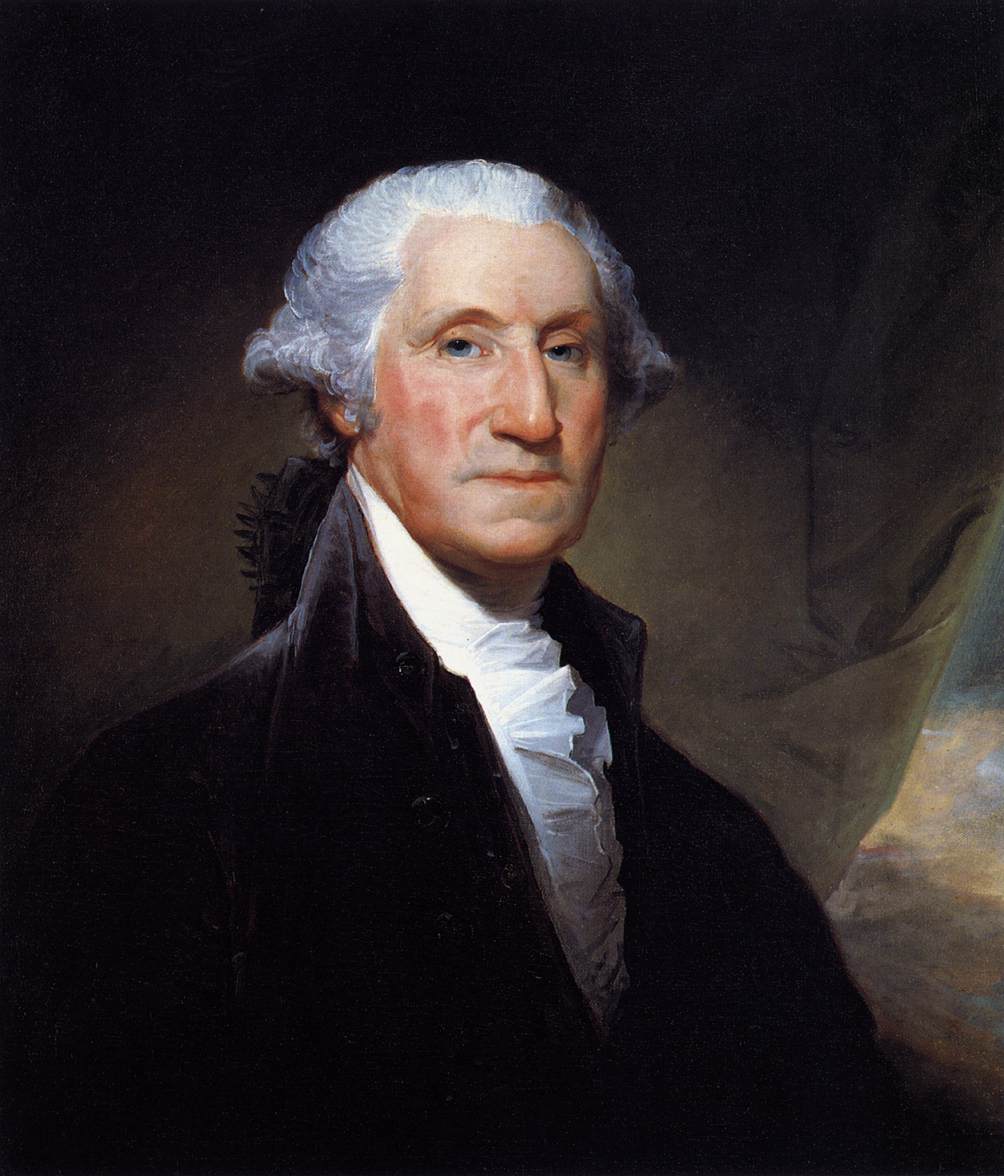
George Washington

Over grown military establishments are under any form of government inauspicious to liberty, and are to be regarded as particularly hostile to republican liberty.

Categories
Today

July 6 Today in Tyranny

July 6 serves better as a “Today in Tyranny” marker than anything positive, at least when you consider these events:

1415 – Jan Hus was burned at the stake.

1535 – Sir Thomas More was executed for treason against King Henry VIII of England.

1887 – David Kalakaua, monarch of the Kingdom of Hawaii, was forced at gunpoint by Americans to sign the Bayonet Constitution giving Americans more power in Hawaii while stripping Hawaiian citizens of their rights.

1939 – The last remaining Jewish enterprises in Germany were closed.

Categories
links

Townhall: Getting Unstuck

The American people are stuck. Trapped. Bogged down by too much government — or, in some cases, the wrong kind of government. When’s a good time to contemplate getting unstuck? Every day. But take the occasion on the weeks of Independence Day.

Getting unstuck surely should be a business for which Americans show a special talent.

Click on over to Townhall to consider today’s sticky, stuck America, and the possibility of Independence from what’s got us stuck. And then, hey, come back here. You may want to read more:

Categories
video

Video: Celebratory Mini-festival

It’s Independence “Weekend” — here is a small budget of videos. July 4, 1776, from the John Adams mini-series:

Star-Studded FULL Reading of the Declaration of Independence:

And just for fun . . . Declaration of Independence Rap – MC LaLa:

Jib Jab: We Declare Our Independence

Too Late To Apologize, A Declaration With Lyrics

http://youtu.be/A_56cZGRMx4

Categories
general freedom ideological culture

Declare Your Independence

Today is Independence Day, and we’re celebrating. Tonight there will be fireworks to watch. So I’ll try to be brief.

The original independence that the Continental Congress of the seceding colonies declared, was dramatic and fundamental, as I’ve tried to honor these past two days in Common Sense.

But the idea of independence, and of our liberty that it was meant to secure, extends beyond events over two centuries ago.Declaration of Independence

Today, we are riddled with at least two kinds of dependence that are worth resisting.

  1. Economic dependence. I’m not talking about foreign trade. “Independence-with-freedom”  assumes that we will always depend on each other by co-operation. But the terms of that co-operation should be mutual. The great problem with crony capitalism and the welfare state — and even to some degree with a large federal workforce — is that increasing numbers of people (whole classes) increasingly depend on taxpayers rather than their own productivity and commerce.

    This sort of dependence depends on wealth, but provides poverty.
  2. Partisan dependence. The polarization of the two political parties has become increasingly ideological — as it was at the beginning of the country, actually — and is becoming increasingly nasty. Americans seem “stuck.” Breaking apart from the parties might make for a more honest and productive debate.

One way to accomplish the latter? Work for general, non-partisan — “transpartisan” — reforms, like term limits . . . and other measures aimed at greater representation, from mandating smaller districts to establishing ranked choice voting.

Remember, in 24 states and most cities and towns, citizens also have the initiative and referendum process to act directly. Staying focused on issues is the key to working across partisan divides.

Who knows what improvements we might be able to make?

What begins by thinking independently comes to fruition in successful cooperation.

This is Common Sense. I’m Paul Jacob.

Categories
Thought

George Washington

The common and continual mischiefs of the spirit of party are sufficient to make it the interest and duty of a wise people to discourage and restrain it.

Categories
Today

July 4 events, many, including the Declaration of Independence

July Fourth — American “Independence Day” — events include:

1054 – A supernova was spotted by Chinese, Arab, and possibly Amerindian observers near the star Zeta Tauri, remaining, for several months, bright enough to be seen during the day. Its remnants form the Crab Nebula.

1776 — The Second Continental Congress approved the Declaration of Independence, thus formalizing its policy of secession from the rule of the Kingdom of Great Britain.

1803 — The Louisiana Purchase was announced to the American people.

1804 – Nathaniel Hawthorne, American author of “The Scarlet Letter,” “House of Seven Gables,” “The Blithesdale Romance,” and other classics, was born.

1826 – Thomas Jefferson, third president of the United States, died a few hours earlier on the same day as John Adams, second president of the United States, on the fiftieth anniversary of the adoption of the United States Declaration of Independence.

1826 – Stephen Foster, composer of “Old Black Joe,” “Beautiful Dreamer, and many other classic American songs, was born.

1827 – Slavery was abolished in New York State.

1831 – Samuel Francis Smith wrote “My Country, ‘Tis of Thee” for Boston’s July 4th festivities, set to the tune of Great Britain’s national anthem, “God Save the King/Queen.”

2009 – The Statue of Liberty’s crown re-opened to the public after eight years of closure that resulted from security concerns following the September 11, 2001, attacks.